by CAP Liberté de Conscience | Mar 14, 2026 | HRC 61, news
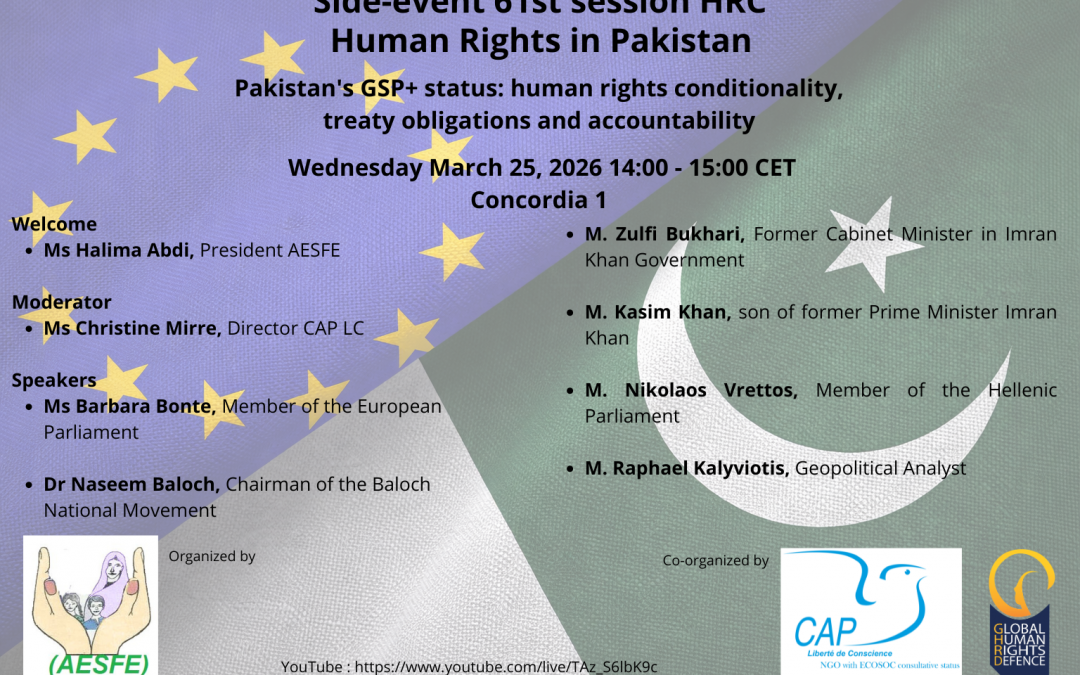
This side event critically examines Pakistan’s GSP+ trade status, questioning whether human rights conditionality is being rigorously enforced in line with international obligations. By combining legal analysis with victim testimonies, it aims to expose the gap between treaty commitments and the on-the-ground reality for those affected by abuses.
by CAP Liberté de Conscience | Oct 1, 2025 | Ahamadiyya, news
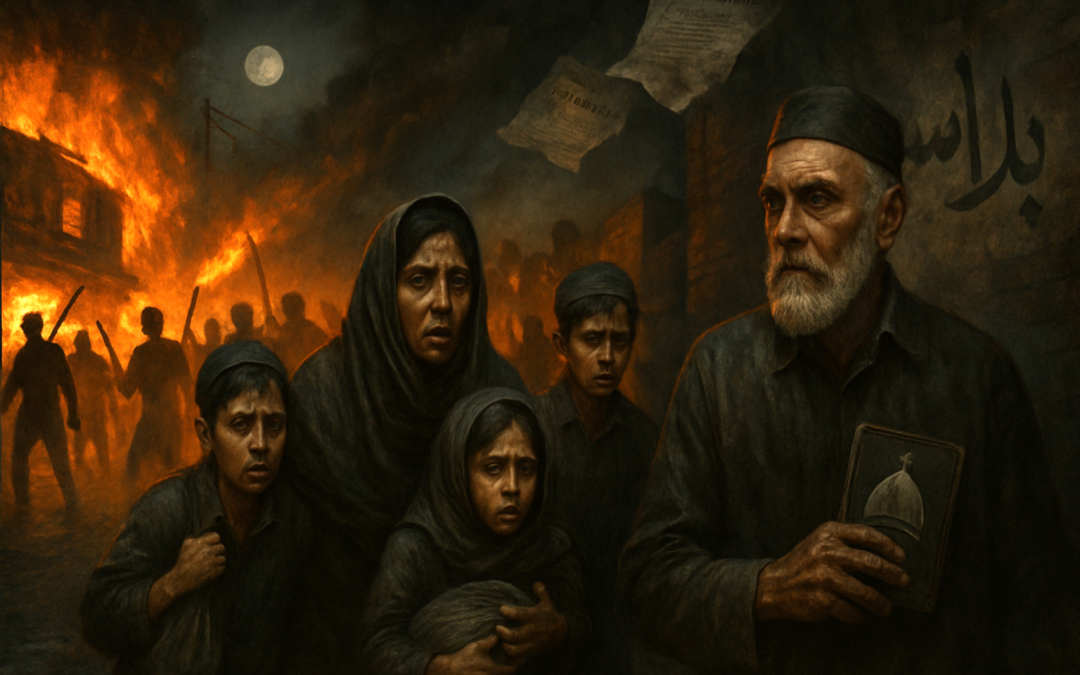
On the evening of September 28, 2025, a violent mob descended upon the Ahmadiyya residents of Piro Chak, a village in the Sialkot district of Punjab, Pakistan. The assailants, incited by religious hatred, systematically attacked homes, shops, and vehicles belonging to members of the community. Eyewitness accounts and journalistic reports describe a scene of terror and destruction, with properties set ablaze and looted while the occupants fled for their lives.
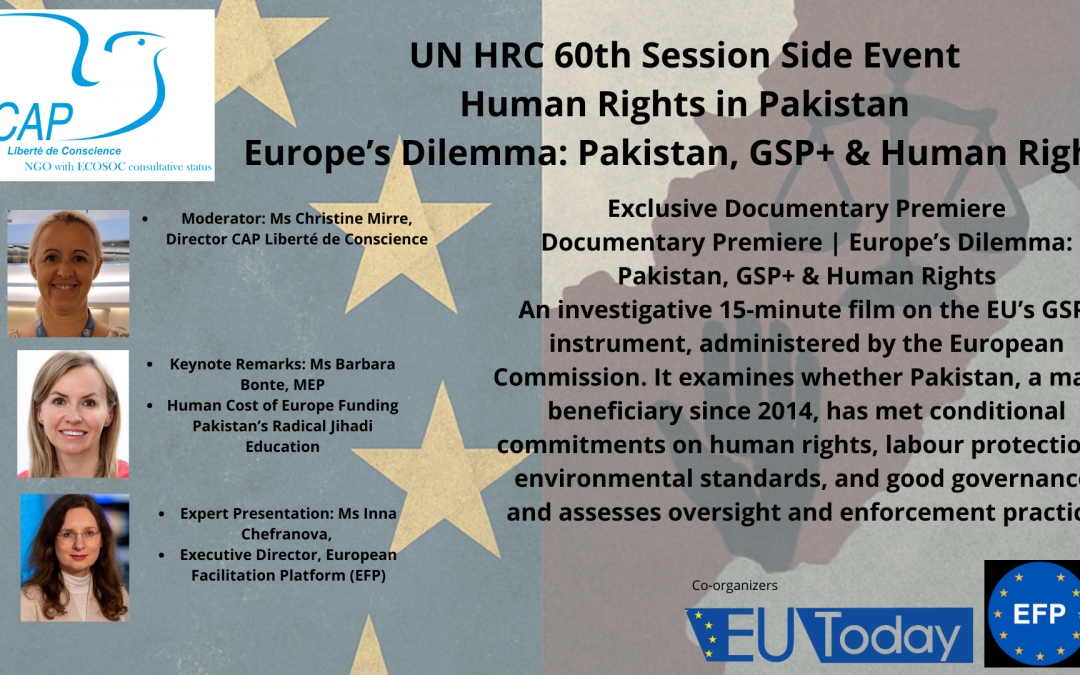
by CAP Liberté de Conscience | Sep 20, 2025 | CAP LC Event Coming, UN HRC 60
Documentary Premiere | Europe’s Dilemma: Pakistan, GSP+ & Human Rights
An investigative 15-minute film on the EU’s GSP+ instrument, administered by the European Commission. It examines whether Pakistan, a major beneficiary since 2014, has met conditional commitments on human rights, labour protections, environmental standards, and good governance, and assesses oversight and enforcement practice.

by CAP Liberté de Conscience | Mar 31, 2025 | HRC 58, news
A side event held during the 58th Session of the United Nations Human Rights Council, Geneva, on 26th March 2025 drew urgent attention to systemic human rights violations in Pakistan, focusing particularly on religious persecution, education policy, and the use of European Union development instruments.

by CAP Liberté de Conscience | Mar 19, 2025 | HRC 58, news
Join us for an urgent discussion on Human Rights in Pakistan, Particularly the education sector crisis. This event will highlight how ideological influences and rising intololerance threaten fundamental rights, limit access to education, and jeopardize academic freedom