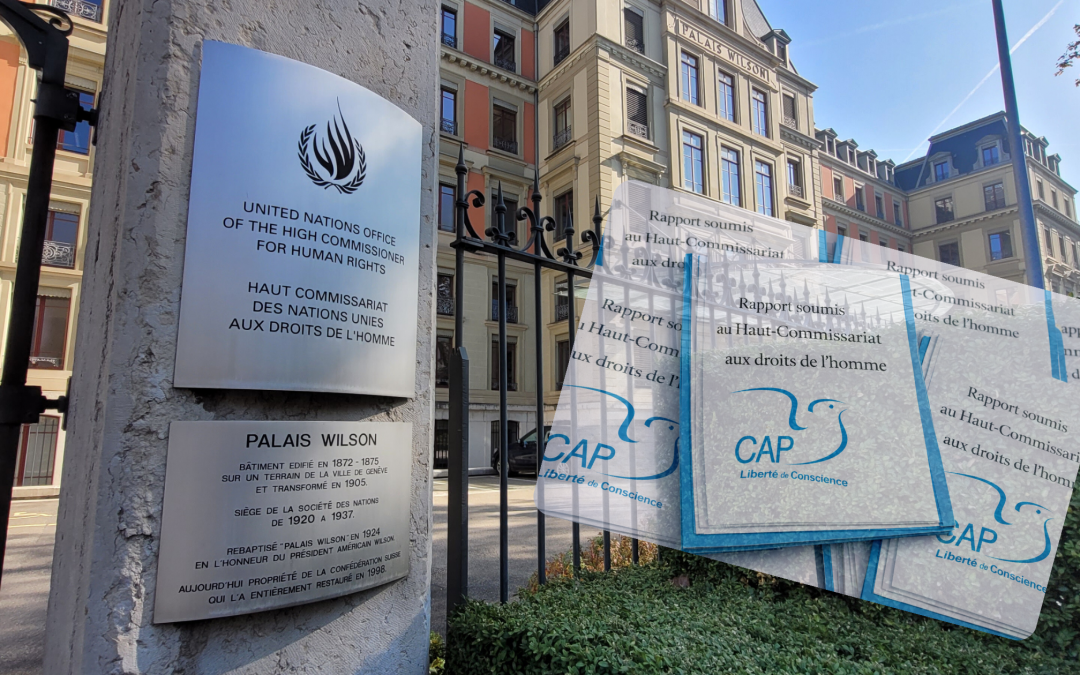
In response to the Call for Input issued by the United Nations Special Rapporteur on violence against women and girls for her report to the 62nd session of the Human Rights Council, CAP Liberté de Conscience has submitted a comprehensive analysis titled “CAP LC report of the Special Rapporteur on violence against women and girls.” The submission, accessible via the official call https://www.ohchr.org/en/calls-for-input/2026/call-input-report-special-rapporteur-violence-against-women-and-girls-62nd, examines specific forms of institutional violence faced by mothers in contexts of intrafamilial violence, with a focus on the French socio-judicial system.
The primary objective of the report is to document and analyze how institutional responses to intrafamilial violence can themselves perpetrate and exacerbate violence against women, specifically targeting them in their capacity as mothers. The methodology is based on a review of available institutional data, public reports from oversight bodies, national statistics, relevant jurisprudence from the European Court of Human Rights, and established international human rights standards. The analysis adopts a structural perspective, seeking to identify recurrent patterns and systemic dysfunctions rather than isolated incidents. It frames these practices within the continuum of violence and the concept of secondary victimization, assessing their compliance with states’ positive obligations under international law.
The report identifies several interconnected and systemic patterns constituting institutional violence against mothers who report intrafamilial violence. These patterns are presented not as malfunctions but as structural features of a system that fails to provide effective protection.
- Institutional Violence as an Extension of Intrafamilial Violence: The report finds that cases involving mothers and children are frequently diverted from criminal justice pathways to civil, administrative, or child protection frameworks. This shift often occurs without effective investigation of the initial violence, leading to a requalification of violence as parental conflict or educational difficulty. The analysis centers on the mother’s behavior rather than the perpetrator’s, transforming her from a victim or protective parent into a subject to be evaluated and controlled. This is evidenced by disproportionate rates of child placement decisions affecting mothers who have reported violence, based on assessments that inadequately consider the original violent context.
- Criminalization of Protective Behaviors and Coercive Control: A key finding is the judicial system’s tendency to progressively criminalize mothers’ protective actions. The offense of “non-representation of a child” is frequently invoked against mothers who refuse to hand over a child to a parent accused of violence, often prior to a full risk assessment. This places mothers in a double bind, forced to choose between obeying a judicial order and ensuring their child’s immediate safety, under threat of penal sanctions or loss of custody. The report identifies this as a form of institutional coercive control.
- Accusatory Inversion and Pathologization: The report documents a pattern of “accusatory inversion,” where allegations are redirected from the accused perpetrator to the protective mother, who may be labeled as manipulative or engaged in “parental alienation”—a concept criticized by international bodies for lacking scientific validation. This is compounded by the pathologization of mothers through psychological and psychiatric expert assessments. Reactions consistent with trauma and protective behaviors, such as hypervigilance, are misinterpreted as signs of psychological disorder, disqualifying the mother’s testimony and neutralizing her alerts regarding violence.
- Consequences for Children and Systemic Deterrence: These institutional practices directly impact children by minimizing or reinterpreting their disclosures, prolonging their exposure to risk, and causing documented psychological harm, including anxiety and socio-affective developmental issues. Furthermore, the systemic disqualification of protective mothers creates a profound deterrent effect, discouraging victims and professionals from reporting violence.
Classification Under International Law:
The report concludes that these persistent practices constitute serious breaches of France’s international obligations. Specifically, they violate:
- The Convention on the Elimination of All Forms of Discrimination Against Women (CEDAW), by subjecting mothers to discriminatory treatment and failing to ensure effective access to justice.
- The Convention on the Rights of the Child, by failing to prioritize the child’s best interest and effective safety over formal parental rights.
- The Istanbul Convention, by failing to prevent secondary victimization and allowing the use of pseudo-scientific concepts in judicial proceedings.
- Potentially, the Convention against Torture, as systemic secondary victimization can inflict severe and prolonged mental suffering amounting to cruel or degrading treatment.
To address these systemic failures and align state practice with its international human rights commitments, the report puts forward several core recommendations:
- Ensure Effective Investigations and Criminal Justice Response: Authorities must conduct prompt, effective, and impartial investigations into all allegations of intrafamilial violence before diverting cases to other frameworks. The initial facts of violence must remain central to the judicial response.
- Prohibit Pseudo-Scientific Concepts and Regulate Expertise: The use of non-validated concepts such as “parental alienation” in judicial settings must be prohibited. Judicial psychological and psychiatric expertise must be strictly regulated, bound by robust methodological and deontological standards, and subject to effective adversarial scrutiny.
- Protect Mothers from Criminalization for Protective Acts: Legal safeguards must be instituted to prevent the penalization of mothers for acts undertaken to protect their children from alleged violence, pending a full and fair assessment of the risks involved.
- Prioritize Child Safety and Credible Testimony: The child’s right to safety must be the paramount consideration. Procedures for hearing children must be improved, and their testimony must not be automatically disqualified based on suspicions towards the protective parent.
- Explicit Recognition and Training: There must be explicit recognition of institutional violence against mothers as a form of gender-based violence. Comprehensive training for all relevant professionals (judges, social workers, psychologists) on the dynamics of intrafamilial violence, coercive control, and trauma is essential to transform institutional practices.
This report was prepared by contributing experts Sarah Thierrée, Johnny Dousse, Marie Sablon, and Thierry Valle for CAP Liberté de Conscience. Their analysis aims to inform the Special Rapporteur’s work and contribute to the UN Human Rights Council’s oversight of states’ compliance with their obligations to prevent, protect against, and redress violence against women and girls. The full submission is intended as a factual contribution to the international dialogue on ending gender-based violence in all its forms.