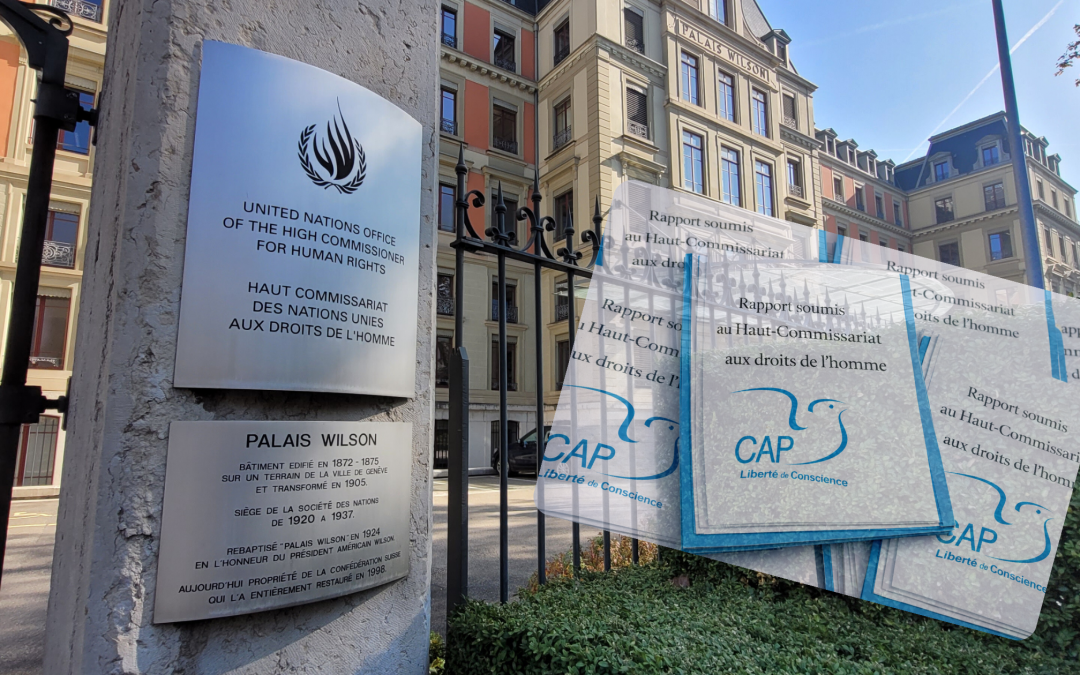
In preparation for the upcoming official visit to Germany by the United Nations Special Rapporteur on the promotion and protection of the right to freedom of opinion and expression, the non-governmental organization CAP Liberté de Conscience (CAP LC) has submitted a comprehensive report addressing specific concerns regarding systemic discrimination. The Special Rapporteur’s visit, scheduled to take place from 26 January to 6 February 2026, aims to assess the situation of freedom of opinion and expression in the country. This assessment includes reviewing legal, institutional, and policy frameworks that protect or restrict these fundamental rights, as well as measures addressing intolerance, negative stereotyping, and stigmatization.
The report submitted by CAP LC, titled “CAP LC report visit to Germany Special Rapporteur on freedom of opinion and expression,” was produced in direct response to the Office of the High Commissioner for Human Rights (OHCHR) call for input. This submission specifically highlights the intersection of economic participation and freedom of conscience, documenting how institutionalized practices in public procurement restrict the rights of specific minority groups.
The full details of the call for input can be accessed via the OHCHR website: https://www.ohchr.org/en/calls-for-input/2026/call-input-official-visit-germany-un-special-rapporteur-freedom-expression.
The primary objective of the CAP LC report is to document, analyze, and assess the prevalence of “protective declarations” (Schutzerklärungen) within the German public procurement landscape. These declarations specifically target the Church of Scientology, requiring economic operators to disavow any affiliation with the religious group as a mandatory precondition for bidding on public contracts. The report investigates whether this requirement complies with international standards regarding equal treatment, non-discrimination, and the freedom of religion or belief.
To ensure the findings were grounded in verifiable fact, the report utilizes an empirical and documentary methodology. The research team conducted a systematic analysis of data collected from the European Union’s Tenders Electronic Daily (TED) portal. As the official journal for public procurement within the EU, the TED portal provides a comprehensive digital record of tenders that exceed specific monetary thresholds.
The methodology involved a targeted search for notices published by German contracting authorities containing the specific term “Scientology.” The longitudinal study covered a ten-year period, from 2 May 2014—the earliest date of accessible comprehensive digital records—through 20 August 2024. The research process involved reviewing individual tender notices to confirm the presence of the “Scientology Protective Declaration,” aggregating the data annually to identify statistical trends, and selecting representative sample tenders for detailed qualitative analysis. This empirical data was then benchmarked against the legal standards of Directive 2014/24/EU, the Treaty on the Functioning of the European Union (TFEU), and core human rights treaties including the International Covenant on Civil and Political Rights (ICCPR).
The investigation revealed a persistent, institutionalized, and growing practice of exclusion. The report’s findings are categorized into the scale of the practice, the nature of the requirements, and their classification under international law.
Scale and Prevalence
The data analysis identified 3,095 public tender notices published between May 2014 and August 2024 that explicitly required bidders to submit a declaration distancing themselves from the Church of Scientology. The report notes that this figure likely represents a minimum baseline, as EU transparency obligations only apply to contracts valued above €140,000. Significantly, the practice is on an upward trajectory. The number of such tenders rose from 81 in the partial year of 2014 to 493 in 2023. The first eight months of 2024 alone saw 434 discriminatory tenders, indicating a record-breaking year for such exclusions.
Nature of the Requirement
The “Scientology Protective Declaration” is typically categorized as a mandatory submission document, appearing alongside standard eligibility declarations and anti-corruption pledges. The clause obliges the bidding company to affirm that neither the entity nor its employees maintain any connection to the Church of Scientology. Failure to provide this declaration results in automatic exclusion from the procurement procedure.
Crucially, the report highlights that this requirement is applied universally, irrespective of the contract’s subject matter. The analysis points to a representative tender from the City of Munich’s municipal hospital group (München Klinik gGmbH), which required this declaration for the supply of secular items such as modular furniture, tables, and bookcases. This evidence suggests a blanket policy where the exclusion is enforced even when there is objectively no conflict of interest or performance risk related to a bidder’s religious affiliation.
Classification under International and EU Law
The report classifies these practices as systemic violations of several legal frameworks:
- Violation of EU Public Procurement Law (Directive 2014/24/EU): The practice is found to contravene Article 18(1), which mandates equal treatment and proportionality. By artificially narrowing competition based on religious affiliation, authorities violate the directive. Furthermore, the report notes that Article 57 provides an exhaustive list of mandatory exclusion grounds (such as corruption or child labor), and religious belief is not a legitimate ground for exclusion.
- Violation of EU Fundamental Freedoms: The requirement restricts the freedom of establishment (Article 49 TFEU) and the freedom to provide services (Article 56 TFEU), effectively barring companies associated with the targeted religion—including those from other EU member states—from the German market.
- Human Rights Violations (ICCPR & UDHR): The report asserts that the practice violates Article 18 of the ICCPR (Freedom of Religion or Belief) by impairing the equal enjoyment of rights based on religious distinction. It further cites violations of Article 26 (Prohibition of Discrimination), as the state subjects individuals to disadvantageous conditions without objective justification.
- Chilling Effect on Freedom of Opinion (ICCPR Article 19): Perhaps most relevant to the Special Rapporteur’s specific mandate, the report argues that requiring a disavowal of association as a condition for economic survival creates a coercive environment. It forces entities to choose between their conscience and their livelihood, constituting undue interference with the right to hold opinions without interference.
Based on the empirical evidence and legal analysis, CAP Liberté de Conscience outlines six specific recommendations for the Special Rapporteur to address with the German government:
- Immediate Cessation: The federal government should issue a directive to all levels of public contracting authorities (municipal, state, and federal) to immediately cease the inclusion of “Scientology Protective Declarations” or similar faith-based exclusionary clauses.
- Legislative Review: The German Parliament (Bundestag) is urged to conduct a comprehensive review of public procurement regulations to repeal any provisions that mandate or permit discrimination based on religion or belief, ensuring alignment with Directive 2014/24/EU.
- Affirmation of Non-Discrimination: The government should publicly affirm that economic operators must be assessed solely on their professional, financial, and technical capacity, strictly adhering to the exhaustive exclusion criteria in EU law.
- Redress Mechanisms: A clear and effective mechanism should be established to allow companies unfairly excluded to seek rapid redress, including compensation for bid preparation costs and guarantees of non-prejudicial participation in future tenders.
- Training and Awareness: Mandatory training programs should be implemented for public officials involved in procurement to educate them on their obligations under international human rights standards and the impermissibility of religious discrimination.
- Monitoring and Transparency: Germany should enhance its monitoring of public procurement practices and publicly report on the measures taken to eliminate these discriminatory clauses, providing statistical data to verify their cessation.
This report was prepared and submitted by the experts and research team at CAP Liberté de Conscience, a non-governmental organization with consultative status at the United Nations, dedicated to the promotion and protection of freedom of conscience and religion worldwide.
CAP LC report visit to Germany Special Rapporteur on freedom of opinion and expression