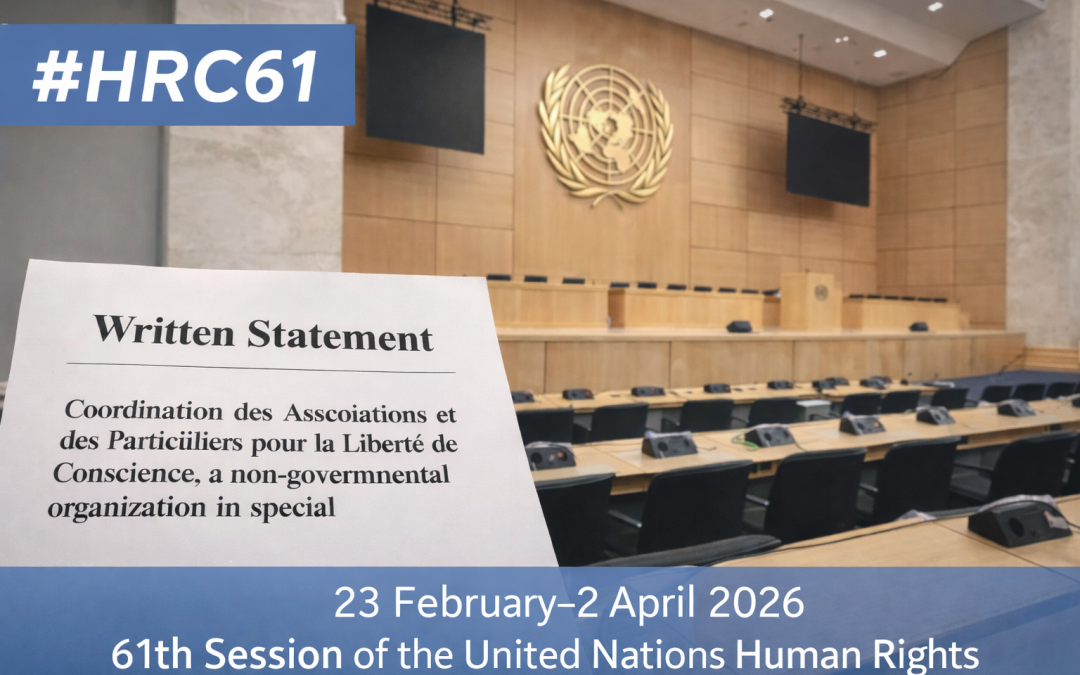
Human Right Without Frontiers, International Support for Human Rights and CAP Liberté de Conscience has submitted a joint written statement to the Human Rights Council at its sixty-first session addressing the grave and systematic violations of freedom of religion or belief perpetrated against members of the Ahmadi Religion of Peace and Light (AROPL) in Egypt. Since March 2025, Egyptian authorities have detained numerous peaceful adherents of this religious minority solely for expressing their beliefs and possessing religious materials, subjecting them to arbitrary arrest, enforced disappearance lasting over a month, torture, and prolonged pre-trial detention exceeding ten months without trial. The statement documents severe violations including electric shocks, beatings, denial of legal counsel, inhumane prison conditions, and crucially, organized religious coercion through visits by Al-Azhar-affiliated sheikhs explicitly aimed at forcing detainees to renounce their faith. CAP Liberté de Conscience calls upon the Egyptian Government to immediately and unconditionally release all detained AROPL members, investigate torture and enforced disappearances by security forces, end the misuse of pre-trial detention, guarantee fair-trial rights and access to legal representation, and cease all forms of religious coercion in violation of Egypt’s international human rights obligations.
g2602286 Ahmadi Religion of Peace and LightHRC 61 Written Statement : Arbitrary Detention, Enforced Disappearance, Torture, Prolonged Pre-Trial Detention, and Religious Coercion of Members of the Ahmadi Religion of Peace and Light in Egypt