by CAP Liberté de Conscience | Jan 4, 2024 | news, OSCE
WARSAW, 16 November 2023 – Launching its annual Hate Crime Report on today’s International Day for Tolerance, the OSCE Office for Democratic Institutions and Human Rights (ODIHR) emphasized the importance of identifying the underlying bias motives of hate crimes in order to diminish the impact on victims and assist their recovery.

by CAP Liberté de Conscience | Oct 7, 2023 | news, OSCE
Anti-religious intolerance and hate crimes continues to be a concern across the Organization for Security and Co-operation in Europe (OSCE) region. Such manifestations of intolerance threaten both the security of individuals and societal cohesion, as discrimination and intolerant discourse often escalate into violence and wider scale conflict. At the same time, a comprehensive security regime is also needed to fully respect, protect and fulfil freedom of religion or belief, which is specifically acknowledged as one of the fundamental principles guiding mutual relations among OSCE participating States and an integral aspect of the OSCE’s concept of security. Furthermore, participating States of the OSCE have agreed on a broad range of commitments to address racism, xenophobia, anti-Semitism, discrimination and intolerance, including intolerance against Christians, Muslims, Jews, and members of other religions.
by CAP Liberté de Conscience | Sep 25, 2023 | CAP LC Event Coming, OSCE
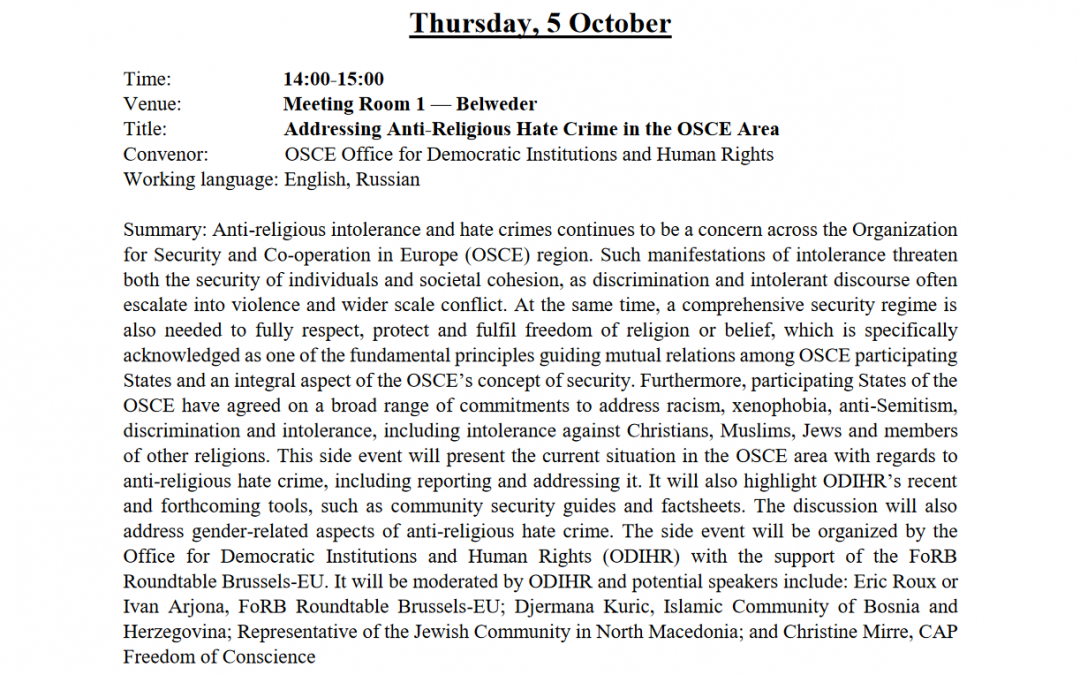
Anti-religious intolerance and hate crimes continues to be a concern across the Organization for Security and Co-operation in Europe (OSCE) region. Such manifestations of intolerance threaten both the security of individuals and societal cohesion, as discrimination and intolerant discourse often escalate into violence and wider scale conflict. At the same time, a comprehensive security regime is also needed to fully respect, protect and fulfil freedom of religion or belief, which is specifically acknowledged as one of the fundamental principles guiding mutual relations among OSCE participating States and an integral aspect of the OSCE’s concept of security. Furthermore, participating States of the OSCE have agreed on a broad range of commitments to address racism, xenophobia, anti-Semitism, discrimination and intolerance, including intolerance against Christians, Muslims, Jews and members of other religions. This side event will present the current situation in the OSCE area with regards to anti-religious hate crime, including reporting and addressing it. It will also highlight ODIHR’s recent and forthcoming tools, such as community security guides and factsheets. The discussion will also address gender-related aspects of anti-religious hate crime. The side event will be organized by the Office for Democratic Institutions and Human Rights (ODIHR) with the support of the FoRB Roundtable Brussels-EU
by CAP Liberté de Conscience | Jul 3, 2023 | news, OSCE
CAP/ Conscience et Liberté and Human Rights Without Frontiers are deeply concerned about the situation of over 100 members of the Ahmadi Religion of Peace and Light who have been blocked by the Turkish authorities at the Turkish-Bulgarian border since the end of May.
Ankara has decided to deport them back to their home countries where they would face imprisonment, torture and even execution in the case of Iran.
by CAP Liberté de Conscience | Oct 10, 2022 | CAP LC Event Coming, news, OSCE
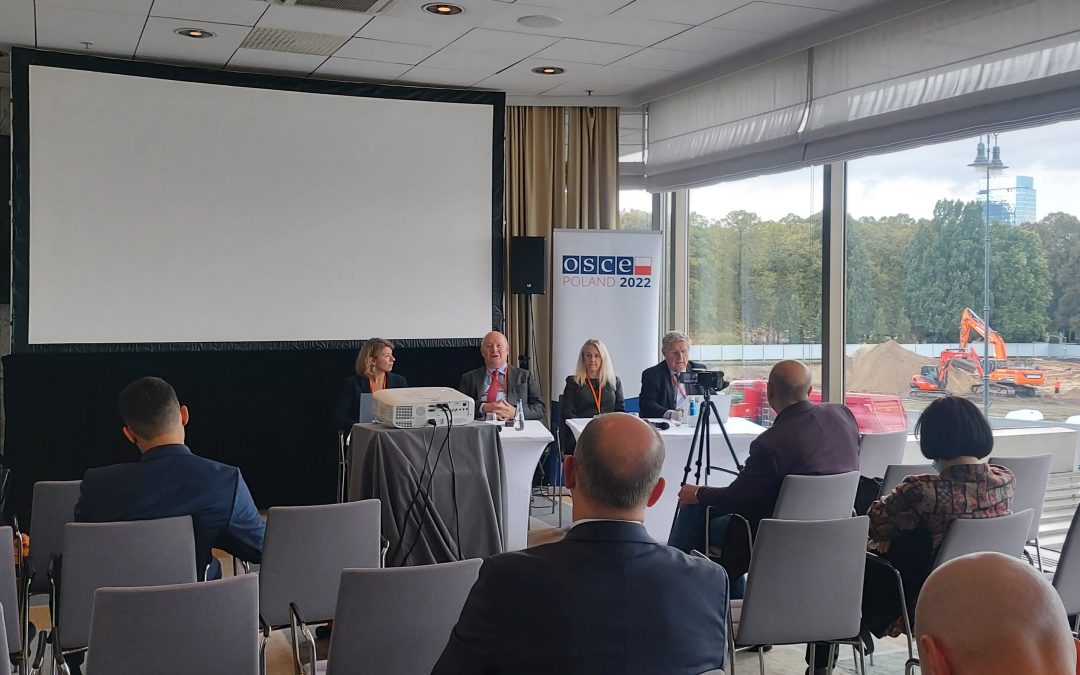
CAP Freedom of Conscience is a secular European NGO with United Nations Consultative Status, created in 1995 and dedicated to protecting the Right of Freedom of Religion and Belief. It combats all forms of discrimination based on religion or belief, inter alia, by alerting European and International bodies to abuses and violations of international standards. It collects testimonies of discrimination and human rights violations affecting religious or belief communities disseminating them to international bodies, to broadly raise awareness on the subject and to generate debate on the need for protection of freedom of religion or Belief. CAP Freedom of Conscience also advocates for any religious or spiritual group facing discrimination supporting the right to have their freedom of religion or belief recognized.