by CAP Liberté de Conscience | Sep 25, 2023 | CAP LC Event Coming, OSCE
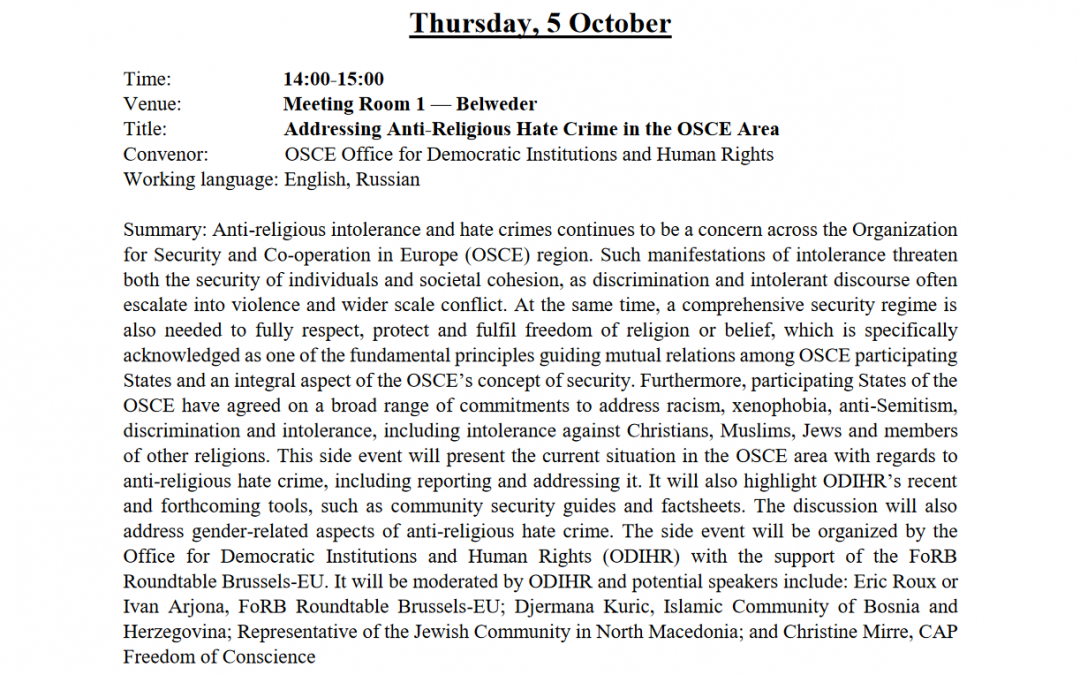
Anti-religious intolerance and hate crimes continues to be a concern across the Organization for Security and Co-operation in Europe (OSCE) region. Such manifestations of intolerance threaten both the security of individuals and societal cohesion, as discrimination and intolerant discourse often escalate into violence and wider scale conflict. At the same time, a comprehensive security regime is also needed to fully respect, protect and fulfil freedom of religion or belief, which is specifically acknowledged as one of the fundamental principles guiding mutual relations among OSCE participating States and an integral aspect of the OSCE’s concept of security. Furthermore, participating States of the OSCE have agreed on a broad range of commitments to address racism, xenophobia, anti-Semitism, discrimination and intolerance, including intolerance against Christians, Muslims, Jews and members of other religions. This side event will present the current situation in the OSCE area with regards to anti-religious hate crime, including reporting and addressing it. It will also highlight ODIHR’s recent and forthcoming tools, such as community security guides and factsheets. The discussion will also address gender-related aspects of anti-religious hate crime. The side event will be organized by the Office for Democratic Institutions and Human Rights (ODIHR) with the support of the FoRB Roundtable Brussels-EU

by CAP Liberté de Conscience | Sep 25, 2023 | CAP LC Event Coming, CAP LC United Nations, HRC 54
Violence in Yemen in 2023 has seen an uptick , including an increase in targeted attacks and violent speech towards religious minorities. On 25th May 2023, Houthi militia stormed a peaceful meeting of Bahais in Sana’a and arrested 17, including five women, and continue to detain 11 of them incommunicado. In 2 June 2023, the UN High Commissioner on Human Rights reported how the Mufti Shamseddin Sharafeddin, appointed by leaders of the Houthi militant movement, accused the detained Bahais of being apostates and saying “they should be killed,” if they did not repent Similar hate speech and incitement has been recorded in Yemen towards Christian converts and others since the start of the conflict and was raised during the virtual 53rd Human Rights Council parallel event co-sponsored by the Slovak Republic Bureau of the Special Envoy for Freedom of Religion or Belief.
by CAP Liberté de Conscience | Sep 24, 2023 | HRC 54, news
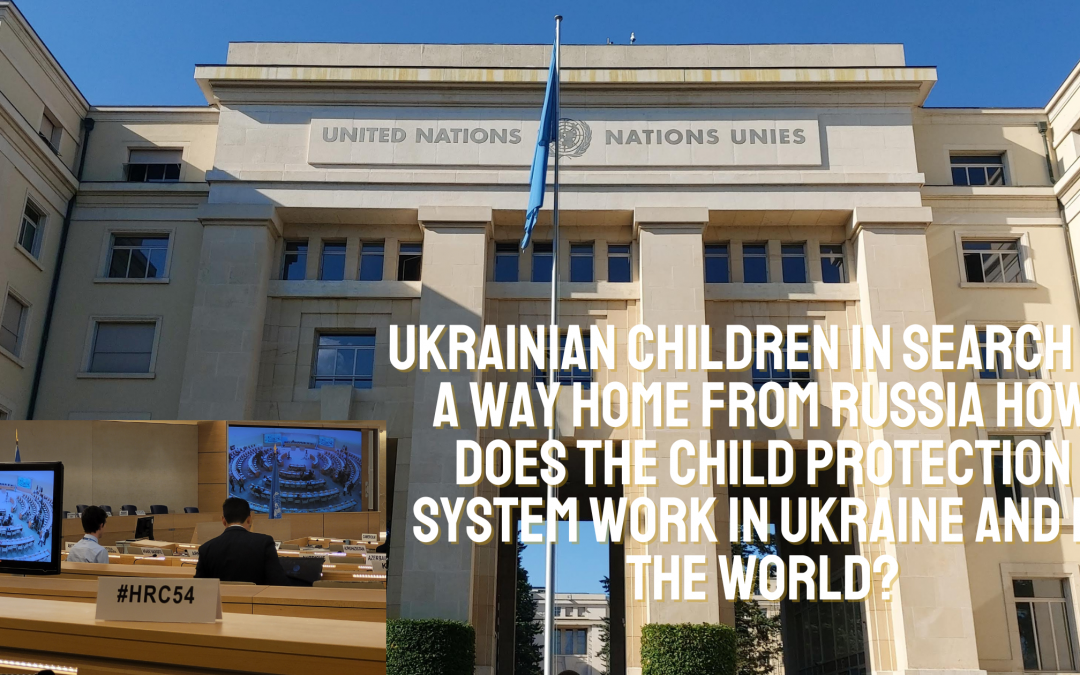
CAP Liberté de conscience and Human Rights Without Frontiers are deeply concerned about the Ukrainian children who were taken away against their will from the Ukrainian occupied territories to Russia in the framework of the war and whose parents are desperately in search of them. Both NGOs strongly support the recommendations of the UN Secretary-General, who urges
by CAP Liberté de Conscience | Sep 24, 2023 | HRC 54, news
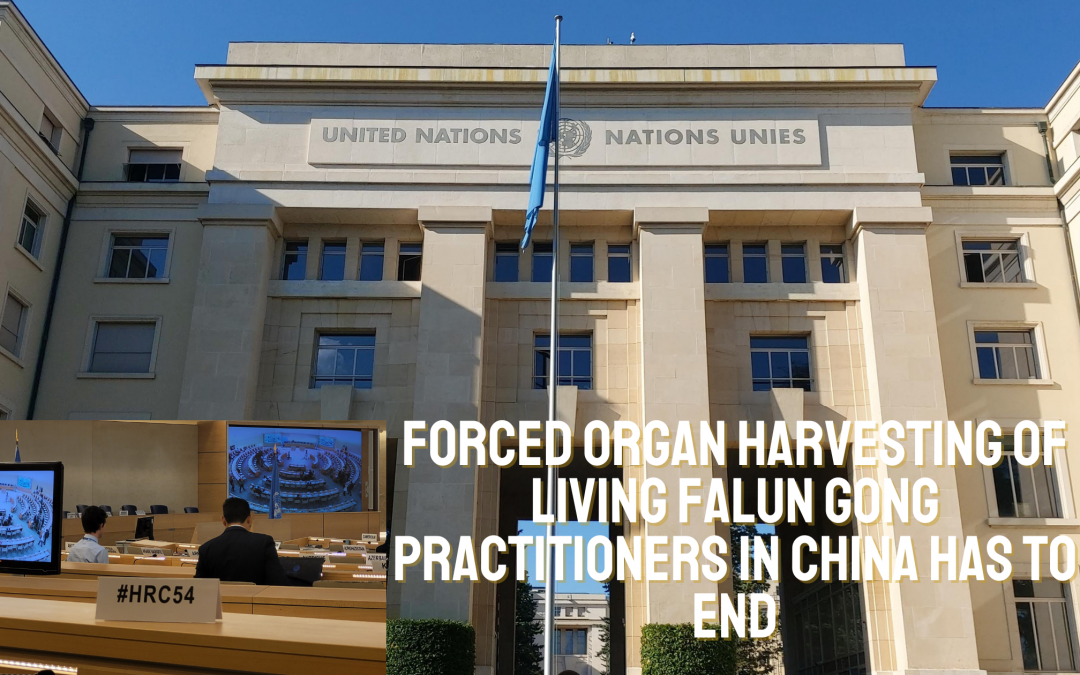
Recognizing that the Universal Declaration on Human Rights has been and continues to be a source of inspiration for the 193 member states of the United Nations and non-governmental organizations, as shown in the Universal Declaration on Combating and Preventing Forced Organ Harvesting, presented by five NGOs during a World Summit in 2021;
by CAP Liberté de Conscience | Sep 23, 2023 | HRC 54, news
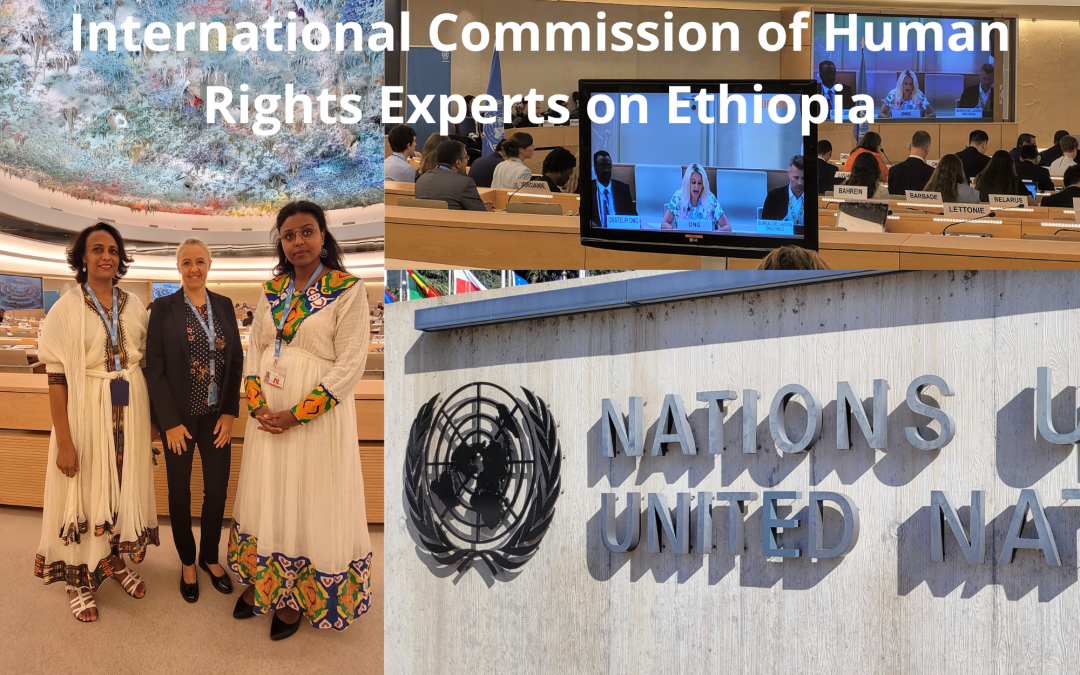
We, together with the NGO Stop Amhara Genocide, have continuously alerted this Council that the Tigray conflict was an opportunity for the Ethiopian government to intensify the ethnic cleansing of the Amhara people started under TPLF regime.
by CAP Liberté de Conscience | Sep 23, 2023 | HRC 54, news
We are deeply concerned about cases of violations of freedom of expression and the misuse of military justice to repress activists and “political dissidents” in Lebanon.
Amendments to the Criminal Code allow the Permanent Military Court to hear civil cases related to national security, with far fewer protections for the defendants.
by CAP Liberté de Conscience | Sep 18, 2023 | HRC 54
The use of law and military justice to repress “political dissent” in lebanon: the Omar Harfouch case
by CAP Liberté de Conscience | Sep 18, 2023 | HRC 54, news
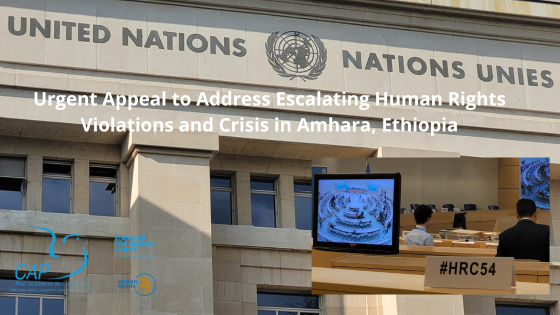
CAP Liberté de conscience is deeply concerned about the escalating crisis and human rights violations that are devastating the Amhara region in Ethiopia.