by CAP Liberté de Conscience | Oct 1, 2025 | Ahamadiyya, news
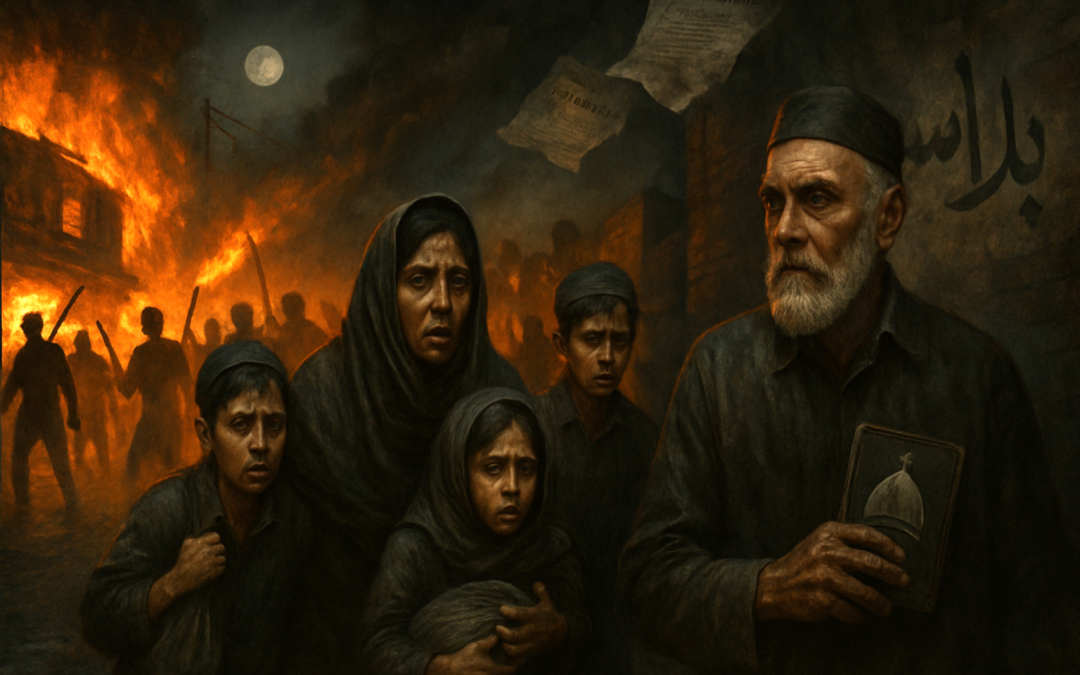
On the evening of September 28, 2025, a violent mob descended upon the Ahmadiyya residents of Piro Chak, a village in the Sialkot district of Punjab, Pakistan. The assailants, incited by religious hatred, systematically attacked homes, shops, and vehicles belonging to members of the community. Eyewitness accounts and journalistic reports describe a scene of terror and destruction, with properties set ablaze and looted while the occupants fled for their lives.
by CAP Liberté de Conscience | Sep 24, 2025 | news, UN HRC 60
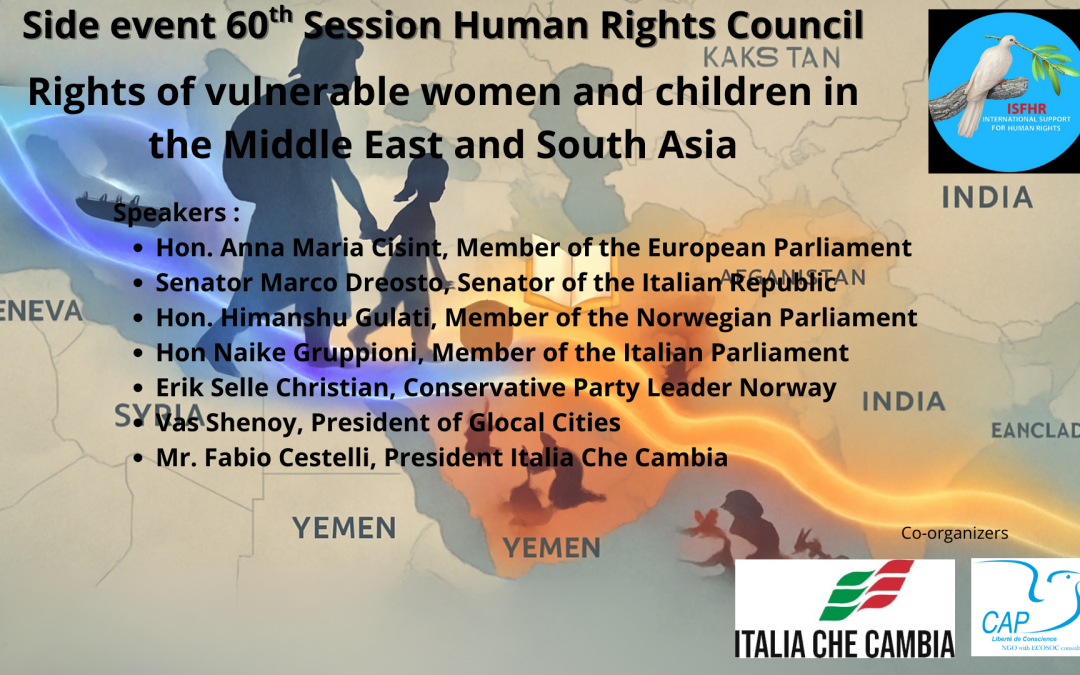
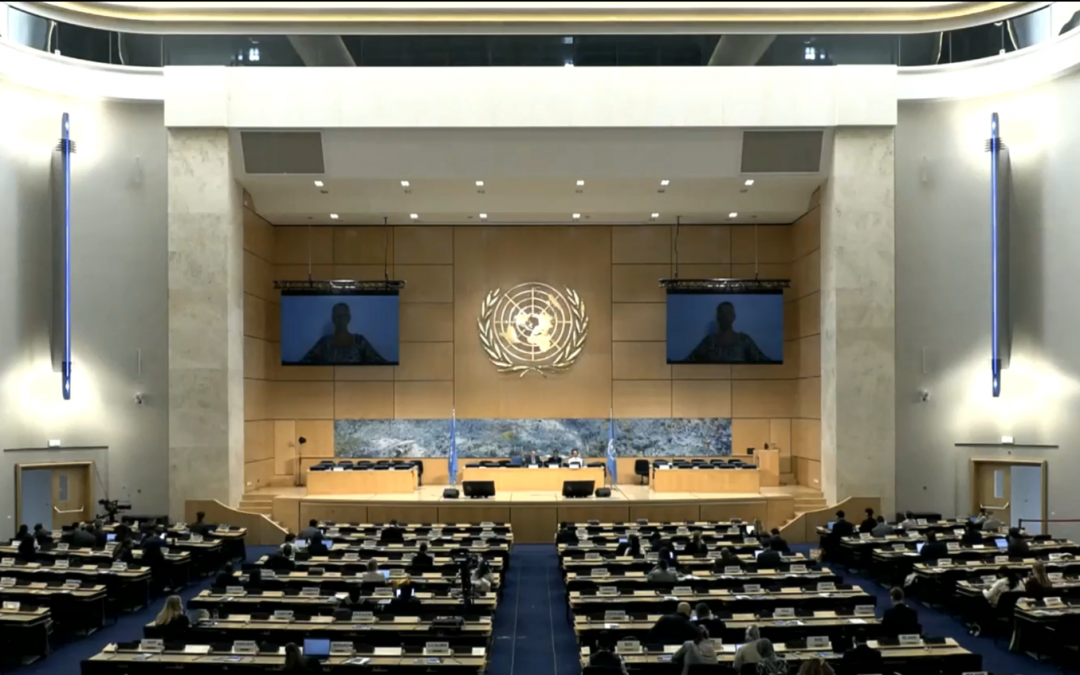
In a globally interconnected world, the effects of extremism originating in hotspots like South Asia, Somalia, and Yemen are felt socially, economically, and politically across continents. This panel will bring together experts to highlight the condition of women, children, and vulnerable groups who bear the brunt of this instability. The discussion aims to foster a multidisciplinary understanding and seek pathways for their protection and empowerment.
by CAP Liberté de Conscience | Sep 23, 2025 | news, UN HRC 60
We and Human Rights Without Frontiers are deeply concerned about the fact that chaplaincy activities of Jehovah’s Witnesses in a number of Belgian prisons are in practice not allowed any more.
Since 2019, Jehovah’s Witnesses have written six times to the Minister of Justice and have initiated legal proceedings due to this discrimination experienced in four Belgian prisons: Nivelles, Leuze, Dinant, and Leuven Central.
by CAP Liberté de Conscience | Sep 23, 2025 | news, UN HRC 60
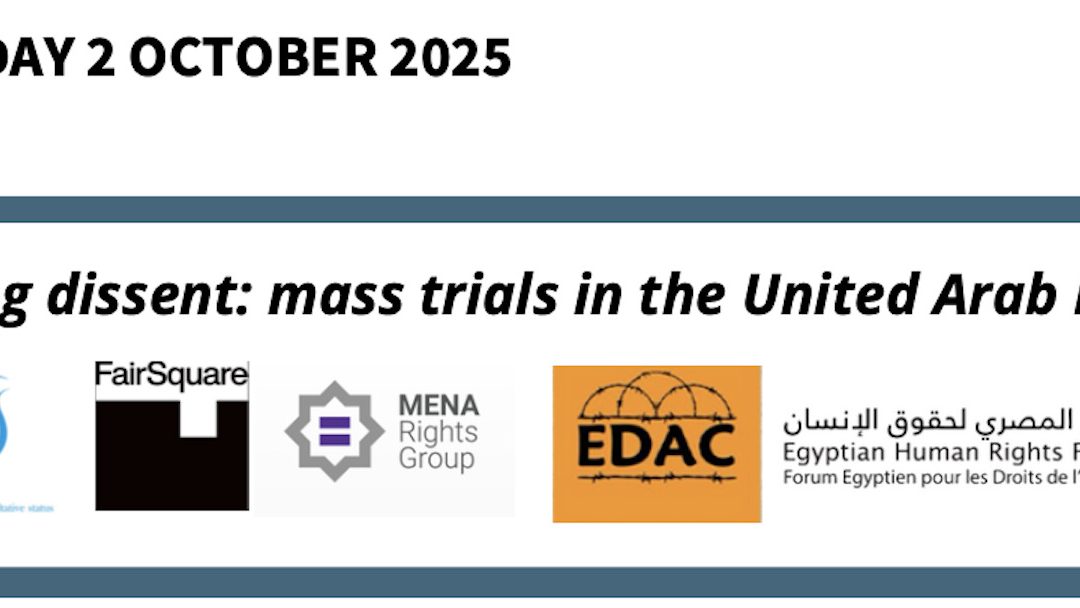
Since the “UAE94” trial in 2013, Emirati authorities have regularly used collective trials to criminalize any form of peaceful dissent and human rights defense. UN experts have denounced the lack of fair trial guarantees and the detention of individuals for exercising their fundamental rights.
by CAP Liberté de Conscience | Sep 22, 2025 | CAP LC United Nations, news
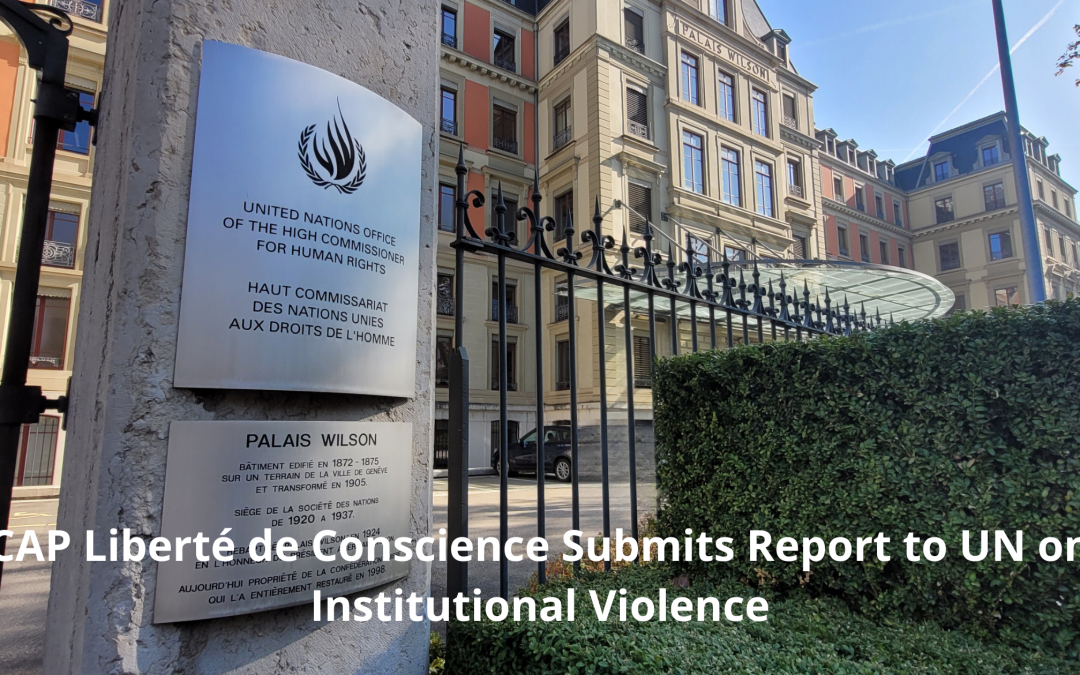
The NGO CAP Liberté de Conscience has formally responded to the call for input issued by the Office of the UN High Commissioner for Human Rights (OHCHR) on the “Experiences and perspectives of victims and survivors of torture and other cruel, inhuman or degrading treatment or punishment”. The call, detailed here, seeks to gather information for a comprehensive report to be presented at the 61st session of the Human Rights Council in March 2026.
by CAP Liberté de Conscience | Sep 22, 2025 | news, UN UPR
CAP Liberté de Conscience (CAP LC), an international non-governmental organization with consultative status at the United Nations, has jointly submitted a report for the 52nd session of the Universal Periodic Review (UPR) Working Group, focusing on Denmark. This expert analysis was prepared in collaboration with Mr. Bashy Quraishy, Secretary General of the European Muslim Initiative for Social Cohesion (EMISCO), and Mr. Gregory Christensen, Leader of Youth for Human Rights – Denmark. Both experts are members of the Advisory Board of the Danish Institute for Human Rights and bring decades of experience in human rights, anti-discrimination, and minority integration work within Denmark and the European Union.
by CAP Liberté de Conscience | Sep 20, 2025 | CAP LC United Nations
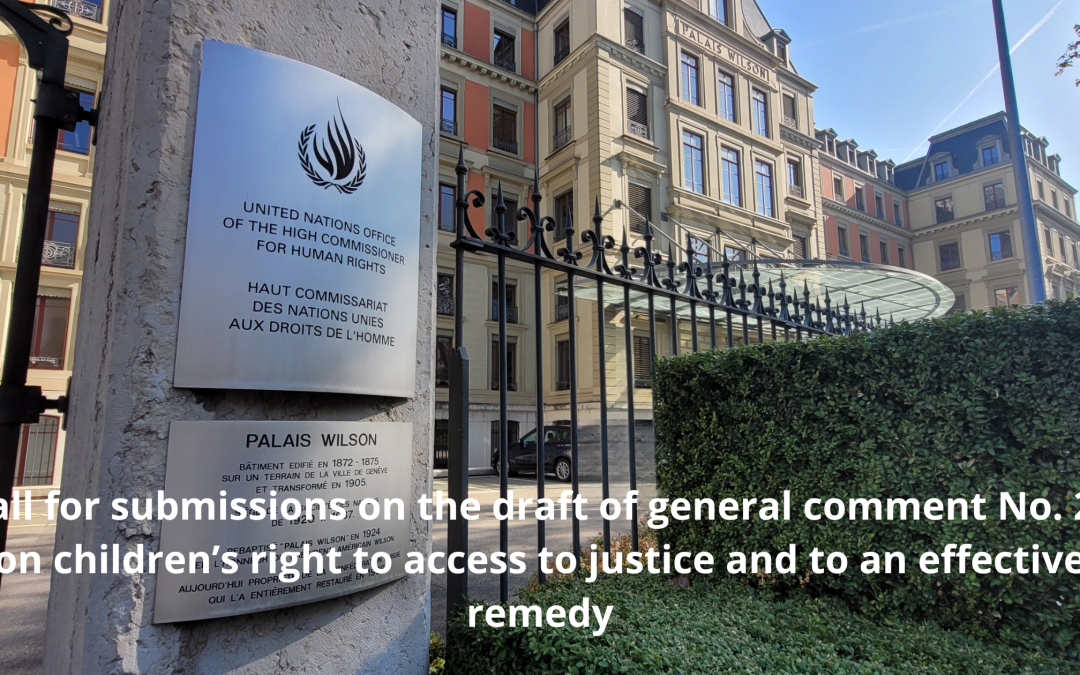
A group of experts on children submitted a contribution on behalf of CAP Liberté de Conscience to the United Nations Committee on the Rights of the Child in response to its public call for contributions on draft general comment No. 27 (2025) on the right of children to access justice and effective remedy. The call for contributions is available on the OHCHR website.
by CAP Liberté de Conscience | Sep 20, 2025 | CAP LC Event Coming, UN HRC 60
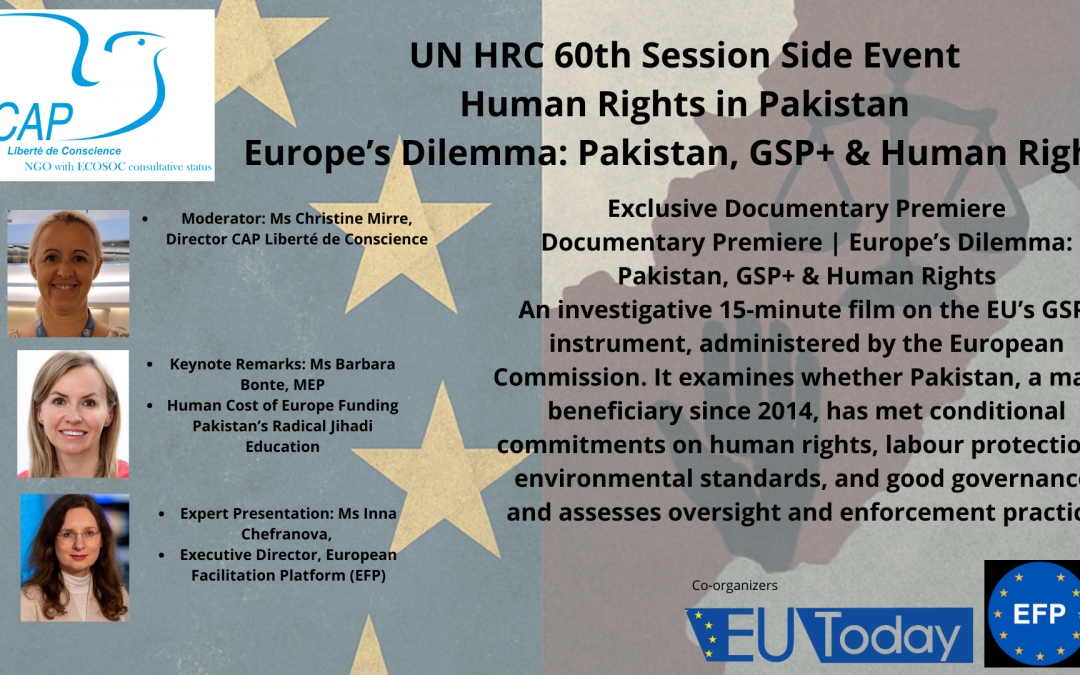
Documentary Premiere | Europe’s Dilemma: Pakistan, GSP+ & Human Rights
An investigative 15-minute film on the EU’s GSP+ instrument, administered by the European Commission. It examines whether Pakistan, a major beneficiary since 2014, has met conditional commitments on human rights, labour protections, environmental standards, and good governance, and assesses oversight and enforcement practice.