by CAP Liberté de Conscience | Nov 23, 2020 | Signing letters, Signing letters 2020
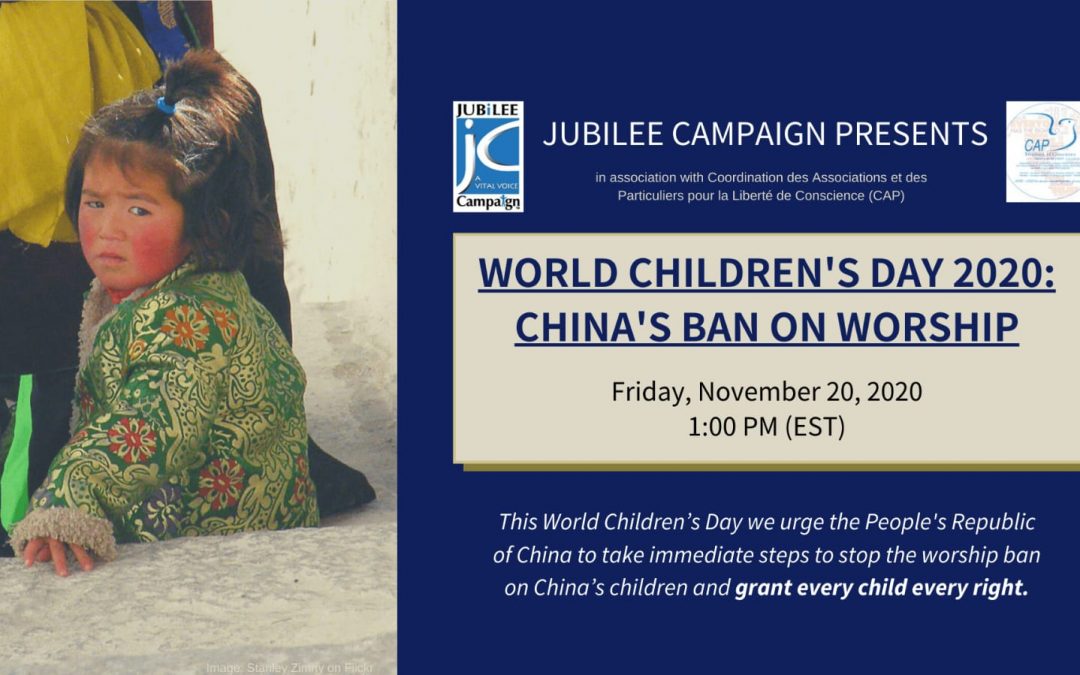
In effect, millions of Chinese children have had their inherent right to freedom of religion wrestled from their grips in contravention of the Convention on the Rights of the Child. China has shut out children from attending any church services or activities in Zhejiang, in Xinjiang the Chinese Communist Party separates Uighur children from their parents and stops Tibetan buddhist children from receiving religious education. The UN Special Rapporteur on freedom of religion or belief stressed that, “Every individual child is a rights holder in his or her own capacity as recognized in Article 14 of the Convention on the Rights of the Child.”
by CAP Liberté de Conscience | Nov 23, 2020 | Chine
China Denies Children Their Freedom of Religion and Belief
by CAP Liberté de Conscience | Nov 23, 2020 | CAP LC Event Coming, Chine
Each November 20, 2020, World Child Day is commemorated around the world. It is the day in 1959 when the UN General Assembly adopted the Declaration of the Rights of the Child. This year, the world focused on the theme that EVERY CHILD HAS EVERY RIGHT. Not so...
by CAP Liberté de Conscience | Nov 23, 2020 | news
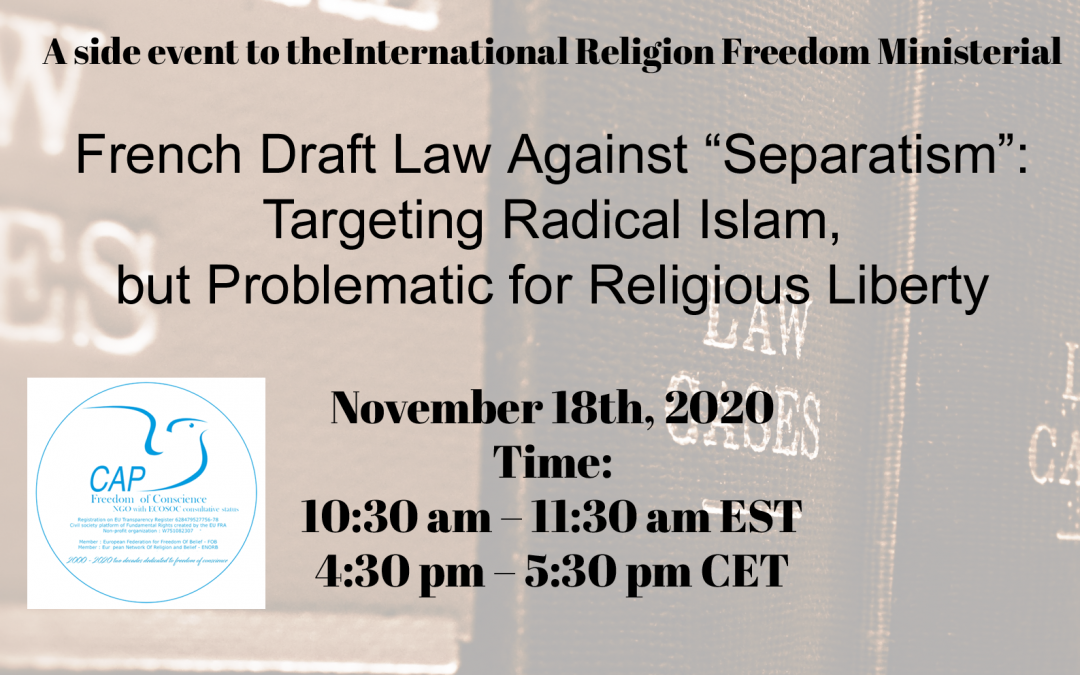
The resurgence in attacks by radical Islamists in France, home to Europe’s largest Muslim population, has rekindled fierce debates about Islam, secularism, and discrimination. The deplorable assassinations in October 2020 of Samuel Paty, a teacher, and three Catholics in the Basilica of Nice have accelerated the political will of the authorities to adopt a law meant to tackle some of the root causes of Islamist terrorism.
by CAP Liberté de Conscience | Nov 23, 2020 | news
Anti-cult organisations UNADFI and CCMM, the controversial state anti-cult institution MIVILUDES and George Fenech (a magistrate, former president of MIVILUDES and MP of the LR opposition party) misled the Minister in charge of citizenship, Marlène Schiappa, about the alleged danger posed by a prayer group.

by CAP Liberté de Conscience | Nov 22, 2020 | news
Today, another heartbreaking murder of a 31 year old Ahmadi doctor Tahir Ahmad.Dr Tahir along with his family was attending the Friday service in the private residence of a member of the community in ‘ Murch Balochan’,District Nankana,Punjab,Pakistan.As he was coming out of the house after the service with his father and two uncles,a teenager shot at them.Dr Tahir died on the spot while three others accompanying him were seriously injured. Dr Tahir’s father Tariq Ahmad is in a critical condition in hospital.The other two badly injured are receiving treatment in hospital.
by CAP Liberté de Conscience | Nov 20, 2020 | CAP LC Event Coming
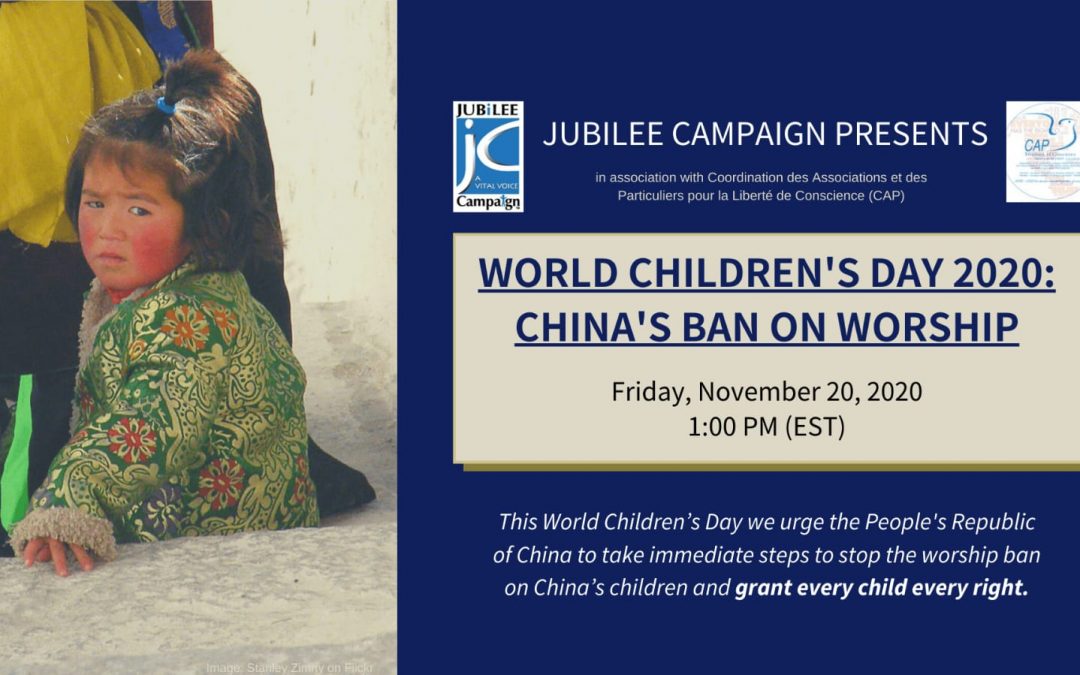
World Children’s Day 2020: China’s Ban on Worship
by CAP Liberté de Conscience | Nov 16, 2020 | CAP LC Event Coming
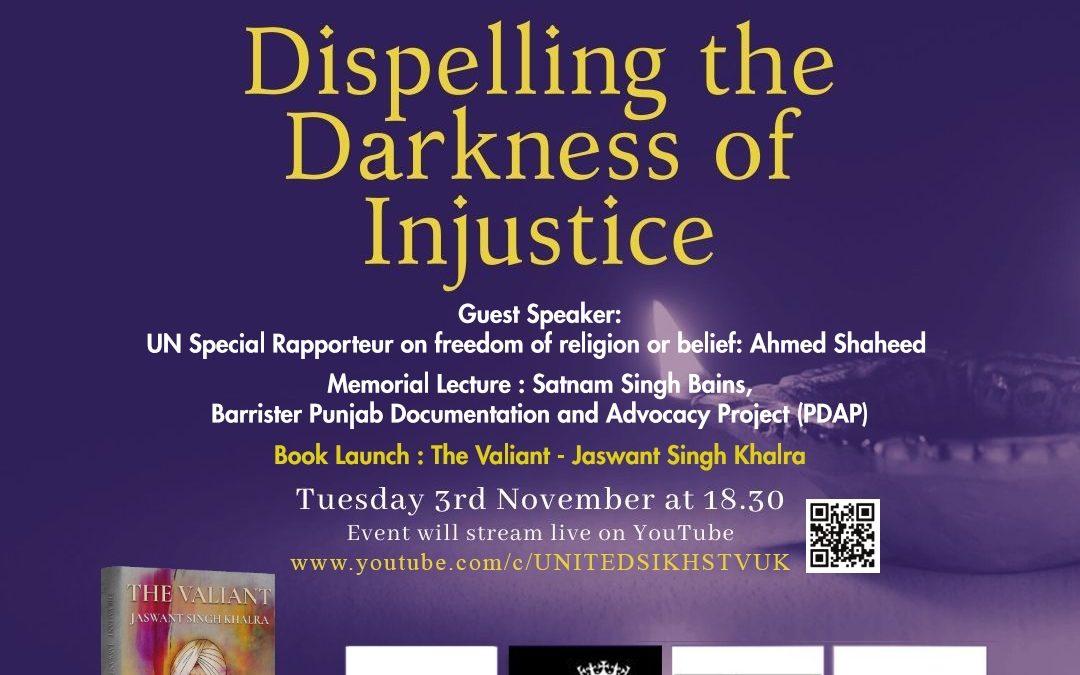
JASWANT SINGH KHALRA MEMORIAL LECTURE & BOOK LAUNCH