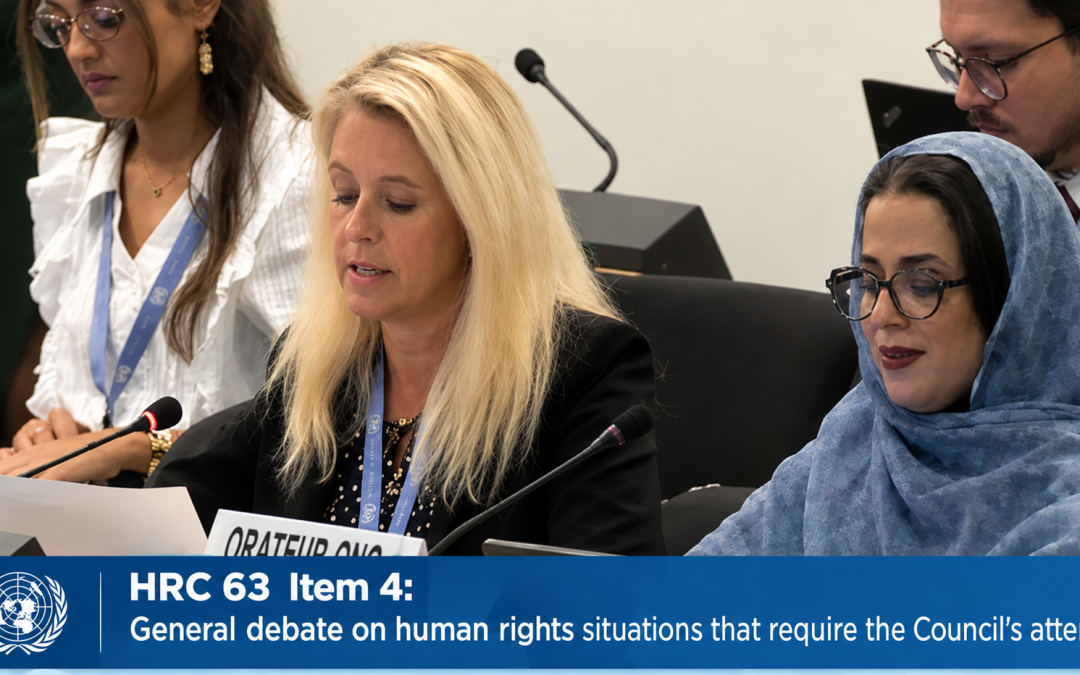
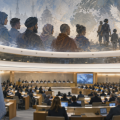
During the general debate under Item 4 of the 63rd session of the Human Rights Council, the Vice President of CAP Freedom of Conscience delivered the following oral statement from the Assembly Hall of the Palais des Nations in Geneva.
We expresses its grave concern about the expanding use of trafficking laws against spiritual and religious communities in the U.S. and elsewhere. In the U.S. OneTaste case, Nicole Daedone and Rachel Cherwitz were sentenced to long prison terms despite no physical coercion, with convictions based solely on psychological influence.Confirming that broad definitions of coercion risk criminalizing ordinary forms of spiritual training, in the OneTaste case testimonies denying harm were excluded and discredited theories of brainwashing shaped the proceedings.This precedent threatens all spiritual, therapeutic, and religious communities, enabling civil or criminal actions based on subjective reinterpretations of belief and belonging.We urges the Second Circuit to restore constitutional limits on appeal and Congress to ensure that trafficking law remains focused on genuine exploitation. Humanitarian considerations also call for reviewing the disproportionate sentences imposed.Protecting freedom of thought, conscience, and belief requires rejecting the misuse of trafficking legislation against peaceful communities.
Source Bitter Winter
Related posts:
 HRC 62 Written Statement : The OneTaste Case and the Expansion of Trafficking Law A Dangerous Precedent with Global Implications
 Maria Shahbaz and the Girls Pakistan’s Courts Refuse to Protect
HRC 62 Written Statement : The Misuse of Tax Systems Against Spiritual Communities and the Two Covenants
Maria Shahbaz and the Girls Pakistan’s Courts Refuse to Protect
HRC 62 Written Statement : The Misuse of Tax Systems Against Spiritual Communities and the Two Covenants
 UN Human Rights Council Adopts Twin Resolutions on Freedom of Religion or Belief and Minority Rights at 61st Session