by CAP Liberté de Conscience | Oct 11, 2026 | France, UN HRC 63
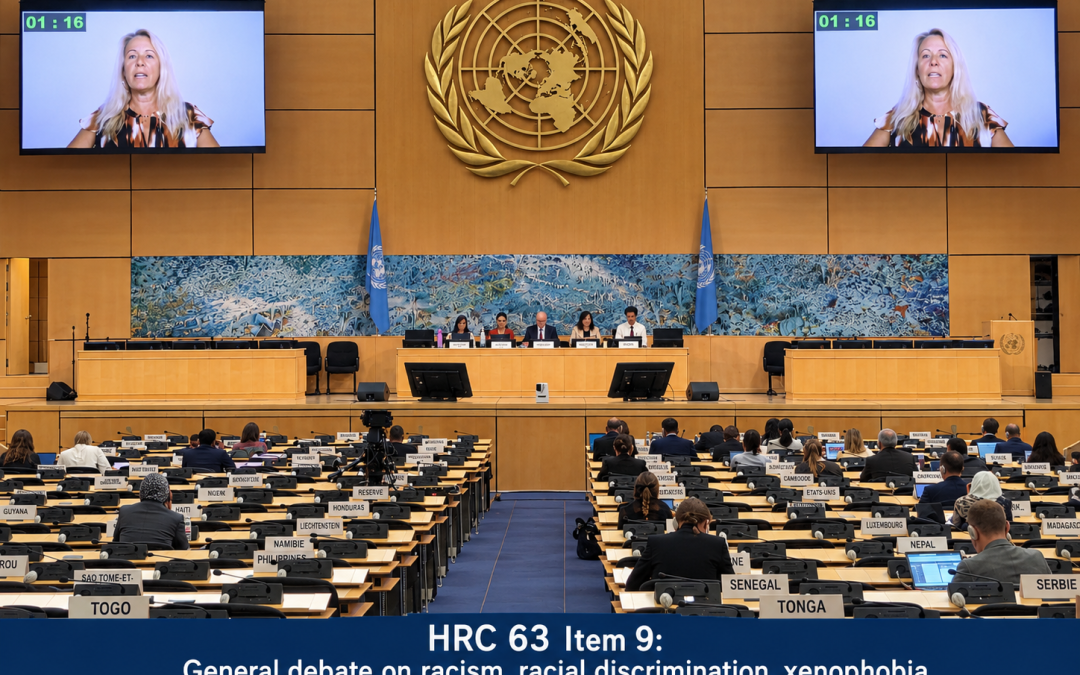
Le jeudi 1er octobre 2026, lors du débat général de l’Item 9 de la 63e session du Conseil des droits de l’Homme des Nations unies, consacré au racisme, à la discrimination raciale, à la xénophobie et aux formes connexes d’intolérance, Christine Mirre, vice-présidente de CAP Liberté de Conscience, a prononcé une déclaration au nom de la Coordination des Associations et des Particuliers pour la Liberté de Conscience, portant sur la politique de la France à l’égard de ses départements d’outre-mer.
by CAP Liberté de Conscience | Oct 9, 2026 | news, UN HRC 63
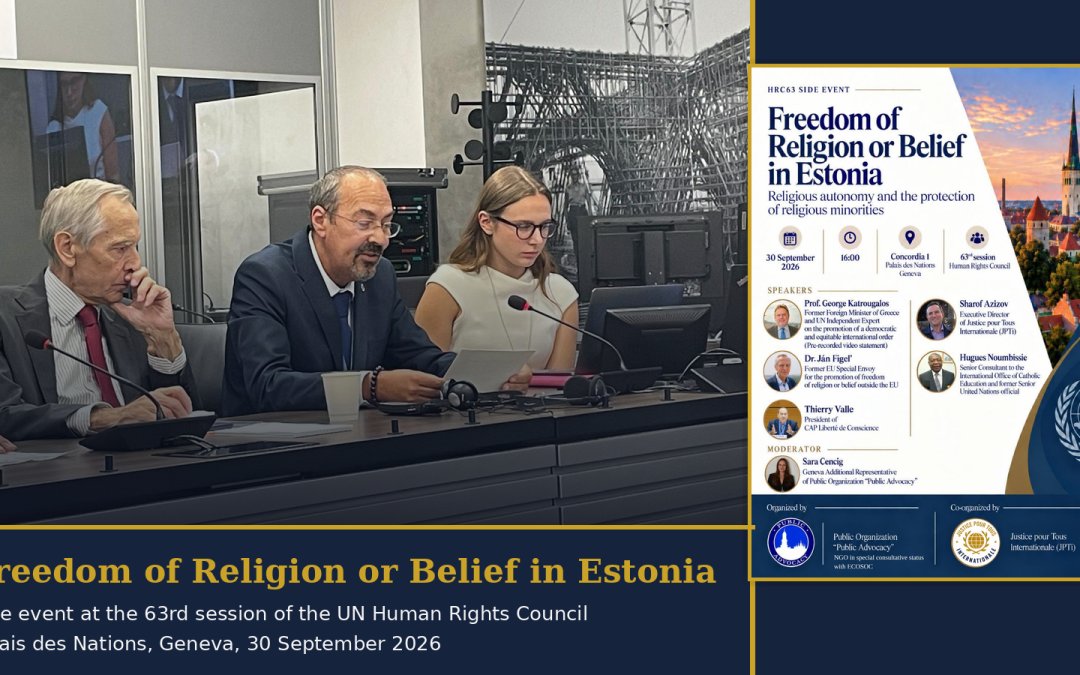
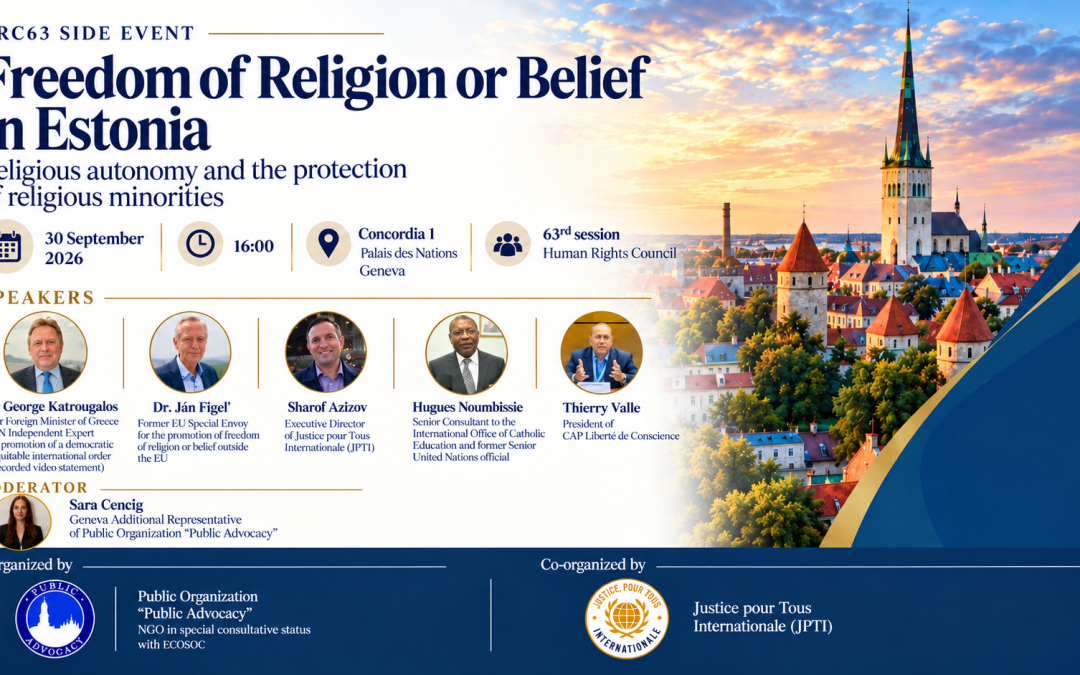
On 30 September 2026, during the 63rd session of the United Nations Human Rights Council, the Public Organization “Public Advocacy”, an NGO in special consultative status with the United Nations Economic and Social Council, convened the side event “Freedom of Religion or Belief in Estonia: Religious Autonomy and the Protection of Religious Minorities” in Concordia 1 at the Palais des Nations in Geneva,
by CAP Liberté de Conscience | Oct 4, 2026 | news, UN HRC 63
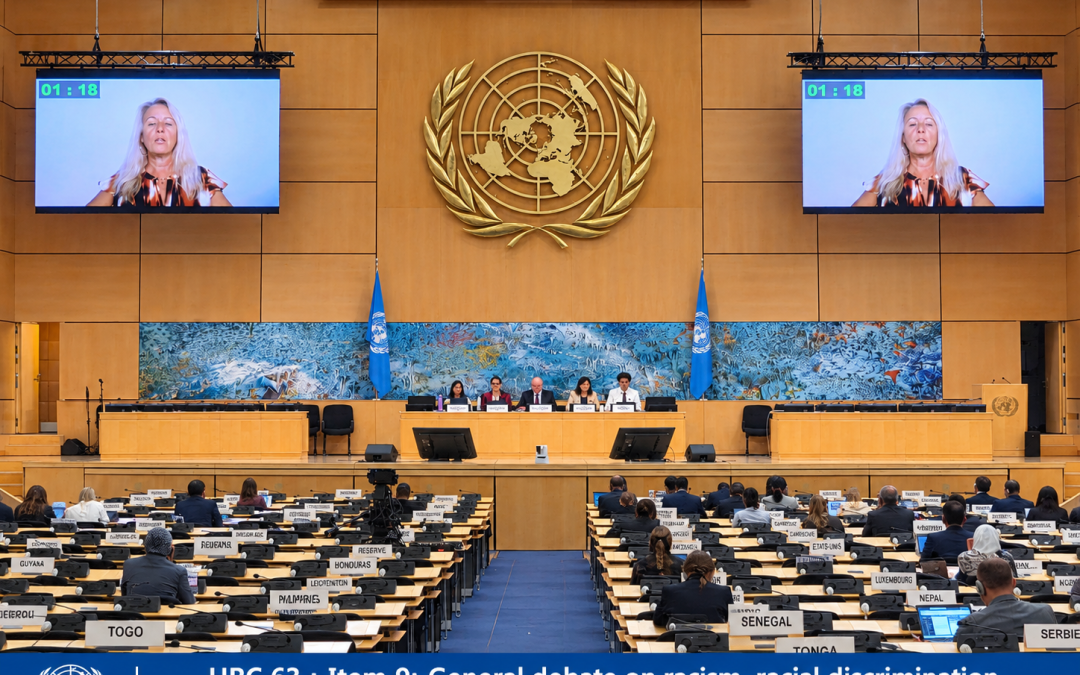
Pakistan appeared twice at the Item 9 general debate on 1 October 2026, in two different capacities. Once as the voice of others: its ambassador delivered the statement of the Organization of Islamic Cooperation to the Human Rights Council, denouncing the desecration of the Quran and attacks on mosques. Once as a target: in the NGO segment that followed, no fewer than eight organizations directed their statements at Islamabad, cataloguing enforced disappearances in Balochistan, life sentences handed down by military courts, the expulsion of 2.3 million Afghans, forced conversions of Hindu girls, and a father of three held incommunicado since a secret trial. A member state that came to accuse spent the afternoon being accused.
by CAP Liberté de Conscience | Oct 2, 2026 | news, UN HRC 63
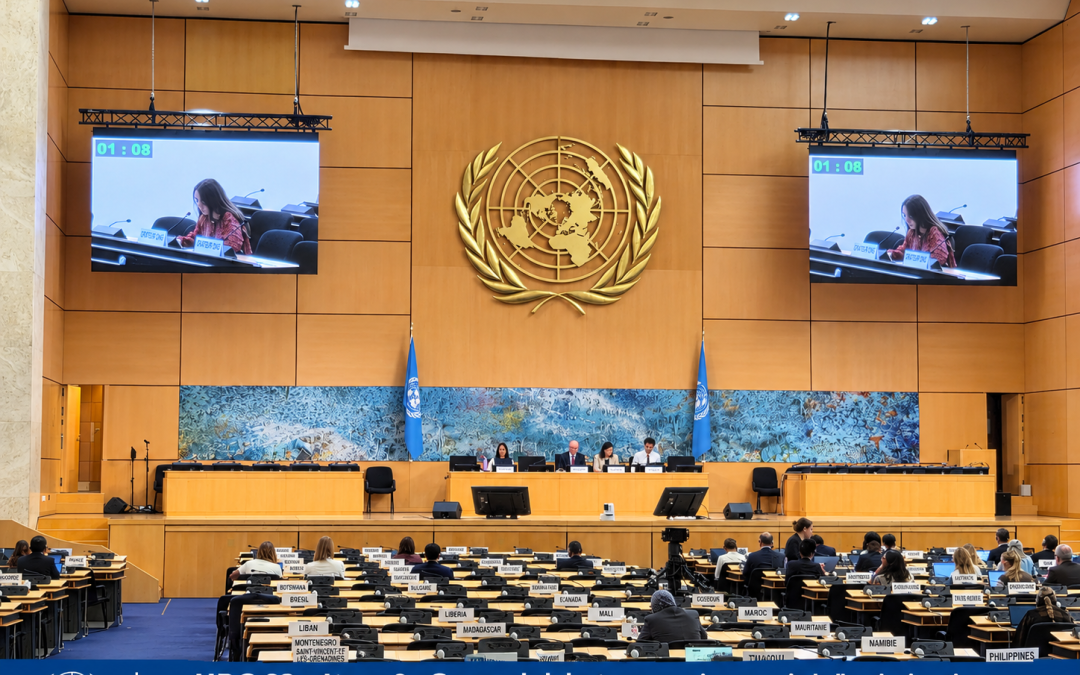
On Thursday 1 October 2026, during the general debate under Item 9 of the 63rd session of the United Nations Human Rights Council, devoted to racism, racial discrimination, xenophobia and related forms of intolerance, Christine Mirre, Vice President of CAP Freedom of Conscience, delivered a statement on behalf of the Coordination of Associations and Individuals for Freedom of Conscience,
by CAP Liberté de Conscience | Oct 2, 2026 | news, UN HRC 63
On Thursday 1 October 2026, during the general debate under Item 9 of the 63rd session of the United Nations Human Rights Council, devoted to racism, racial discrimination, xenophobia and related forms of intolerance, Talia Khan Khattak took the floor to appeal for the release of her father, Idris Khattak, a well-known Pashtun human rights defender from Pakistan.
by CAP Liberté de Conscience | Sep 29, 2026 | news, UN HRC 63, UN UPR
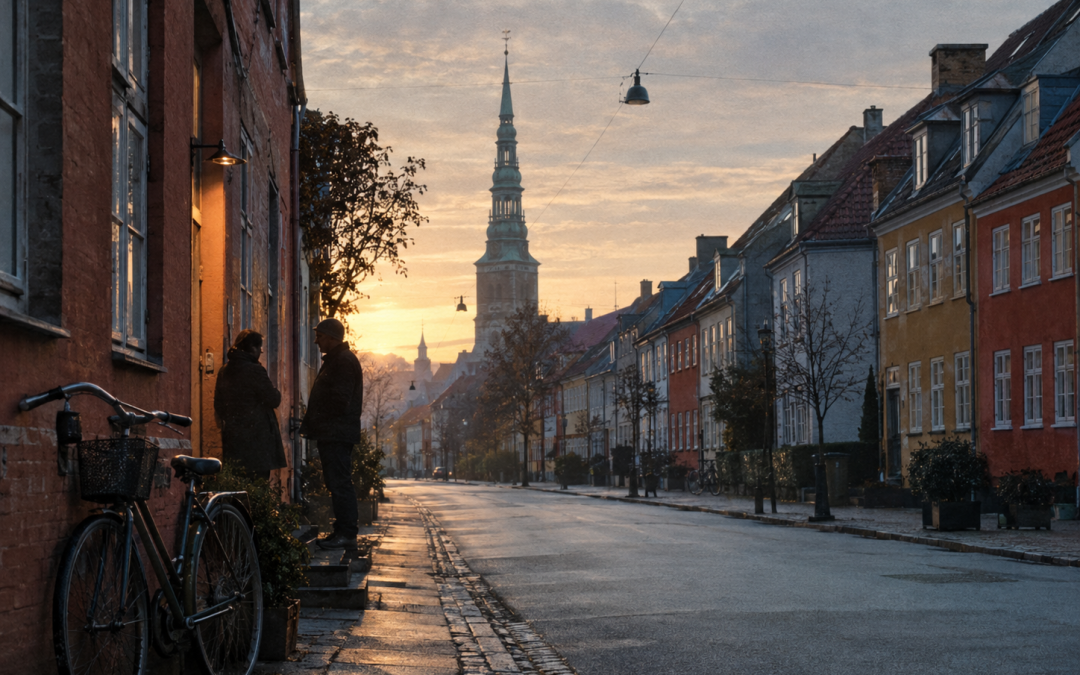
Two hundred and sixty-five recommendations, one hundred and seventy-four accepted, ninety-one merely noted. On paper, Denmark’s fourth Universal Periodic Review ended in September 2026 the way most Western reviews do: with broad acceptance and polite applause. Yet the most telling sentence of the adoption session may not belong to any state. It came from a humanist organization, which observed that not one of the 265 recommendations addressed the place of non-religious life stances in Danish law. In a session where religion, belief and belonging dominated much of the floor, that silence said as much as the speeches.

by CAP Liberté de Conscience | Sep 29, 2026 | news, UN HRC 63
“Arbitrary detention is the quietest of violations. There is no explosion, no headline. A door simply closes and a person disappears from their work, from their family, from public life.”
by CAP Liberté de Conscience | Sep 29, 2026 | news, UN HRC 63
Geneva, 30 September 2026 — On the occasion of the 63rd session of the Human Rights Council, CAP Freedom of Conscience will take part, on 30 September at 16:00 in Concordia 1, Palais des Nations, in a side event dedicated to freedom of religion or belief in Estonia, with a focus on religious autonomy and the protection of religious minorities.