by CAP Liberté de Conscience | Apr 25, 2026 | HRC 61, news
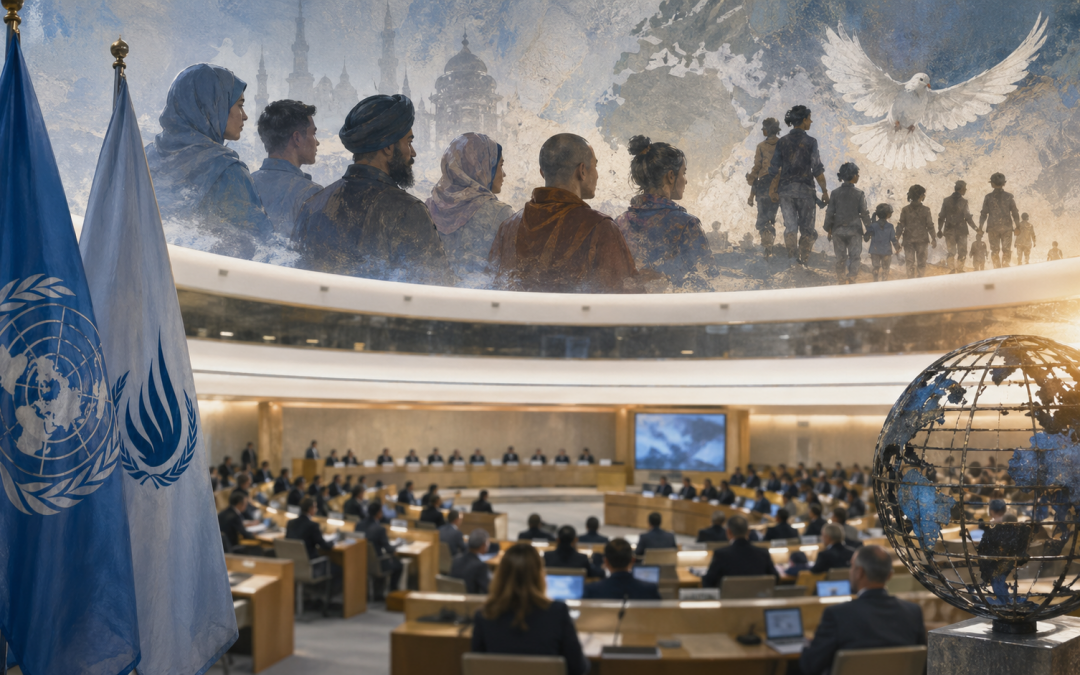
The UN Human Rights Council adopted three consensus resolutions at its 61st session on freedom of religion or belief (A/HRC/61/L.33), minority rights (A/HRC/61/L.20/Rev.1), and combating religious intolerance (A/HRC/61/L.9). All three texts extend monitoring mechanisms, detail state obligations to protect religious minorities, prevent statelessness, counter hate speech, and safeguard places of worship. Sponsored by broad cross-regional coalitions, these instruments reinforce existing standards and provide civil society with a sustained framework for accountability and advocacy.
by CAP Liberté de Conscience | Mar 22, 2026 | Ahamadiyya, news
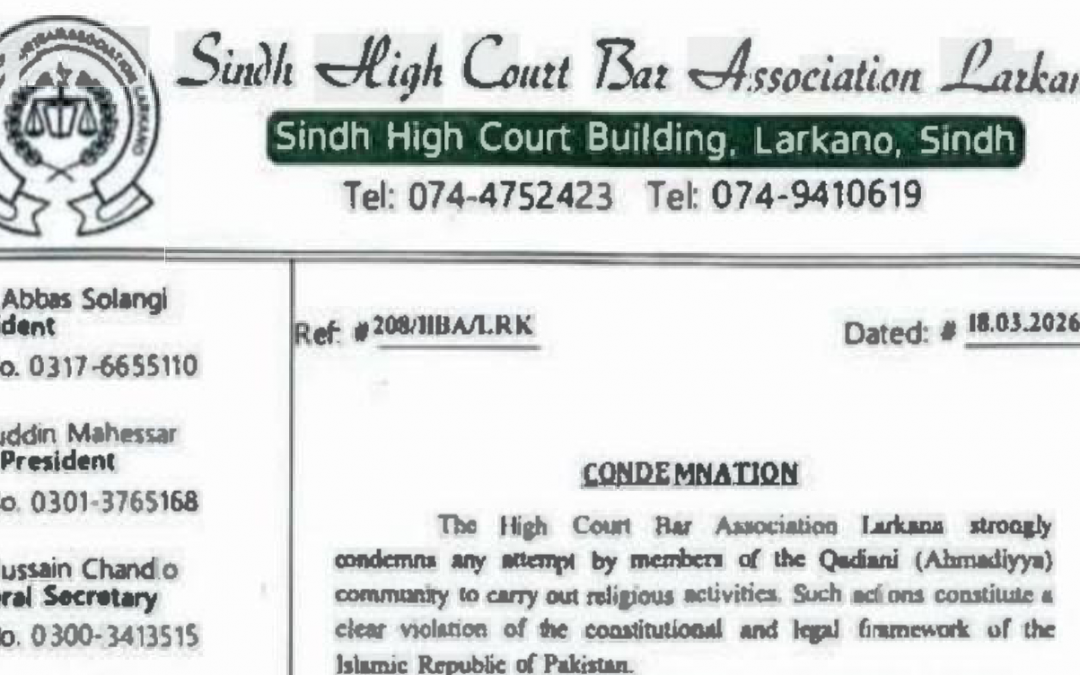
The condemnation by the High Court Bar Association at Larkana calls on authorities to criminally punish Ahmadiyya religious practices in Pakistan. This analysis explains how the text and the provisions it enforces violate the Universal Declaration of Human Rights and the International Covenant on Civil and Political Rights, and reaffirms States’ obligations to ensure freedom of religion or belief for all.
by CAP Liberté de Conscience | Mar 4, 2024 | HRC 55, news
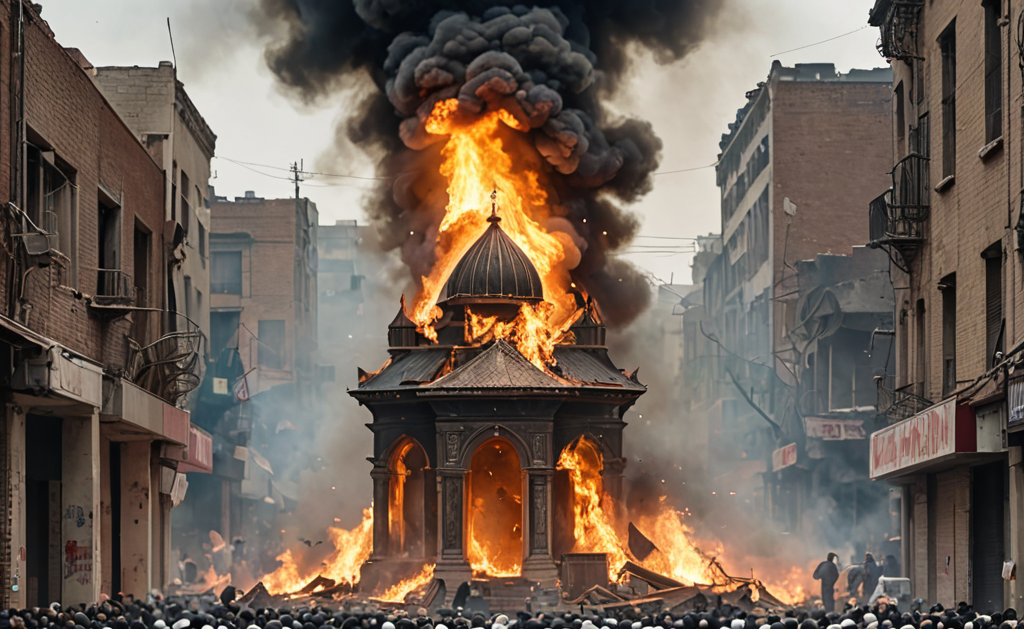
At a time when the fabric of global society is increasingly strained by divisions, the report on hatred based on religion or belief by Nazila Ghanea, the Special Rapporteur on freedom of religion or belief, emerges as a beacon of insight and guidance. This comprehensive document, to be presented at the 55th session of the Human Rights Council, not only examines the diverse manifestations of religious hatred, but also proposes a way forward for nations and societies grappling with this pervasive problem.