By CAP Liberté de Conscience
Sanctuaries Under Fire
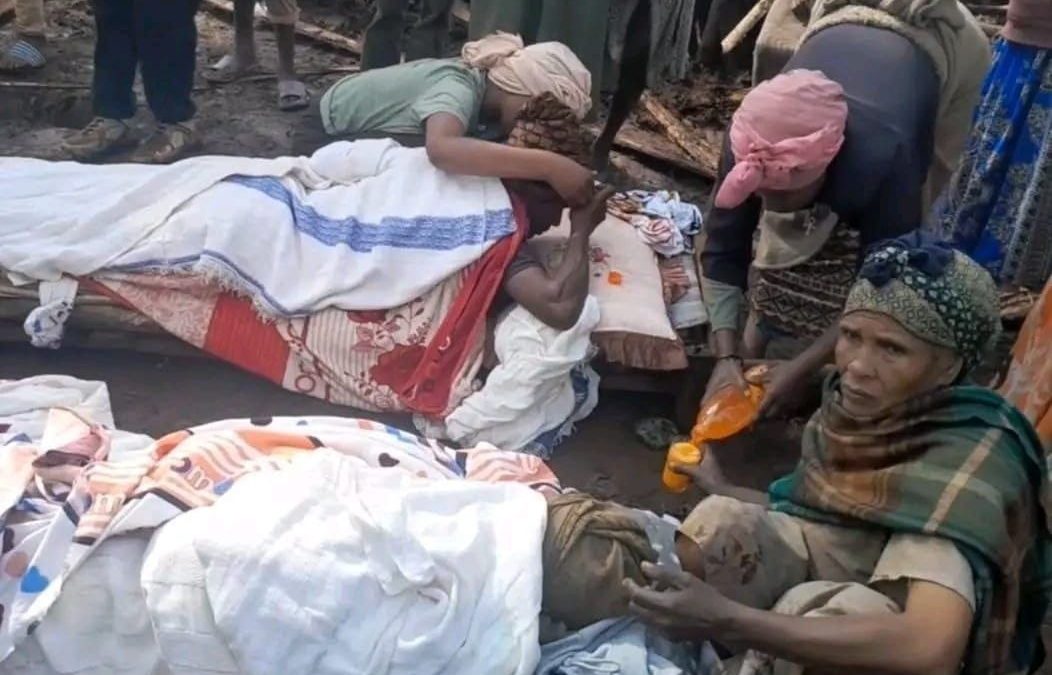
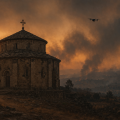
On 22 July 2026, a reported drone strike hit the historic St. Arsema Monastery near Mekane Selam, in Ethiopia’s Amhara Region, killing at least two nuns and six priests and injuring eleven others. The attack flattened parts of the centuries-old compound, destroyed grain stores, and severed water-supply infrastructure. Local reports attribute the strike to the Ethiopian National Defense Force (ENDF), allegedly targeting Fano fighters in the area. No independent military confirmation has been issued, and federal authorities have remained silent.
This incident is not isolated. It forms part of a deepening pattern of violence against the Ethiopian Orthodox Tewahedo Church (EOTC) — one of the oldest Christian denominations in the world — and against the Amhara communities with which it is historically intertwined. From drone strikes on monasteries to the demolition of parish churches, the sanctuaries of Ethiopia’s Orthodox faithful are being turned into sites of bloodshed and rubble.
The Mekane Selam Attack: What We Know
Multiple independent sources have corroborated the 22 July strike on St. Arsema Monastery (also known locally as Abune Aregawi and Saint Arsema Unity Monastery), located near the Abay Bridge in the Mekane Selam area of South Wollo Zone.
According to reports by Borkena and Addis Perspective, the drone strike killed two nuns and six priests on the scene, with dozens more wounded. The monastery’s work facilities were completely destroyed, stored grain supplies were ruined, and the compound’s water tank and infrastructure were severely damaged. Eyewitness accounts cited by these outlets describe a direct hit on a religious site with no confirmed presence of armed combatants at the time of the strike.
The American Ethiopian Public Affairs Committee, in a statement issued following the attack, condemned the targeting of Christian religious communities and reminded the international community that under Article 8 of the Rome Statute of the International Criminal Court, “intentionally directing attacks against buildings dedicated to religion or against civilians may constitute war crimes.” The Committee called upon the United States Government, the European Union, the United Nations, the International Criminal Court, and global Christian and interfaith organizations to “urgently examine these reports and take meaningful action,” including demanding the protection of civilians, supporting credible investigations, and ensuring accountability for violations of international humanitarian law.
The Ethiopian government has not issued any public statement confirming or denying the attack. The Ethiopian Orthodox Tewahedo Church has likewise not provided official notice of casualties at this specific monastery, though the Holy Synod has repeatedly pleaded for peace amid escalating violence against believers across the country.
St. Stephen the Martyr Church: Reports from the Ground
In a separate incident reported by local contacts in the Hadiya and Siltie Diocese, hostile actors demolished St. Stephen the Martyr Church in Tara Homboya Kebele, Ameka Woreda. According to these ground reports, the sanctuary was completely destroyed and Orthodox Christians in the area suffered severe injuries. While this specific incident has not yet been independently verified by international monitors or major media outlets, it fits a documented pattern of church destruction that has intensified across multiple regions of Ethiopia in 2026.
A Systematic Crisis: The Data Speaks
The attack on St. Arsema Monastery is the latest entry in a grim catalogue of violence against Ethiopia’s Orthodox Church. Amhara Advocacy Europe maintains a documented database of attacks on the EOTC that records 39 verified or corroborated incidents since 2015, with a death toll exceeding 945 people, including more than 95 clergy. The database notes that these figures are “a floor, not a ceiling,” given severe information blackouts in conflict zones.
The trajectory is alarming. After isolated incidents between 2015 and 2020, attacks surged during the Tigray war (2020–2022), during which at least 78 priests were reported killed. Since January 2023, the frequency and intensity have converged on the Amhara and Arsi regions. In March 2026, the historic Atronse Maryam Monastery in Mehal Sayint was hit by mortar fire shortly after morning mass, killing six monks, deacons, and religious students and wounding more than twenty. In May–June 2026, a wave of attacks in East Arsi left at least 37 Orthodox Christians dead and the 101-year-old Telata St. Gabriel Church burned to the ground, displacing over 280 households.
Open Doors UK, which monitors persecution against Christians worldwide, reported in June 2026 that “Orthodox Christians have been forced from the homes where they were born, raised and built their lives. Their houses were singled out and burned solely because of their religion.” The Arsi Diocese itself described the pattern as one in which “residents fled with nothing but their faith.”
International human rights bodies have taken note. In February 2026, the Global Centre for the Responsibility to Protect warned that Ethiopia “stands on the brink of renewed large-scale conflict,” citing OHCHR reports of heavy weapons use, drone strikes, and arbitrary detentions. Genocide Watch, in a May 2026 assessment, highlighted “systematic attacks and abuses targeting the Amhara community” and the persecution of Ethiopian Orthodox Christians as part of a broader crisis of state-sponsored violence.
A Record of Advocacy
CAP LC has consistently raised the alarm before the United Nations Human Rights Council, the European Parliament, and other international forums regarding the escalating persecution of the Amhara people.
Related posts:
 HRC 62 : Ethiopia: The Amhara Cry at the United Nations — A Silence the Council Must Break
 Ethiopian Regime’s Escalated Military Campaign in the Amhara Region Amidst Performative “National Dialogue”
 UN HRC 61 1000 days of conflict. 1000 days of civilians suffering the first-hand consequences of the fighting
 The United Nations High Commissioner for Human Rights Addresses Critical Violations in Sudan: Key Findings and International Recommendations