CAP Liberté de Conscience calls on the OSCE to examine the use of national security instruments to suppress academic freedom and independent scholarly opinion.
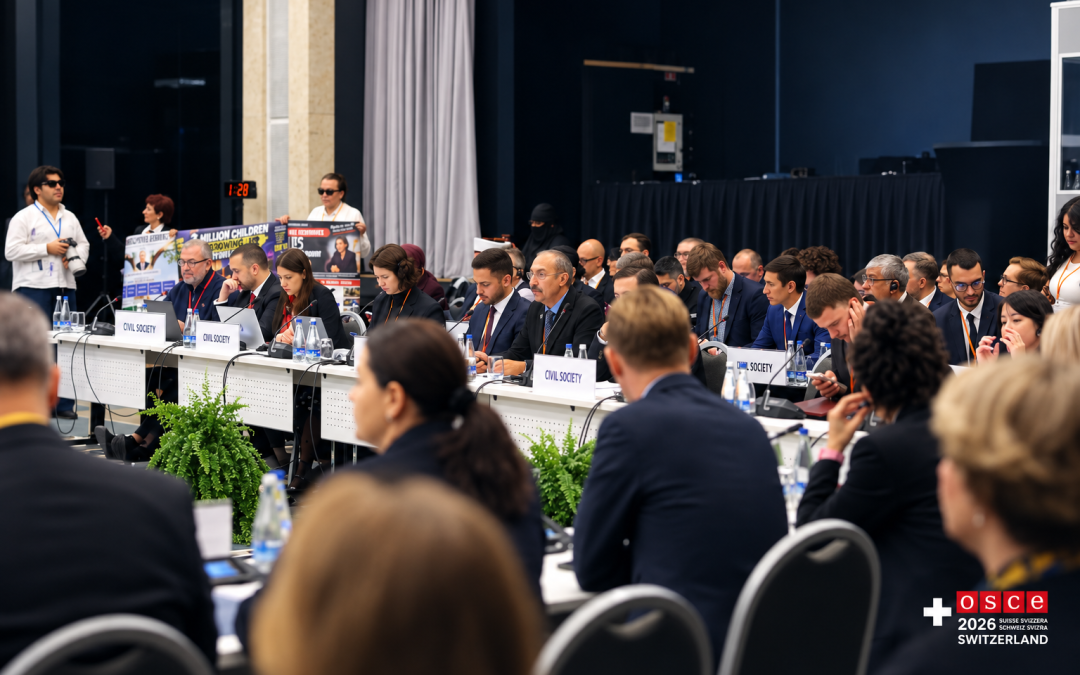
Warsaw, 13 October 2026. As part of Plenary Session 8 on Fundamental Freedoms II, which addresses freedom of expression, freedom of the media and the safety of journalists, CAP LC submitted a written statement on the case of Dr. Valery Engel, an Israeli historian born in Russia, visiting scholar at Rutgers University and consultant to the United Nations on counter terrorism, whose permanent residence permit was revoked by Latvia in February 2026 and who was banned from entering the country. The statement, prepared for the session held on Tuesday, 13 October 2026 at 10:30, is available on the ODIHR conference platform under reference CIO.WHDC.CS/0165/26/EN.A decision taken without trial or criminal case
Dr. Engel lived in Latvia for twenty years. He is married to a citizen of the country and raised his daughter there. In February 2026, the Latvian authorities revoked his permanent residence permit, citing his participation in what they called Russian non military measures of influence. No trial was held and no criminal case was opened. Dr. Engel has never supported President Putin and has openly condemned Russia’s war against Ukraine.
Before the courts, the charges concerned his scholarly work: an article published in the American online journal Fair Observer, in which he argued that sanctions against Russia should be targeted at military capabilities rather than ordinary citizens, and annual scientific monitoring reports on the situation of minorities in Europe and North America, presented at this very OSCE platform in Warsaw since 2015. Dr. Engel was editor in chief of these studies, which contain criticism of Western countries and Ukraine as well as of Russia. Scholarly reviews from leading American, Canadian and European academics were ignored by the court, part of the file was classified, Dr. Engel was denied remote participation in the proceedings, and his wife was not allowed to appeal the decision separating her from her husband.
Academic freedom equated with a security threat
A representative of the Latvian State Security Service stated in court that the purpose of the entry ban was to ensure that Dr. Engel could not comfortably remain in the European Union. For CAP LC, this confirms that the measure is not about security but about punishment for independent opinion. The case exposes a systemic problem in which independent scholarly opinion is treated as a threat to national security, subjective assessments by security services replace evidence, and political considerations replace independent judicial review. If this can happen to a United Nations expert, what awaits ordinary citizens?
Three calls to the OSCE
In its statement, CAP LC calls on the OSCE to:
- Demand that Latvia provide an explanation for this decision;
- Ensure Dr. Engel’s access to the classified materials in his case and his right to a fair trial;
- Assess the practice of using the national security threat instrument to suppress academic freedom.
CAP LC stresses that academic freedom and the right to independent opinion must not become bargaining chips, and that Europe must respond to this case if it wishes to remain faithful to its values.
261012090557_0165 VALERY ENGELRelated posts:
 Oral statement on the situation of Chairman Lee Man-hee in pretrial detention in the Republic of Korea — General Debate under Item 3, 63rd session of the Human Rights Council
 Pakistan: An Ahmadi Official Removed from Post After Extremist Pressure Campaign
 MIVILUDES: CAP LC’s follow up report to the OSCE published at the Warsaw Human Dimension Conference
 EU Parliament and Council Take Firm Stand on Sudan Crisis as Accountability Efforts Widen