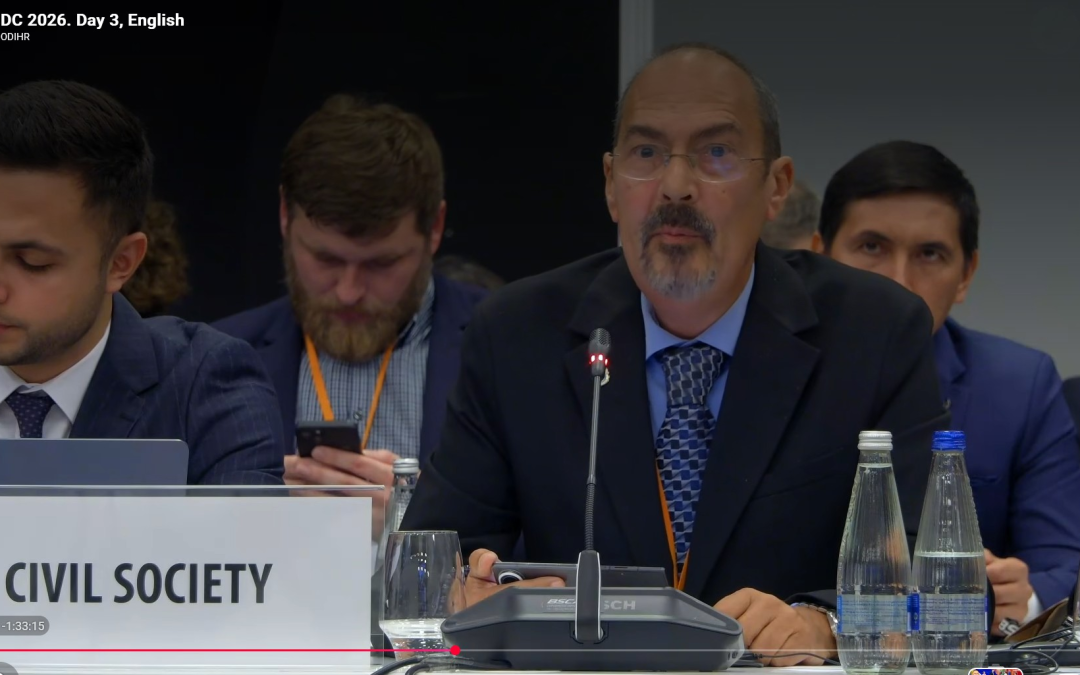
During Plenary Session 3 of the Warsaw Human Dimension Conference 2026, devoted to fundamental freedoms including freedom of thought, conscience, religion or belief, CAP Freedom of Conscience delivered a statement highlighting a development in the United States that raises significant concerns.
Warsaw Human Dimension Conference 2026
Plenary Session 3: Fundamental Freedoms I, including:
– Freedom of peaceful assembly and association
– Human rights defenders
– National human rights institutions
– Freedom of thought, conscience, religion or belief
CAP‑LC draws the attention to a development within the United States that raises significant concerns. Recent applications of the Trafficking Victims Protection Act have extended the notion of coercion into areas involving spiritual instruction and communal life. In the federal OneTaste case, two individuals received severe prison sentences although no physical compulsion, threats, or restraint were alleged. The proceedings relied on psychological influence and on theories of coercive persuasion that academic experts and courts have long rejected. Testimonies from participants reporting no harm were not admitted.
This approach creates a precedent that may expose religious, therapeutic, and self‑development communities to civil or criminal liability based on subjective reinterpretations of belief and belonging. CAP‑LC urges the United States Congress, currently reauthorizing the TVPA, to adopt safeguards ensuring that trafficking legislation remains directed at genuine exploitation. A careful review of the sentences imposed would also reflect humanitarian considerations and reinforce OSCE-recommended commitments to human rights and fundamental freedoms.
261007111917_0085 OneTaste Case at the Warsaw Human Dimension Conference 2026
Related posts:
 UN Human Rights Council Adopts Twin Resolutions on Freedom of Religion or Belief and Minority Rights at 61st Session
 YURII SHELIAZHENKO*, conscientious objector to military service and human rights defender, under immediate threat
 Pakistan: A Two Week Escalation Against the Ahmadiyya Muslim Community
 Pakistan Human Rights Fact Sheet No. 2: August 2026 Developments, Protection Concerns and Priority Recommendations