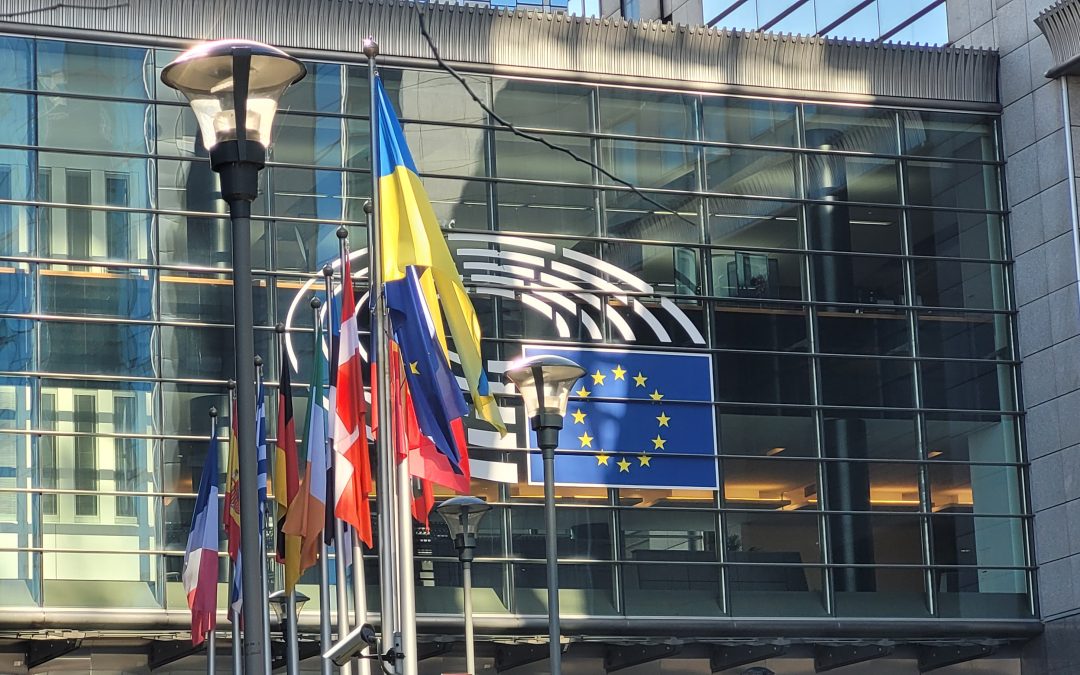
On 12 November 2026, the European Parliament demanded that Russia immediately, safely and unconditionally return all deported and forcibly transferred Ukrainian children to unoccupied Ukraine. It stated that their return is an obligation under international law and must never be used as a bargaining instrument or made conditional on territorial concessions or other political agreements. CAP Liberté de Conscience welcomes this position. A child cannot be treated as an instrument of war or as material for forced assimilation.[1]
The resolution puts figures and dates on a continuing injustice. According to Ukrainian authorities, 20,651 cases of deportation and forcible transfer had been verified by September 2026. Ukraine’s Children of War portal recorded 2,752 children returned by 28 October 2026. Parliament stresses that the actual number of children taken remains unknown. These figures require a precise response for every child, not a general settlement that leaves families without information.[2]
Forced assimilation attacks the child’s identity
The resolution describes a policy that extends beyond displacement. It cites changes to names and birth records, accelerated access to Russian citizenship and unlawful adoptions. Such practices obstruct identification and family reunification. They also attack the child’s right to preserve an identity formed through family life and cultural belonging.[3]
Education is part of this policy. Parliament demands that children in temporarily Russian occupied territories have access to education in their native language, including through Ukrainian institutions and online learning, without intimidation or punishment. It also denounces compulsory Russian educational programmes and military instruction, including weapons and tactical drone training. For CAP Liberté de Conscience, these practices attack freedom of conscience because they seek to impose allegiance and suppress the child’s ability to form convictions and maintain cultural belonging without coercion.[4]
Parliament refers to the OSCE Moscow Mechanism report of 9 July 2026, which concluded that Russia had established a systematic and deliberately designed policy of indoctrination and militarisation. The resolution places responsibility for this policy within an organised state structure rather than treating it as the isolated conduct of individual institutions.[5]
Families need verifiable information and independent access
The resolution demands complete and verifiable information from Russia and Belarus on each child’s identity, whereabouts, health condition and legal status. It calls on Russia to grant immediate and regular access without obstruction to the International Committee of the Red Cross, UNICEF, the Office of the United Nations High Commissioner for Human Rights and other competent independent organisations. These are operational requirements. Without records and access, families must search through altered documents and institutional secrecy.[6]
Return must be followed by durable support. Parliament calls for psychological care, healthcare, education, legal assistance, restoration of identity documents and family based care. It also requests dedicated funding for Ukrainian civil society and investigative organisations that maintain verified databases and preserve evidence of children’s identities. CAP Liberté de Conscience supports this approach because documentation serves reunification while preserving the possibility of later legal proceedings.[7]
Accountability must reach those who organise the system
The resolution declares that Russia’s actions towards Ukrainian children meet the legal definition of genocide and calls on European Union Member States to recognise them officially as such. It also recalls the arrest warrants issued by the International Criminal Court against the Russian President and the Russian Commissioner for Children’s Rights. Parliament’s own declaration and the judicial proceedings must remain clearly distinguished, but the resolution leaves no ambiguity about its legal assessment.[8]
Accountability cannot stop at senior leaders. Parliament calls for investigation and prosecution across the chain of officials and collaborators who carried out these acts. It also urges the Council and the Commission to examine the documented involvement of companies and other enablers involved in financing or logistics, including the findings concerning Gazprom and Rosneft, and to apply restrictive measures where the applicable legal criteria are met. This final qualification matters because sanctions must rest on verified facts and legal grounds.[9]
CAP Liberté de Conscience supports Parliament’s insistence that the safe and unconditional return of every child remain central to diplomatic initiatives and any genuine peace agreement. Parliament has asked the European Commission to report on the implementation and 2026 results of the measures agreed within the International Coalition for the Return of Ukrainian Children. That report will provide a concrete test of the commitments made on 12 November.[10]
[1]European Parliament resolution of 12 November 2026, P10_TA(2026)0380, paragraphs 1 and 21. Official text
[2]European Parliament resolution of 12 November 2026, P10_TA(2026)0380, recital B. Official text
[3]European Parliament resolution of 12 November 2026, P10_TA(2026)0380, recital J and paragraphs 6 and 8. Official text
[4]European Parliament resolution of 12 November 2026, P10_TA(2026)0380, paragraphs 9 and 10. Official text
[5]European Parliament resolution of 12 November 2026, P10_TA(2026)0380, recitals F and G. Official text
[6]European Parliament resolution of 12 November 2026, P10_TA(2026)0380, paragraphs 6, 7 and 12. Official text
[7]European Parliament resolution of 12 November 2026, P10_TA(2026)0380, paragraphs 14 and 16. Official text
[8]European Parliament resolution of 12 November 2026, P10_TA(2026)0380, recital K and paragraphs 3 and 18. Official text
[9]European Parliament resolution of 12 November 2026, P10_TA(2026)0380, paragraphs 17 and 18. Official text
[10]European Parliament resolution of 12 November 2026, P10_TA(2026)0380, paragraphs 15 and 21. Official text
Related posts:
 Maria Shahbaz and the Girls Pakistan’s Courts Refuse to Protect
 European Parliament Resolution on Systemic Oppression in Iran: A Call for International Accountability
 International Day of the Girl 2026: End Child Marriage and Invest in Girls’ Rights
 The Kawel Massacre and the European Parliament’s Response to Nigeria’s Christian Persecution