What is “Coordination des Associations et des Particuliers pour la Liberté de Conscience” (CAP Freedom of Conscience)?
CAP Freedom of Conscience is a secular European NGO with United Nations Consultative Status, created in 1995 and dedicated to protect the Right of Freedom of Religion and Belief.
CAP Freedom of Conscience combats all forms of discrimination based on religion or belief by alerting European and International bodies.
CAP Freedom of Conscience collects testimonies of discrimination and human rights violations affecting religious or belief communities in order to disseminate them to international bodies, and in order to raise awareness and inform them as well as to generate debate on the protection of Freedom of Religion and Belief.
CAP Freedom of Conscience also advocates for any religious or spiritual group facing discrimination to have their right to Freedom of Religion and Belief recognized.
CAP Freedom of Conscience is a member of the European Federation for Freedom of Belief (FOB), European Network Of Religion and Belief (ENORB) and participate to the Civil Society Platform of Fundamental Rights created by the EU Fundamental Rights Agency DAFOH Partners in Combating and Preventing Forced Organ Harvesting
HRC 60 side-event : Silencing dissent: mass trials in the United Arab Emirates
On Tuesday 2 October, CAP Freedom of Conscience co-sponsored an event at the Geneva Press Club on “Silencing dissent: mass trials in the United Arab Emirates”. During the 59th session of the Human Rights Council, the organisation had hosted a similar side event at the United Nations to highlight the crisis of arbitrary detention in the United Arab Emirates following mass trials, and to examine the country’s persistent failure to comply with international standards.
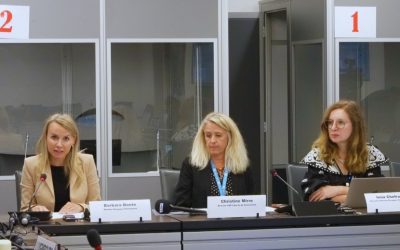
HRC 60 Side-event : UNHRC60 side event urges UN to press European Commission on GSP+ enforcement in Pakistan
A side event at the UN Human Rights Council’s 60th session (UNHRC60) in Geneva urged the Council’s mechanisms to place structured pressure on the European Commission to apply the EU’s Generalised Scheme of Preferences Plus (GSP+) as written, using six procedural steps outlined by Inna Chefranova of the European Facilitation Platform (EFP).
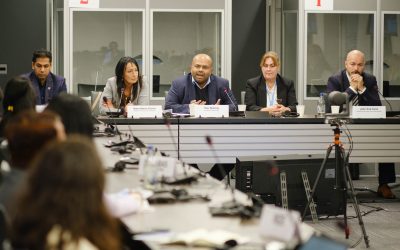
HRC 60 side-event : Indo-Mediterranean: Women and Children Are Extremism’s First Victims
weakest and most vulnerable individuals, especially women and children. The world is also connected, with the effects of radicalization being felt in Europe and South Asia with extremism, anti-semitism and terrorism as well as indoctrination of youth more rampant. To discuss this a side event is being held at the United Nations Human Rights Council’s 60th session.
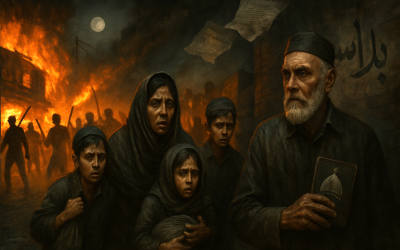
Piro Chak Burning: Ahmadi Homes, Shops, and Lives Under Siege in Sialkot, Punjab, Pakistan
On the evening of September 28, 2025, a violent mob descended upon the Ahmadiyya residents of Piro Chak, a village in the Sialkot district of Punjab, Pakistan. The assailants, incited by religious hatred, systematically attacked homes, shops, and vehicles belonging to members of the community. Eyewitness accounts and journalistic reports describe a scene of terror and destruction, with properties set ablaze and looted while the occupants fled for their lives.
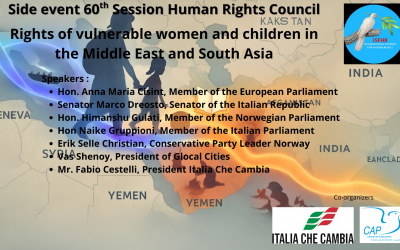
UN HRC 60 de-Event: The Impact of Extremism on Women & Vulnerable Groups in the Indo-Mediterranean Region
In a globally interconnected world, the effects of extremism originating in hotspots like South Asia, Somalia, and Yemen are felt socially, economically, and politically across continents. This panel will bring together experts to highlight the condition of women, children, and vulnerable groups who bear the brunt of this instability. The discussion aims to foster a multidisciplinary understanding and seek pathways for their protection and empowerment.
HRC 60 oral statement : Item 4: General debate on the human rights situations that require the Council’s attention
We and Human Rights Without Frontiers are deeply concerned about the fact that chaplaincy activities of Jehovah’s Witnesses in a number of Belgian prisons are in practice not allowed any more.
Since 2019, Jehovah’s Witnesses have written six times to the Minister of Justice and have initiated legal proceedings due to this discrimination experienced in four Belgian prisons: Nivelles, Leuze, Dinant, and Leuven Central.
CAP Freedom of Conscience involvement UNITED NATIONS
LASTEST NEWS
Adhésion CAP LC 2024
CAP Freedom of Conscience involvement in Europe
SUPPORT CAP Liberté de Conscience
IBAN BE61 9670 0987 0017
SWIFT / BIC TRWIBEB1XXX
Address
TransferWise Europe SA
Square de Meeûs 38 bte 40
Brussels
1000
Belgium

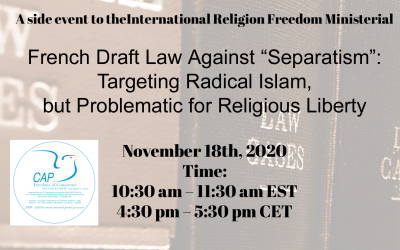
International Religion Freedom Ministerial side event Separatism and Human Rights
France has a serious problem with radical Islam, but the draft law against “separatism” announced by President Macron may create more problems than it claims to solve.
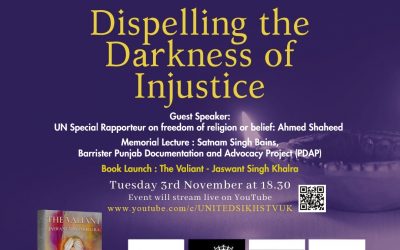
Jaswant Sikh Khalra Memorial Lecture 2020 and book launch
The event will comprise an address by the UN Special Rapporteur for Freedom of Religion or Belief, a Memorial Lecture on the continuing work of Khalra and the UK launch of the highly anticipated book on Khalra’s life “The Valiant”.
FoRB Roundtable Brussels-EU
FoRB Roundtable Brussels-EU
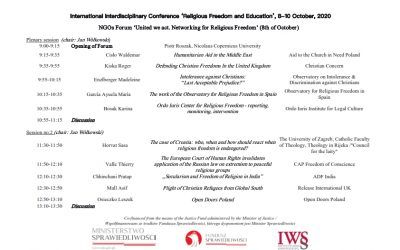
International Interdisciplinary Conference ‘Religious Freedom and Education’, 8-10 October, 2020
THE EUROPEAN COURT OF HUMAN RIGHTS INVALIDATES APPLICATION OF THE RUSSIAN LAW ON EXTREMISM TO PEACEFUL RELIGIOUS GROUPS
In a landmark decision, Ibragim Ibragimov and others v. Russia (28 August 2018), the European Court of Human Rights has invalidated the Russian Extremism Law as far as the Law’s definition of extremism allows the ban of religious publications even in the absence of any violence or hate speech.
The decision is extremely significant as the Human Rights Court found that any application of the Extremism Law must be based on actual incitement to hatred or violence in order to justify any restriction of freedom of expression of religious beliefs.
It is also significant that the Human Rights Court rejected the national courts’ reliance and wholesale adoption of the findings of one-sided experts’ reports to rule religious publications extremist, without any meaningful and independent analysis by the courts of materials characterized as extremist by experts retained by the government. The Human Rights Court also emphasized that the civil or criminal parties must be given an opportunity to adduce counter-evidence to counter extremist charges. The total process relied on by the courts in Russia in extremist cases has constituted a breach of the equality of arms principle, a practice of Russian courts which has become systematic in the recent years.
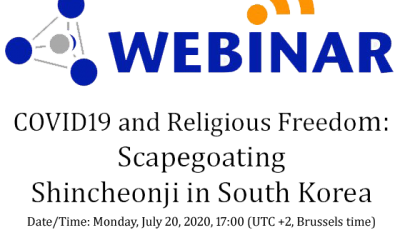
COVID-19 and Religious Freedom: Scapegoating Shincheonji in South Korea
A webinar organized by the Center for Studies on New Religions (CESNUR) and Human Rights Without Frontiers (HRWF) Date/Time: Monday, July 20, 2020, 17:00 (UTC +2, Brussels time) The fact that one member of Shincheonji, a Christian new religious movement in South...

Media Briefing The Coronavirus and the Shincheonji Church: True facts and fake news
Tuesday, 17 March 2020, 14h Press Club Brussels Europe Rue Froissart 95, 1000 Brussels In 2019, while no one knew the Shincheonji Church outside of South Korea, Massimo Introvigne, Willy Fautré and Rosita Soryté were studying the Shincheonji Church in Seoul, meeting...