What is “Coordination des Associations et des Particuliers pour la Liberté de Conscience” (CAP Freedom of Conscience)?
CAP Freedom of Conscience is a secular European NGO with United Nations Consultative Status, created in 1995 and dedicated to protect the Right of Freedom of Religion and Belief.
CAP Freedom of Conscience combats all forms of discrimination based on religion or belief by alerting European and International bodies.
CAP Freedom of Conscience collects testimonies of discrimination and human rights violations affecting religious or belief communities in order to disseminate them to international bodies, and in order to raise awareness and inform them as well as to generate debate on the protection of Freedom of Religion and Belief.
CAP Freedom of Conscience also advocates for any religious or spiritual group facing discrimination to have their right to Freedom of Religion and Belief recognized.
CAP Freedom of Conscience is a member of the European Federation for Freedom of Belief (FOB), European Network Of Religion and Belief (ENORB) and participate to the Civil Society Platform of Fundamental Rights created by the EU Fundamental Rights Agency DAFOH Partners in Combating and Preventing Forced Organ Harvesting

UN Special Rapporteur Examines Freedom of Religion or Belief in Relation to Death and Burial Practices
The report “How freedom of religion or belief relates to death and honouring the deceased” (A/HRC/61/50) was published on 7 January 2026 by the United Nations Human Rights Council. The document was authored by Nazila Ghanea, UN Special Rapporteur on freedom of religion or belief, and submitted to the Council’s sixty-first session pursuant to resolution 58/5.
Annual Report of the Special Representative of the United Nations Secretary-General on Violence against Children: Cyberbullying and Protection Issues
The report A/HRC/61/38, entitled “Annual Report of the Special Representative of the Secretary-General on Violence against Children,” was published on December 24, 2025, and submitted to the Human Rights Council for its 61st session, scheduled for February 23 to April 2, 2026. Prepared by Najat Maalla M’jid, Special Representative of the United Nations Secretary-General on Violence against Children, this document outlines the mandate established by General Assembly resolution 62/141.
Submission to UN Special Rapporteur Details Systemic Discrimination in German Public Procurement
In preparation for the upcoming official visit to Germany by the United Nations Special Rapporteur on the promotion and protection of the right to freedom of opinion and expression, the non-governmental organization CAP Liberté de Conscience (CAP LC) has submitted a comprehensive report addressing specific concerns regarding systemic discrimination. The Special Rapporteur’s visit, scheduled to take place from 26 January to 6 February 2026, aims to assess the situation of freedom of opinion and expression in the country. This assessment includes reviewing legal, institutional, and policy frameworks that protect or restrict these fundamental rights, as well as measures addressing intolerance, negative stereotyping, and stigmatization.
CAP Liberté de Conscience Submission to the UN Special Rapporteur on Violence Against Women and Girls
In response to the Call for Input issued by the United Nations Special Rapporteur on violence against women and girls for her report to the 62nd session of the Human Rights Council, CAP Liberté de Conscience has submitted a comprehensive analysis titled “CAP LC report of the Special Rapporteur on violence against women and girls.” The submission, accessible via the official call https://www.ohchr.org/en/calls-for-input/2026/call-input-report-special-rapporteur-violence-against-women-and-girls-62nd, examines specific forms of institutional violence faced by mothers in contexts of intrafamilial violence, with a focus on the French socio-judicial system.
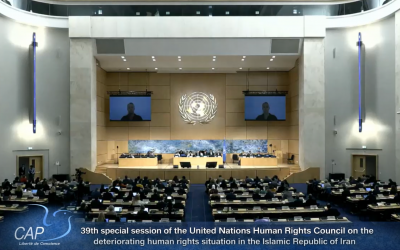
Oral Statement – 39th Special Session of the UN Human Rights Council on Iran
CAP Liberté de Conscience is deeply concerned about the deteriorating human rights situation in Iran, particularly regarding religious freedom and the persecution of religious minorities.
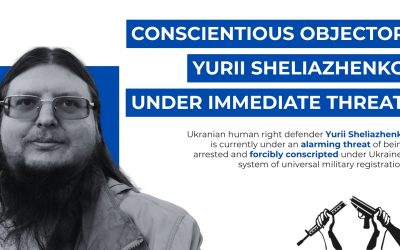
YURII SHELIAZHENKO*, conscientious objector to military service and human rights defender, under immediate threat
The undersigned organizations express serious concern regarding the continued persecution of Ukrainian human rights defender Yurii Sheliazhenko, a conscientious objector to military service. He is currently under an alarming threat of being arrested and forcibly conscripted under Ukraine’s system of universal military registration, which is enforced through coercive measures including arbitrary detentions and forced transfers to conscription offices. Such practices effectively compel conscientious objectors to act against their beliefs and directly violate Article 18(2) of the ICCPR, which prohibits coercion impairing freedom of thought, conscience and religion.
CAP Freedom of Conscience involvement UNITED NATIONS
LASTEST NEWS
Adhésion CAP LC 2024
CAP Freedom of Conscience involvement in Europe
SUPPORT CAP Liberté de Conscience
IBAN BE61 9670 0987 0017
SWIFT / BIC TRWIBEB1XXX
Address
TransferWise Europe SA
Square de Meeûs 38 bte 40
Brussels
1000
Belgium

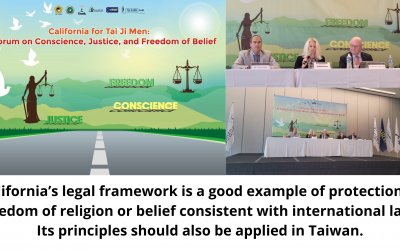
California for Tai Ji Men: Conscience, Justice and Freedom of Belief
California, the Golden State, is known for its stunning landscapes, thriving entertainment industry, and diverse culture. Beneath the surface of this multifaceted state lies another remarkable aspect of its diversity: religious pluralism. From the Spanish missions of the 18th century to the bustling metropolises of the 21st century, California’s religious landscape has evolved into a vibrant tapestry of faiths and beliefs.
Ahmadi Muslims in Germany who’ve fled state persecution are being deported back to Pakistan and it’s putting their lives at risk
Thousands of Ahmadi Muslims in Germany who have fled severe religious persecution in Pakistan are awaiting a decision on their asylum applications. They belong to a religiously and politically persecuted minority – the Ahmadiyya Muslim Community. It is recognized around the world by human rights groups that Ahmadi Muslims are constantly, ruthlessly persecuted.
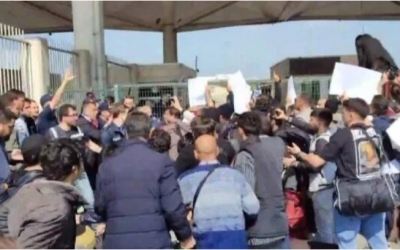
Turkish court rules in favor of 101 Ahmadi religion detainees
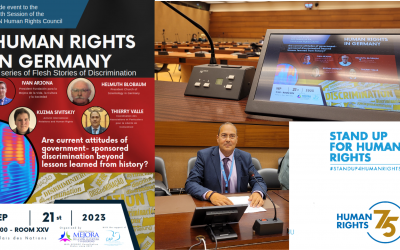
In a side-event of the 54th session of the Human Rights Council in Germany, director of CAP Freedom of Conscience, Thierry Valle, has delivered an oral statement emphasizing the urgent need to grant asylum/humanitarian visas to the 101 members through EU consulates in Turkey as the only way available means to safeguard their right to freedom of religion and their right to life and freedom from inhumane or degrading treatment.
Side-event of the 54th session of the Human Rights Council UN Human Rights In Germany
Since May of this year, over 100 Ahmadis from various countries where they were heavily persecuted, have been detained by the Turkish authorities in Edirne Immigration Detention Center. They want to apply for asylum in an EU country.
Those people from the Ahmadi Religion of Peace and Light do not want to stay in Turkey, another Muslim majority country, where people also consider them infidels and treat them as such.
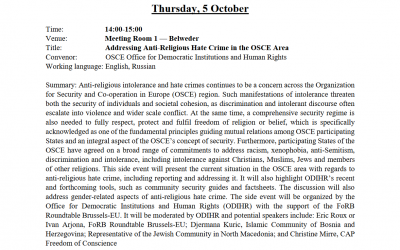
Addressing Anti-Religious Hate Crime in the OSCE Area
Anti-religious intolerance and hate crimes continues to be a concern across the Organization for Security and Co-operation in Europe (OSCE) region. Such manifestations of intolerance threaten both the security of individuals and societal cohesion, as discrimination and intolerant discourse often escalate into violence and wider scale conflict. At the same time, a comprehensive security regime is also needed to fully respect, protect and fulfil freedom of religion or belief, which is specifically acknowledged as one of the fundamental principles guiding mutual relations among OSCE participating States and an integral aspect of the OSCE’s concept of security. Furthermore, participating States of the OSCE have agreed on a broad range of commitments to address racism, xenophobia, anti-Semitism, discrimination and intolerance, including intolerance against Christians, Muslims, Jews and members of other religions. This side event will present the current situation in the OSCE area with regards to anti-religious hate crime, including reporting and addressing it. It will also highlight ODIHR’s recent and forthcoming tools, such as community security guides and factsheets. The discussion will also address gender-related aspects of anti-religious hate crime. The side event will be organized by the Office for Democratic Institutions and Human Rights (ODIHR) with the support of the FoRB Roundtable Brussels-EU

Strengthening Freedom of Thought Conscience Religion and Belief in Yemen
Violence in Yemen in 2023 has seen an uptick , including an increase in targeted attacks and violent speech towards religious minorities. On 25th May 2023, Houthi militia stormed a peaceful meeting of Bahais in Sana’a and arrested 17, including five women, and continue to detain 11 of them incommunicado. In 2 June 2023, the UN High Commissioner on Human Rights reported how the Mufti Shamseddin Sharafeddin, appointed by leaders of the Houthi militant movement, accused the detained Bahais of being apostates and saying “they should be killed,” if they did not repent Similar hate speech and incitement has been recorded in Yemen towards Christian converts and others since the start of the conflict and was raised during the virtual 53rd Human Rights Council parallel event co-sponsored by the Slovak Republic Bureau of the Special Envoy for Freedom of Religion or Belief.