What is “Coordination des Associations et des Particuliers pour la Liberté de Conscience” (CAP Freedom of Conscience)?
CAP Freedom of Conscience is a secular European NGO with United Nations Consultative Status, created in 1995 and dedicated to protect the Right of Freedom of Religion and Belief.
CAP Freedom of Conscience combats all forms of discrimination based on religion or belief by alerting European and International bodies.
CAP Freedom of Conscience collects testimonies of discrimination and human rights violations affecting religious or belief communities in order to disseminate them to international bodies, and in order to raise awareness and inform them as well as to generate debate on the protection of Freedom of Religion and Belief.
CAP Freedom of Conscience also advocates for any religious or spiritual group facing discrimination to have their right to Freedom of Religion and Belief recognized.
CAP Freedom of Conscience is a member of the European Federation for Freedom of Belief (FOB), European Network Of Religion and Belief (ENORB) and participate to the Civil Society Platform of Fundamental Rights created by the EU Fundamental Rights Agency DAFOH Partners in Combating and Preventing Forced Organ Harvesting
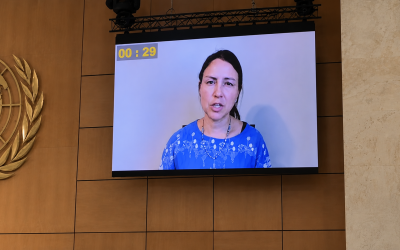
HRC 62 : Japan’s Unification Church Dissolution: A Second-Generation Member’s Plea for Freedom of Assembly and Association
At HRC 62, CAP LC presents the testimony of Yoshiko Nishi, a second-generation Unification Church member from Japan. Following the Tokyo High Court’s dissolution order, liquidators seized all churches nationwide within hours, depriving members of their place of worship, community, and right to peaceful assembly. This arbitrary state dismantling, amplified by stigmatizing media coverage, violates the rights to freedom of peaceful assembly and of association under international human rights law.
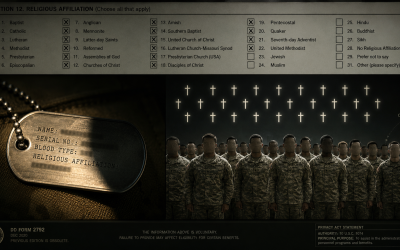
Pentagon Slashes Religious Affiliation Codes from 211 to 31, Sparks Debate Over Mormon Inclusion and State Neutrality
The Pentagon reduced military religious codes from 211 to 31 in June 2026, ostensibly to streamline chaplaincy resources. The initial omission of the Mormon Church sparked political backlash, revealing deeper tensions about state categorisation of faith. The subsequent removal of all “Christian” labels from denominations avoided doctrinal adjudication but flattened meaningful diversity. Minority faiths — atheists, Pagans, Wiccans — were collapsed into generic categories, raising concerns about invisibility and equitable resource allocation within an increasingly Christian-framed military culture.

Serbia Condemned by the European Court of Human Rights for Banning Falun Gong Protests During Xi Jinping’s Visit
The European Court of Human Rights unanimously condemned Serbia for banning three peaceful Falun Gong assemblies during Chinese President Xi Jinping’s 2016 state visit to Belgrade. The Court ruled that Serbian authorities relied on speculative security grounds rather than concrete evidence, violating Article 11 (freedom of peaceful assembly) and Article 13 (right to an effective remedy) of the European Convention. The judgment reinforces that diplomatic considerations cannot override fundamental rights in democratic societies.
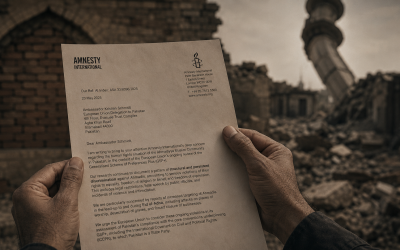
Pakistan: Amnesty International Warns of Escalating Persecution Against Ahmadis Ahead of Eid
Amnesty International wrote to Punjab’s Chief Minister on 21 May 2026 warning of escalating persecution against Ahmadis ahead of Eid ul-Adha. IHRC documented the demolition of minarets in Jamalpur under mob pressure. CAP LC and IHRC welcome Amnesty’s intervention, noting that Pakistan’s GSP+ reapplication must account for these documented violations of religious freedom.

The EU Reinforces Trade Preferences: Human Rights and the GSP+ Revision
The Council of the EU formally adopted the revised GSP regulation on 22 May 2026, expanding human rights conditionality from 27 to 32 conventions. CAP Liberté de Conscience and IHRC welcome this reinforcement, noting that Pakistan’s GSP+ reappraisal offers an opportunity to address documented persecution of the Ahmadiyya community. The organisations urge the Commission to use the review to transform words into acts.

Afghanistan: The European Parliament Confronts Institutionalised Gender Apartheid
The European Parliament adopted resolution TA-10-2026-0186 on 21 May 2026, condemning the Taliban’s Criminal Procedure Code for Courts as institutionalised gender apartheid. The text demands repeal of the Code, ICC warrant enforcement, and recognition of slavery and child marriage as crimes against humanity. CAP Liberté de Conscience supports this resolution, highlighting the intersection of religious freedom and gender persecution in Afghanistan.
CAP Freedom of Conscience involvement UNITED NATIONS
LASTEST NEWS
Adhésion CAP LC 2024

CAP Freedom of Conscience involvement in Europe
SUPPORT CAP Liberté de Conscience
IBAN BE61 9670 0987 0017
SWIFT / BIC TRWIBEB1XXX
Address
TransferWise Europe SA
Square de Meeûs 38 bte 40
Brussels
1000
Belgium

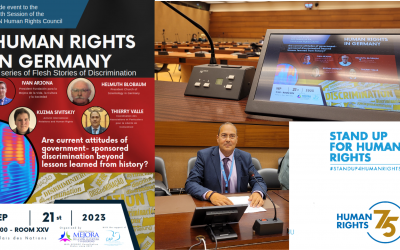
Side-event of the 54th session of the Human Rights Council UN Human Rights In Germany
Since May of this year, over 100 Ahmadis from various countries where they were heavily persecuted, have been detained by the Turkish authorities in Edirne Immigration Detention Center. They want to apply for asylum in an EU country.
Those people from the Ahmadi Religion of Peace and Light do not want to stay in Turkey, another Muslim majority country, where people also consider them infidels and treat them as such.
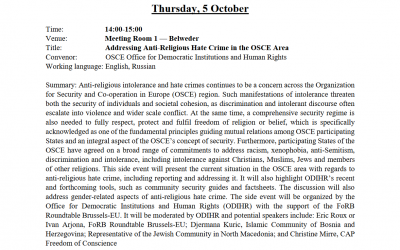
Addressing Anti-Religious Hate Crime in the OSCE Area
Anti-religious intolerance and hate crimes continues to be a concern across the Organization for Security and Co-operation in Europe (OSCE) region. Such manifestations of intolerance threaten both the security of individuals and societal cohesion, as discrimination and intolerant discourse often escalate into violence and wider scale conflict. At the same time, a comprehensive security regime is also needed to fully respect, protect and fulfil freedom of religion or belief, which is specifically acknowledged as one of the fundamental principles guiding mutual relations among OSCE participating States and an integral aspect of the OSCE’s concept of security. Furthermore, participating States of the OSCE have agreed on a broad range of commitments to address racism, xenophobia, anti-Semitism, discrimination and intolerance, including intolerance against Christians, Muslims, Jews and members of other religions. This side event will present the current situation in the OSCE area with regards to anti-religious hate crime, including reporting and addressing it. It will also highlight ODIHR’s recent and forthcoming tools, such as community security guides and factsheets. The discussion will also address gender-related aspects of anti-religious hate crime. The side event will be organized by the Office for Democratic Institutions and Human Rights (ODIHR) with the support of the FoRB Roundtable Brussels-EU

Strengthening Freedom of Thought Conscience Religion and Belief in Yemen
Violence in Yemen in 2023 has seen an uptick , including an increase in targeted attacks and violent speech towards religious minorities. On 25th May 2023, Houthi militia stormed a peaceful meeting of Bahais in Sana’a and arrested 17, including five women, and continue to detain 11 of them incommunicado. In 2 June 2023, the UN High Commissioner on Human Rights reported how the Mufti Shamseddin Sharafeddin, appointed by leaders of the Houthi militant movement, accused the detained Bahais of being apostates and saying “they should be killed,” if they did not repent Similar hate speech and incitement has been recorded in Yemen towards Christian converts and others since the start of the conflict and was raised during the virtual 53rd Human Rights Council parallel event co-sponsored by the Slovak Republic Bureau of the Special Envoy for Freedom of Religion or Belief.
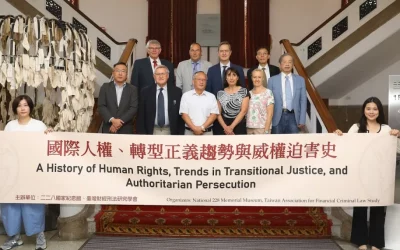
Axiom Justice Has No Time Limit Government transitional justice should not set its own limits
Whether or not transitional justice is implemented is the basic condition for examining the establishment of a human rights nation. As Christine Mire, vice president of the French CAP-LC (Coordination for Freedom of Conscience of Individuals and Organizations), emphasized, Taiwan is one of the few countries that can turn the relics of past government abuses into museums, and despite Taiwan’s commitment to democracy, the failure to solve the Taijimen case has tarnished Taiwan’s reputation as a democracy. The government should face up to the fact that Taiwan’s international reputation should be preserved.
Transformational justice stepping on thunder? European and American Human Rights Experts Warn: Be Careful of Ruining the Democracy of Taiwan
Christine Mirre, vice-chairman of CAP-LC, the French Coordination for Individuals and Organizations Freedom of Conscience, said that what she felt during this visit was that the police and soldiers who originally rescued Taiwanese from Japanese occupation turned out to be protectors. oppressor. Taiwan must really turn the page, otherwise it will be a wound that has not yet healed. This is indeed unknown to Western countries. She believes that this is indeed a big wound for Taiwan.
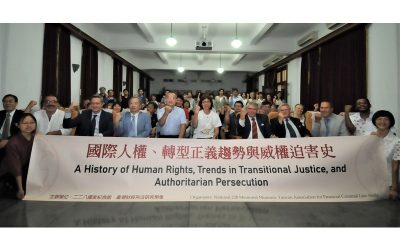
Are there too many human rights mines in Taiwan? International Human Rights Forum Calls for Cancellation of Transitional Justice Timeline
Christine Mirre, vice-chairman of the French Coordination for Freedom of Conscience of Individuals and Organizations, said that what she felt during this visit was that the police and soldiers who were supposed to be protectors of Taiwan from the Japanese occupation turned into oppressors. Taiwan must really turn the page, otherwise it will be a wound that has not yet healed. This is indeed unknown to Western countries. She believes that this is indeed a big wound for Taiwan.