What is “Coordination des Associations et des Particuliers pour la Liberté de Conscience” (CAP Freedom of Conscience)?

CAP Freedom of Conscience is a secular European NGO with United Nations Consultative Status, created in 1995 and dedicated to protect the Right of Freedom of Religion and Belief.

CAP Freedom of Conscience combats all forms of discrimination based on religion or belief by alerting European and International bodies.

CAP Freedom of Conscience collects testimonies of discrimination and human rights violations affecting religious or belief communities in order to disseminate them to international bodies, and in order to raise awareness and inform them as well as to generate debate on the protection of Freedom of Religion and Belief.

CAP Freedom of Conscience also advocates for any religious or spiritual group facing discrimination to have their right to Freedom of Religion and Belief recognized.

CAP Freedom of Conscience is a member of the European Federation for Freedom of Belief (FOB), European Network Of Religion and Belief (ENORB) and participate to the Civil Society Platform of Fundamental Rights created by the EU Fundamental Rights Agency DAFOH Partners in Combating and Preventing Forced Organ Harvesting

European Parliament Resolution on Systemic Oppression in Iran: A Call for International Accountability

European Parliament Resolution on Systemic Oppression in Iran: A Call for International Accountability

On 12 February 2026, the European Parliament adopted Resolution P10_TA(2026)0046 addressing systemic oppression, inhumane conditions and arbitrary detentions by the Iranian regime. This text represents the institution’s continued engagement with human rights violations in Iran, building upon multiple prior parliamentary resolutions on the country. The resolution was adopted under emergency procedures (Rule 150(5) and 136(4)), underscoring the urgency with which the Parliament views the situation.

read more
European parliament raises urgent questions on antisemitism in Eu schools following UNESCO survey

European parliament raises urgent questions on antisemitism in Eu schools following UNESCO survey

On 30 January 2026, a cross-party group of eighteen European Parliament members submitted a written question to the European Commission regarding alarming findings in a UNESCO report on antisemitism in European Union educational institutions. The initiative, led by MEPs from multiple political groups—including the European Conservatives and Reformists, Renewists, and the Patriotic Europe faction—signals growing parliamentary concern over documented prevalence of antisemitic incidents within classrooms across the bloc.

read more
The United Nations High Commissioner for Human Rights Addresses Critical Violations in Sudan: Key Findings and International Recommendations

The United Nations High Commissioner for Human Rights Addresses Critical Violations in Sudan: Key Findings and International Recommendations

The Office of the United Nations High Commissioner for Human Rights (OHCHR) published a comprehensive report (A/HRC/61/24) on 13 January 2026, presenting an assessment of the human rights situation across Sudan. The document covers the period from 16 November 2024 to 15 November 2025 and was submitted to the Human Rights Council at its sixty-first session, responding to Council resolution 57/2.
read more
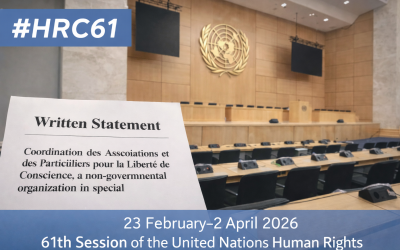
HRC 61 Written Statement Ensuring Justice in the Sudan: Extending Accountability for Crimes Against Humanity

HRC 61 Written Statement Ensuring Justice in the Sudan: Extending Accountability for Crimes Against Humanity

At the 61st session of the United Nations Human Rights Council, CAP Liberté de Conscience submitted a written statement highlighting the catastrophic human rights situation in Sudan and the urgent need for extended accountability. The submission documents heinous crimes committed by the Rapid Support Forces (RSF), including summary executions, sexual violence, and mass killings in areas like El Fasher and the Zamzam camp, while noting the RSF’s systematic attempts to destroy evidence. CAP LC emphasizes the necessity of extending the UN Security Council’s ICC referral beyond Darfur to cover all regions of Sudan, ensuring justice for crimes against humanity nationwide. Additionally, the statement exposes the critical role of foreign actors, particularly the United Arab Emirates, in supplying weapons that sustain the RSF’s operations. Consequently, CAP LC calls on Member States to cease arms transfers to the RSF, condemn the UAE’s involvement, impose sanctions on perpetrators and enablers, and support international mechanisms for evidence preservation and accountability.

read more
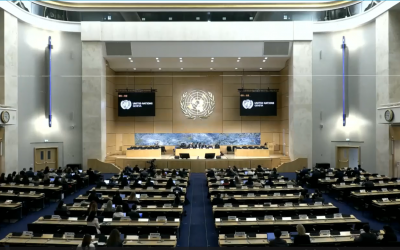
HRC 61 Written Statement Threatened Dissolution of Shincheonji and Other Religious Organizations in the Republic of Korea

HRC 61 Written Statement Threatened Dissolution of Shincheonji and Other Religious Organizations in the Republic of Korea

At the 61st session of the United Nations Human Rights Council, CAP Liberté de Conscience submitted a written statement raising serious concerns over the threatened dissolution of the Shincheonji Church and other minority religious organizations in the Republic of Korea. The document condemns efforts by President Lee Jae Myung to disband groups labeled as “pseudo-religions,” arguing that such state actions violate Article 18 of the ICCPR by allowing the government to act as a theological arbiter. CAP LC challenges the cited Japanese precedent, noting UN Special Rapporteurs’ criticism of dissolution orders based on vague concepts of “public welfare.” The statement further refutes claims of “enormous damage,” highlighting the Supreme Court’s acquittal of Shincheonji regarding COVID-19 allegations and the lack of coercive elements in its past evangelism methods. Consequently, CAP LC urges the Korean authorities to respect freedom of religion or belief and cease discriminatory campaigns driven by religious intolerance.
read more
Interactive dialogue on the oral update of the OHCHR on the human rights situation in and around El Fasher, in the context of the ongoing conflict in the Sudan

Interactive dialogue on the oral update of the OHCHR on the human rights situation in and around El Fasher, in the context of the ongoing conflict in the Sudan

Survivors of the attacks in El Fasher report mass atrocities and killings committed by the Rapid Support Forces after a year and a half of siege under horrific conditions, with no access to basic necessities. Civilians who fled describe widespread violence, including torture, kidnappings for ransom, sexual violence, disproportionately affecting women and girls, and summary executions as they attempted to escape. More than 1,000 days into the conflict, atrocities persist, and large-scale attacks are becoming a recurring pattern. Immediate and collective action is required to cease these crimes and prevent similar atrocities in other regions of Sudan.

read more

CAP Freedom of Conscience involvement UNITED NATIONS

LASTEST NEWS

France Under Scrutiny: UN Human Rights Committee Reveals Systemic Challenges in Religious Freedom, Policing

In a review of France’s human rights record, the United Nations Human Rights Committee has highlighted significant concerns regarding religious freedom, law enforcement practices. The 142nd session’s report (CCPR/C/FRA/CO/6) offers a critical examination of systemic challenges facing the French Republic.

UN OHCHR CAP LC Submits Report on Religious Persecution and Torture to UN Special Rapporteur

CAP Freedom of Conscience October 2024 CAP Liberté de Conscience has submitted a comprehensive...

Submission to the 49th session of the UPR Working group on Sweden

The submission highlights a concerning issue: the deportation of Ahmadi asylum seekers by Sweden to Pakistan, where they face a high risk of persecution. The submission argues that Sweden’s actions in this regard contravene international law, European legal frameworks, and established UN guidelines, which recognize the extreme vulnerability of Ahmadis in Pakistan.

CCPR – International Covenant on Civil and Political Rights 142 Session Pakistan

CAP Liberté de Conscience September 2024 Ahmadiyya Community in Pakistan Faces Alarming...

CCPR – International Covenant on Civil and Political Rights 142 Session FRANCE

The report by Human Rights Without Frontiers (HRWF) and CAP LC presented to the 142nd session of the UN Human Rights Committee paints a disturbing picture of the treatment of Romanian yoga practitioners by French authorities in the aftermath of wide-scale police raids in November 2023.

48th session Working Group Universal Periodic Review : Persecution of the Ahmadi Religion of Peace and Light in Egypt

Since their implantation in Egypt in 2012, members of a new religious movement in Islam, self-named “The Ahmadi Religion of Peace and Light,” have been the victims of state repression, social hostility, death threats by extremist imams for being considered heretics.

56th Session Human Rights Council Side Event on “Countering Islamophobia in Asia: From Awareness to Action”

In recent years, the rise of Islamophobia in Asia has emerged as a critical challenge to religious freedom and human rights across the region. This side event aims to transform dialogue into dedicated action, highlighting effective strategies and fostering international cooperation to address and mitigate Islamophobia.

UN OHCHR Protecting the Rights of Minority Groups; Efforts, by Civil Society

In a step towards addressing minority concerns the United Nations Special Rapporteur on minority issues has called upon civil society organizations worldwide. The appeal is for contributions to a report focusing on the role of NGOs in advocating for and safeguarding minority rights set to be presented at the UN General Assembly in 2024.

Ethiopia’s Hidden Crisis: UN Report Exposes Widespread Human Rights Abuses

The recent report, by the Office of the United Nations High Commissioner for Human Rights (OHCHR) has again brought attention to the human rights situation in Ethiopia specifically focusing on the hardships faced by the Amhara community.

United Nations Reaffirms Commitment to Religious Freedom in Landmark Resolution

The United Nations has restated its dedication to safeguarding freedom through a resolution approved by the Human Rights Council in its fifty session held from 26 February to 5 April 2024. This resolution, passed with support highlights the Community’s commitment, to upholding one of the essential human rights.

Human Rights Council Universal Periodic Review 47th session (4 – 15 Nov 2024) Universal Periodic Review of the Federal Democratic Republic of Ethiopia

Ethiopia is a multi-ethnic country with over 76 different groups. The Amhara people are one of the largest ethnic groups with a history spanning over 4000 years in Ethiopia, distributed across various regions of the country. However, they have been impacted significantly by targeted attacks, displacement, and grave human rights violations. This report aims to address the widespread abuses faced by the Amhara community throughout Ethiopia,.

HRC 55 UPR outcomes of Germany

The report includes Germany’s responses to various human rights challenges, including efforts to combat racism, antisemitism, and discrimination, as well as measures to protect the rights of LGBTIQ+ persons, migrants, and other vulnerable groups.

Non-governmental organizations held a briefing at the United Nations to condemn the CCP’s organ harvesting

[Minghui.com, February 8, 2024] (Reported by Minghui Swiss Correspondent Station) On January 22, 2024, two non-governmental organizations – the European “CAP Freedom of Conscience” and “Doctors International” The Organization Against Forced Organ Harvesting (DAFOH) held a briefing on the Chinese Communist Party’s persecution of Falun Gong and organ harvesting from Falun Gong practitioners at the United Nations in Geneva, Switzerland.

A meeting on the persecution of Falun Gong and organ harvesting held before the United Nations human rights review was held at the Palais des Nations

[Voice of Hope January 26, 2024] (reported by our reporter Wen Simin) The 45th session of the fourth round of the Universal Periodic Review (Universal Periodic Review) of the United Nations Human Rights Council was held on January 22. It begins at the Palais des Nations (Palais des Nations) in Geneva, the European headquarters of the United Nations. The day before the review of human rights in China, a conference titled “China’s Deprivation of Universal Human Rights “, focusing on the persecution of Falun Gong and organ harvesting from living persons, was also held at the Palais des Nations . On the 22nd and 23rd, some Falun Gong practitioners from the Czech Republic, Finland, Germany, France, the German-speaking and French-speaking areas of Switzerland held truth-clarification activities at the Place des Nations opposite the Palais des Nations.

Anyone involved in China’s transplant field risks becoming complicit in human rights abuses

The day before the United Nations Human Rights Council held the fourth round of the Universal Periodic Review ( UPR ) of human rights in China, a non-governmental organization with United Nations consultative status – “Association for Freedom of Conscience and Individual Collaboration” (French abbreviation CAP LC) organized , together with the organization “Doctors Against Forced Organ Harvesting ” (DAFOH), held an information meeting titled “China’s Deprivation of Universal Human Rights ” on January 22, specifically focusing on the ongoing persecution of Falun Gong practitioners and organ harvesting. question.

Anti-forced organ harvesting organizations call for the establishment of an international criminal tribunal to target the CCP’s crimes of forced organ harvesting

The Coordination of associations and individuals for Freedom of Conscience (CAP LC in French), a non-governmental organization with consultative status with the United Nations , together with Doctors Against Forced Organ Harvesting ( DAFOH ), held a meeting in On January 22, the day before the fourth round of the Universal Periodic Review ( UPR ) of China’s human rights by the United Nations Human Rights Council, a message titled “China’s Deprivation of Universal Human Rights ” was held at the United Nations Palais des Nations. Meeting.

NIGERIA Submission to the 45th Session of the Human Rights Council’s Universal Periodic Review Working Group

1. This joint submission addresses the state of freedom of religion or belief and freedom of opinion and expression in Nigeria. In particular, it presents an overview of the country’s domestic legal framework and draws attention to specific concerns related to the criminalization of blasphemy. Additionally, the report examines the rise in acts of terrorism and mob violence against Christians and religious minorities, including Muslim minorities, and the related climate of impunity over the reporting period.

45th session Universal Periodic Review Working Group Information meeting on China

We are pleased to extend an invitation to you for a crucial conference addressing pressing human rights issues in China. The focus of this event revolves around the impending Universal Periodic Review (UPR) of China, with particular attention to the ongoing persecution and forced organ harvesting of Falun Gong practitioners.

UPHOLDING UNIVERSAL COMMITMENTS: Addressing the damaging impact of landmines on the enjoyment of human rights.

The Universal Periodic Review (UPR) is a unique mechanism of the Human Rights Council that requires each UN Member State to undergo a peer review of its human rights record every 4.5 years. The UPR provides an opportunity for each state to regularly
Report on the measures it has taken to improve the human rights situation in its country and to address challenges to the enjoyment of human rights; and
Receive recommendations for continuous improvement from UN Member States, based on input from various stakeholders and pre-session reports.
The aim of this side-event we are organising today is to highlight points 203 and 204 of Azerbaijan’s national report on landmines.

UN expert on truth and justice to visit Armenia from 16 to 24 November 2023.

During his visit, the UN expert will assess the measures in the areas of truth, justice, reparation, memorialisation and guarantees of non-recurrence that have been adopted by authorities in Armenia to address the legacy of serious violations of human rights committed in situations of conflict, state repression or civil unrest.

Call for inputs advocacy of hatred based on religion or belief: transformative responses

Purpose: To inform the Special Rapporteur on freedom of religion or belief’s thematic report to be delivered to the 55th session of the UN Human Rights Council.

Addressing the damaging impact of landmines on the enjoyment of human rights

With an estimated 26,000 people a year becoming landmine victims, this indiscriminate weaponry poses one of the most challenging threats to human life and dignity and thus affects inalienable fundamental human rights.
The UN human rights machinery has a key role in addressing the negative impact of landmines, explosive remnants of war and other improvised explosive devices on the enjoyment of human rights of mine victims in the context of humanitarian mine action. It can also be instrumental in bringing to the fore the utmost importance of providing international assistance in mine action including protection and restoration of inalienable human rights of mine victims.
The side event intends to discuss humanitarian mine actions in light of this very role of the UN human rights machinery. It also aims to raise awareness on the importance of full and effective protection of fundamental human rights when related to humanitarian mine action. Other objectives of the event include exploring effective ways to address the humanitarian, socio-economic and environmental impact of landmines, explosive remnants of war and other IEDs; highlighting the importance of international cooperation and assistance in mine action which aims at eliminating the threat posed by mine contamination to the security of States and safety of their populations, facilitating post-conflict rehabilitation, including the return of refugees and IDPs to their homes, and contributing to sustainable peace and development.

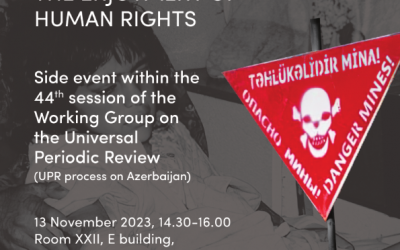
Information meeting on the UPR process in Azerbaijan

UPHOLDING UNIVERSAL COMMITMENTS:

Addressing the damaging impact of landmines on the enjoyment of human rights

Side event within the 44 session of  the Working Group on the Universal Periodic Review

Room XXII, E building, Palais des Nations, Geneva  13 November 2023 / 14.30-16.00

UPR Summary of stakeholders’ submissions on Bangladesh Report of the Office of the United Nations High Commissioner for Human Rights

68. JS2, JS5,JS9 and JS20 expressed concerns about discrimination, persecution, and limited access to justice faced by marginalized communities.115
JS2 highlighted the  discrimination and stigma experienced by Dalits, recommending immediate action through the enactment of an Anti-discrimination Act, representation, access to social services, and addressing discrimination in education and employment. JS5 focused on the persecution  of Ahmadi Muslims and called for stronger legislative and institutional responses, protecting religious practices, ensuring access to justice, and addressing violence and discrimination.  JS9 and JS16 were concerns about the limited justice access, violent attacks, and religious intolerance affecting various religious minorities.

Ahmadi Muslims in Germany who’ve fled state persecution are being deported back to Pakistan and it’s putting their lives at risk

Thousands  of Ahmadi  Muslims  in  Germany who  have fled  severe  religious persecution in Pakistan are awaiting a decision on their asylum  applications. They   belong   to  a religiously  and  politically  persecuted   minority  – the Ahmadiyya Muslim  Community. It  is  recognized   around  the  world   by  human   rights  groups  that Ahmadi Muslims  are  constantly,  ruthlessly  persecuted.

CAP Freedom of Conscience involvement in Europe

Side event OSCE 2023 Addressing Anti-Religious Hate Crime in the OSCE Area

Anti-religious intolerance and hate crimes continues to be a concern across the Organization for Security and Co-operation in Europe (OSCE) region. Such manifestations of intolerance threaten both the security of individuals and societal cohesion, as discrimination and intolerant discourse often escalate into violence and wider scale conflict. At the same time, a comprehensive security regime is also needed to fully respect, protect and fulfil freedom of religion or belief, which is specifically acknowledged as one of the fundamental principles guiding mutual relations among OSCE participating States and an integral aspect of the OSCE’s concept of security. Furthermore, participating States of the OSCE have agreed on a broad range of commitments to address racism, xenophobia, anti-Semitism, discrimination and intolerance, including intolerance against Christians, Muslims, Jews, and members of other religions.

Addressing Anti-Religious Hate Crime in the OSCE Area

Anti-religious intolerance and hate crimes continues to be a concern across the Organization for Security and Co-operation in Europe (OSCE) region. Such manifestations of intolerance threaten both the security of individuals and societal cohesion, as discrimination and intolerant discourse often escalate into violence and wider scale conflict. At the same time, a comprehensive security regime is also needed to fully respect, protect and fulfil freedom of religion or belief, which is specifically acknowledged as one of the fundamental principles guiding mutual relations among OSCE participating States and an integral aspect of the OSCE’s concept of security. Furthermore, participating States of the OSCE have agreed on a broad range of commitments to address racism, xenophobia, anti-Semitism, discrimination and intolerance, including intolerance against Christians, Muslims, Jews and members of other religions. This side event will present the current situation in the OSCE area with regards to anti-religious hate crime, including reporting and addressing it. It will also highlight ODIHR’s recent and forthcoming tools, such as community security guides and factsheets. The discussion will also address gender-related aspects of anti-religious hate crime. The side event will be organized by the Office for Democratic Institutions and Human Rights (ODIHR) with the support of the FoRB Roundtable Brussels-EU

The various peace and security proposals put forward by the United Nations UN Security Council on the conflict in Sudan.

The United Nations Security Council convened on 2nd June 2023, to discuss the ongoing situation in Sudan.

The members of the Security Council recalled the previous Press Statement issued on 15 April 2023, expressing deep concern regarding the continued military clashes between the Sudanese Armed Forces and Rapid Support Forces.

I will summarize the key points and outcomes of the Security Council’s deliberations.

The devastating impact on women of the ongoing conflict in Sudan and the crucial role they can play in the peace process

As we all know, women, along with children, are the most vulnerable targets in wartime.

Gender-based violence and crime, such as rape and the destruction of property and lives, are the greatest threats to women, and these crimes are often overlooked and committed with impunity.

According to UN estimates, even before the fighting broke out on April 15, more than 3 million women and girls in Sudan were at risk of gender-based violence. This figure has since risen to 4.2 million.

Conference EU Parliament : oppression of minorities in Iran and women rights

They have also encountered restrictions on their language and cultural rights. For instance, the Azeri language, which is widely spoken in Iran, has faced limitations in official settings, education, and media. Iranian law imposes certain restrictions on women, such as compulsory hijab and gender-based segregation in public spaces. It is important to emphasize that these issues are not unique to women of ethnic minority backgrounds in Iran. Women across the country, regardless of their ethnicity, face legal and social challenges that limit their rights and freedoms. I’d like to illustrate the situation of ethnic minority women in Iran with an emblematic case of persecution.

Conference EU Parliament : oppression of minorities in Iran and Religious Freedom

It is high time that Iran listened to the voices from around the world imploring it to comply with the universal principles of respect for human rights for all Iranians, and that the persecution, discrimination, and barbaric behavior of another age cease, so that this great country with a rich and glorious history, can once again become the magnificent Iran.

104 Ahmadis discussed at Organization for security and cooperation in Europe (OSCE) in Vienna

CAP/ Conscience et Liberté and Human Rights Without Frontiers are deeply concerned about the situation of over 100 members of the Ahmadi Religion of Peace and Light who have been blocked by the Turkish authorities at the Turkish-Bulgarian border since the end of May.

Ankara has decided to deport them back to their home countries where they would face imprisonment, torture and even execution in the case of Iran.

OSCE 2022 side-event The Anti-Cult Ideology and FECRIS: Dangers for Religious Freedom

CAP Freedom of Conscience is a secular European NGO with United Nations Consultative Status, created in 1995 and dedicated to protecting the Right of Freedom of Religion and Belief. It combats all forms of discrimination based on religion or belief, inter alia, by alerting European and International bodies to abuses and violations of international standards. It collects testimonies of discrimination and human rights violations affecting religious or belief communities disseminating them to international bodies, to broadly raise awareness on the subject and to generate debate on the need for protection of freedom of religion or Belief. CAP Freedom of Conscience also advocates for any religious or spiritual group facing discrimination supporting the right to have their freedom of religion or belief recognized.

OSCE 2022 Plenary Session VII Rule of Law II The Case of Cyrille Adam

Despite France is adherent to the ICCPR, to the Tokyo Rule, to the UNODC recommendations on prison conditions, it has been repeatedly pointed out on this issue during its UPR in 2018, by the ECHR, the OIP and the CPT. Moreover, on April 2021 a law was voted in France intended to guarantee the right to respect for dignity in detention.

OSCE 2022 Plenary Session III: Tolerance and Non-Discrimination I MIVILUDES

We call on France to definitively put an end to this campaign of discrimination and stigmatization with regard to spiritual minorities or beliefs.

SUPPORT CAP Liberté de Conscience

IBAN BE61 9670 0987 0017

SWIFT / BIC TRWIBEB1XXX

Address
TransferWise Europe SA
Square de Meeûs 38 bte 40
Brussels
1000
Belgium

Side event HRC 57 Arbitrary Detention in the UAE: Addressing the Crisis of Civil Society Suppression

Side event HRC 57 Arbitrary Detention in the UAE: Addressing the Crisis of Civil Society Suppression

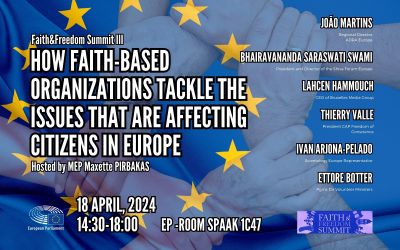
On Tuesday 17 September 2024 at 1 p.m. in the Peace Palace (Room XXV) in Geneva, a side event will feature Joey Shea, Researcher at Human Rights Watch, Ahmed al-Nuaimi,  defendant in the UAE 94 trial, and Matthew Hedges, a British academic held in solitary confinement for nearly seven months. The panel will address serious concerns about arbitrary detention and the repression of civil society in the United Arab Emirates (UAE).
read more
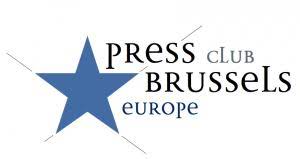
Social Impact of Faith-Based Organizations in Europe

Social Impact of Faith-Based Organizations in Europe

FBO’s play a significant role in addressing societal challenges, promoting social cohesion, and advocating for the values of faith and freedom in the European Union (EU). This conference aims to provide a platform for MEPs and Civil Society to discuss the challenges, opportunities and impact of FBOs and their contributions to a more inclusive and sustainable society inside Europe.
read more
Our heritage is not preceded by a testament

Our heritage is not preceded by a testament

Hannah Arendt quotes an aphorism by René Char (published in Feuillets d’Hypnos in 1946). “During the Resistance, a generation of European writers and men of letters created, in the political vacuum created by the collapse of the old system, a distinct public sphere, a bare space in which freedom could appear. But this opportunity did not last long. This treasure, which had appeared unexpectedly under mysterious circumstances, was soon lost. That generation was unable to give it a name. The history of revolutions was repeating itself.

read more
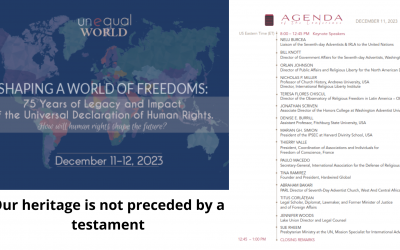
Conference 13 Decembre – Façonner un monde de libertés : 75 ans d’héritage et d’impact de la Déclaration Universelle des Droits de l’Homme

Conference 13 Decembre – Façonner un monde de libertés : 75 ans d’héritage et d’impact de la Déclaration Universelle des Droits de l’Homme

Dans le cadre de la commémoration du 75e anniversaire de la Déclaration Universelle des Droits de l’Homme, un groupement d’Associations et d’ONG collaborant avec les Nations Unies organise une conférence en ligne les 11 et 12 décembre 2023 (en anglais) et le 13 décembre 2023 (en français). Cette conférence qui a pour thème « Façonner un monde de libertés : 75 ans d’héritage et d’impact de la Déclaration Universelle des Droits de l’Homme ! Comment les Droits de l’Homme façonneront-ils l’avenir ? », vise à explorer l’influence durable et la pertinence de cette Déclaration.
read more
Information meeting on the UPR process in Azerbaijan

Information meeting on the UPR process in Azerbaijan

UPHOLDING UNIVERSAL COMMITMENTS:

Addressing the damaging impact of landmines on the enjoyment of human rights

Side event within the 44 session of  the Working Group on the Universal Periodic Review

Room XXII, E building, Palais des Nations, Geneva  13 November 2023 / 14.30-16.00

read more
Translate »
Share This