What is “Coordination des Associations et des Particuliers pour la Liberté de Conscience” (CAP Freedom of Conscience)?
CAP Freedom of Conscience is a secular European NGO with United Nations Consultative Status, created in 1995 and dedicated to protect the Right of Freedom of Religion and Belief.
CAP Freedom of Conscience combats all forms of discrimination based on religion or belief by alerting European and International bodies.
CAP Freedom of Conscience collects testimonies of discrimination and human rights violations affecting religious or belief communities in order to disseminate them to international bodies, and in order to raise awareness and inform them as well as to generate debate on the protection of Freedom of Religion and Belief.
CAP Freedom of Conscience also advocates for any religious or spiritual group facing discrimination to have their right to Freedom of Religion and Belief recognized.
CAP Freedom of Conscience is a member of the European Federation for Freedom of Belief (FOB), European Network Of Religion and Belief (ENORB) and participate to the Civil Society Platform of Fundamental Rights created by the EU Fundamental Rights Agency DAFOH Partners in Combating and Preventing Forced Organ Harvesting
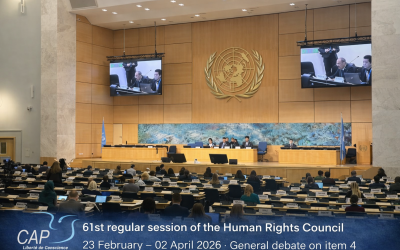
HRC 61 ITEM 4 Media-Driven Persecution: The Christian Gospel Mission Between Systemic Discrimination and Human Rights Violations
This statement draws urgent attention to the systematic persecution of Christian Gospel Mission members between 2023 and 2026. Following Netflix documentaries in 2023 and 2025, thousands of believers—accused of no crime—faced discrimination, doxxing, and violence. In Taiwan, 4,500 members suffered threats and public shaming. In South Korea, over 160 sworn statements document exclusion. Economic boycotts destroyed businesses; educators and professors lost jobs solely for their faith
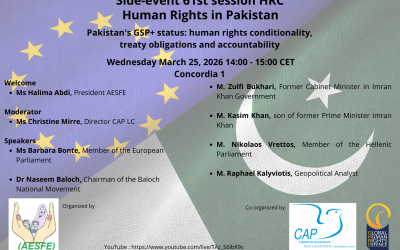
HRC 61 Side-event Human Rights In Pakistan
This side event critically examines Pakistan’s GSP+ trade status, questioning whether human rights conditionality is being rigorously enforced in line with international obligations. By combining legal analysis with victim testimonies, it aims to expose the gap between treaty commitments and the on-the-ground reality for those affected by abuses.
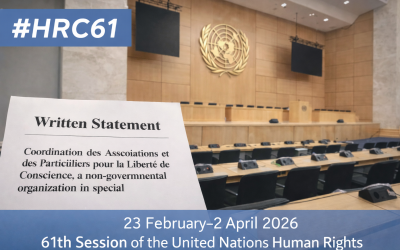
HRC 61 Written Statement The Two Covenants, the Abuse of Tax Law Against Spiritual Minorities, and Two Shadow Reports
During the 61st Human Rights Council session, CAP LC presented a written statement on the weaponization of tax law against spiritual minorities in Taiwan. It examines the Tai Ji Men case, involving perpetual tax bills despite judicial acquittals, resulting in sacred land seizure. The statement identifies structural tax administration flaws violating international human rights covenants, undermining religious freedom and due process. CAP LC urges resolution of the Tai Ji Men case and reforms ensuring taxation isn’t used discriminatorily against religious groups.
HRC 61 Written Statement : The Inhumane Detention of Konstantin Rudnev in Argentina
CAP Liberté de Conscience presented a statement to the Human Rights Council regarding Russian spiritual teacher Konstantin Rudnev’s arbitrary detention in Argentina. Arrested following misunderstandings and unsubstantiated accusations of being a “cult leader,” Rudnev remains in pretrial detention despite lack of evidence. He faces due process violations and inadequate medical care with declining health. The organization argues his imprisonment violates religious freedom and liberty rights, based on imported disinformation rather than actual crimes. CAP LC demands his immediate release on humanitarian grounds.
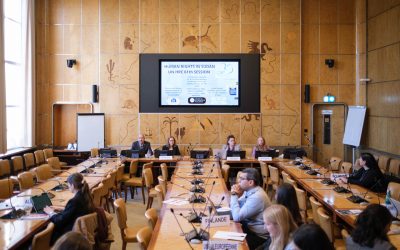
UN HRC 61 1000 days of conflict. 1000 days of civilians suffering the first-hand consequences of the fighting
“1000 days of conflict. 1000 days of civilians suffering the first-hand consequences of the fighting”, opened Thierry Valle, President of CAP Freedom of Conscience, at the side event on Friday 27 February 2026, held at the UN Human Rights Council, as atrocities continue unabated.
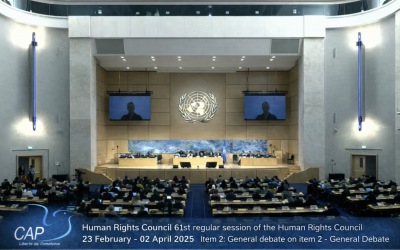
HRC 61 oral statement Item 2 Sudan
Sudan conflict: civilians face executions, torture, sexual violence. UAE supports RSF forces enabling atrocities. States must end support, investigate crimes, prevent prolonged suffering
CAP Freedom of Conscience involvement UNITED NATIONS
LASTEST NEWS
Adhésion CAP LC 2024
CAP Freedom of Conscience involvement in Europe
SUPPORT CAP Liberté de Conscience
IBAN BE61 9670 0987 0017
SWIFT / BIC TRWIBEB1XXX
Address
TransferWise Europe SA
Square de Meeûs 38 bte 40
Brussels
1000
Belgium

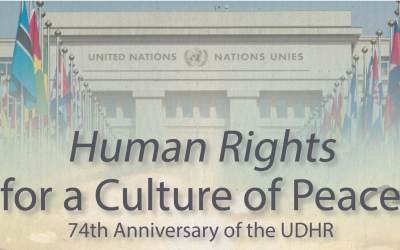
Human Rights for a Culture of Peace 74th Anniversary of the UDHR
Human Rights
for a Culture of Peace
74th Anniversary of the UDHR
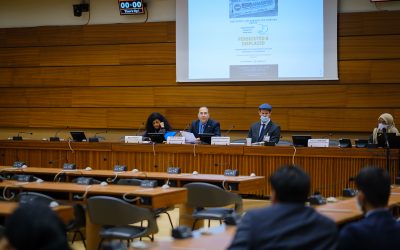
41st Session UPR Working Group Information meeting on the UPR process in Indonesia CAP LC
CAP Liberté de Conscience is a secular European created in 1995 and dedicated to protect the Right of Freedom of Religion and Belief. We combats all forms of discrimination based on religion or belief by alerting European and International bodies. We collects testimonies of discrimination and human rights violations affecting religious or belief communities in order to disseminate them to international bodies, and in order to raise awareness and inform them as well as to generate debate on the protection of Freedom of Religion and Belief. We also advocates for any religious or spiritual group facing discrimination to have their right to Freedom of Religion and Belief recognized.
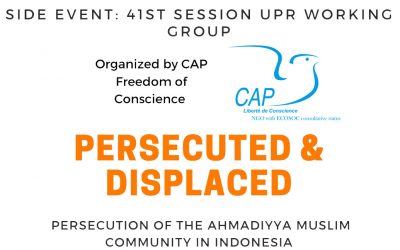
Side Event 41st Session UPR Working Group Information meeting on the UPR process in Indonesia
On behalf of the Coordination des Associations et des Particuliers pour la Liberté de Conscience (CAP Freedom of Conscience) and International Human Rights Commissio , it is my privilege to invite you to our NGO side event highlighting the persecution faced by the Ahmadiyya Muslim Community in Indonesia during the 41st session of the United Nations Universal Periodic Review in Geneva.

A symbol of hope for global unity 77 years ago The United Nations was born out of hope.
A symbol of hope for global unity 77 years ago The United Nations was born out of hope.
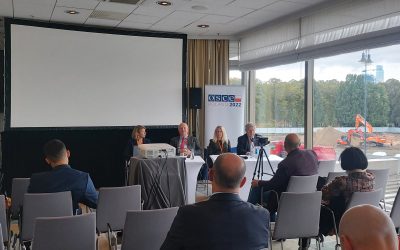
OSCE 2022 side-event The Anti-Cult Ideology and FECRIS: Dangers for Religious Freedom
CAP Freedom of Conscience is a secular European NGO with United Nations Consultative Status, created in 1995 and dedicated to protecting the Right of Freedom of Religion and Belief. It combats all forms of discrimination based on religion or belief, inter alia, by alerting European and International bodies to abuses and violations of international standards. It collects testimonies of discrimination and human rights violations affecting religious or belief communities disseminating them to international bodies, to broadly raise awareness on the subject and to generate debate on the need for protection of freedom of religion or Belief. CAP Freedom of Conscience also advocates for any religious or spiritual group facing discrimination supporting the right to have their freedom of religion or belief recognized.
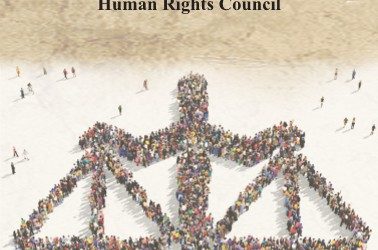
Reconciliation through recognition: Transitional justice and peacebuilding through civil society dialogue
Peace and justice are inevitable part of any post-conflict reconciliation. It is therefore necessary to streamline efforts aimed at strengthening the linkage between them while ensuring broad participation of civil society to this aim. This would not only serve to bringing justice and broaden the rule of law, but would also help healing wounds thereby contributing to post-conflict peace- building and reconciliation processes through the multi-stakeholder approach.