What is “Coordination des Associations et des Particuliers pour la Liberté de Conscience” (CAP Freedom of Conscience)?
CAP Freedom of Conscience is a secular European NGO with United Nations Consultative Status, created in 1995 and dedicated to protect the Right of Freedom of Religion and Belief.
CAP Freedom of Conscience combats all forms of discrimination based on religion or belief by alerting European and International bodies.
CAP Freedom of Conscience collects testimonies of discrimination and human rights violations affecting religious or belief communities in order to disseminate them to international bodies, and in order to raise awareness and inform them as well as to generate debate on the protection of Freedom of Religion and Belief.
CAP Freedom of Conscience also advocates for any religious or spiritual group facing discrimination to have their right to Freedom of Religion and Belief recognized.
CAP Freedom of Conscience is a member of the European Federation for Freedom of Belief (FOB), European Network Of Religion and Belief (ENORB) and participate to the Civil Society Platform of Fundamental Rights created by the EU Fundamental Rights Agency DAFOH Partners in Combating and Preventing Forced Organ Harvesting
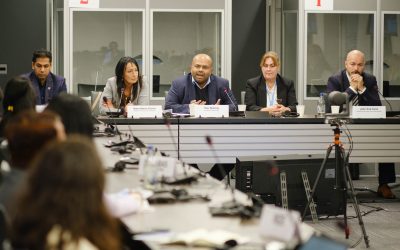
HRC 60 side-event : Indo-Mediterranean: Women and Children Are Extremism’s First Victims
weakest and most vulnerable individuals, especially women and children. The world is also connected, with the effects of radicalization being felt in Europe and South Asia with extremism, anti-semitism and terrorism as well as indoctrination of youth more rampant. To discuss this a side event is being held at the United Nations Human Rights Council’s 60th session.
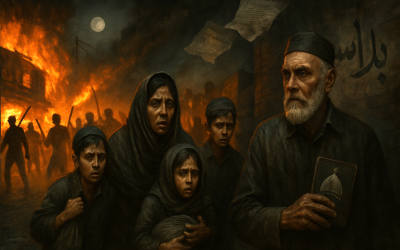
Piro Chak Burning: Ahmadi Homes, Shops, and Lives Under Siege in Sialkot, Punjab, Pakistan
On the evening of September 28, 2025, a violent mob descended upon the Ahmadiyya residents of Piro Chak, a village in the Sialkot district of Punjab, Pakistan. The assailants, incited by religious hatred, systematically attacked homes, shops, and vehicles belonging to members of the community. Eyewitness accounts and journalistic reports describe a scene of terror and destruction, with properties set ablaze and looted while the occupants fled for their lives.
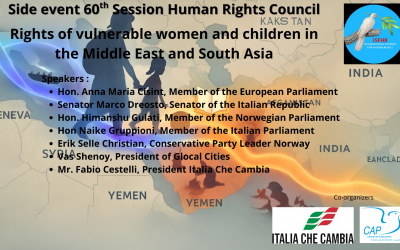
UN HRC 60 de-Event: The Impact of Extremism on Women & Vulnerable Groups in the Indo-Mediterranean Region
In a globally interconnected world, the effects of extremism originating in hotspots like South Asia, Somalia, and Yemen are felt socially, economically, and politically across continents. This panel will bring together experts to highlight the condition of women, children, and vulnerable groups who bear the brunt of this instability. The discussion aims to foster a multidisciplinary understanding and seek pathways for their protection and empowerment.
HRC 60 oral statement : Item 4: General debate on the human rights situations that require the Council’s attention
We and Human Rights Without Frontiers are deeply concerned about the fact that chaplaincy activities of Jehovah’s Witnesses in a number of Belgian prisons are in practice not allowed any more.
Since 2019, Jehovah’s Witnesses have written six times to the Minister of Justice and have initiated legal proceedings due to this discrimination experienced in four Belgian prisons: Nivelles, Leuze, Dinant, and Leuven Central.
HRC 60 : Silencing Dissent: Mass Trials in the United Arab Emirates
Since the “UAE94” trial in 2013, Emirati authorities have regularly used collective trials to criminalize any form of peaceful dissent and human rights defense. UN experts have denounced the lack of fair trial guarantees and the detention of individuals for exercising their fundamental rights.
CAP Liberté de Conscience Submits Report to UN on Institutional Violence
The NGO CAP Liberté de Conscience has formally responded to the call for input issued by the Office of the UN High Commissioner for Human Rights (OHCHR) on the “Experiences and perspectives of victims and survivors of torture and other cruel, inhuman or degrading treatment or punishment”. The call, detailed here, seeks to gather information for a comprehensive report to be presented at the 61st session of the Human Rights Council in March 2026.
CAP Freedom of Conscience involvement UNITED NATIONS
LASTEST NEWS
Adhésion CAP LC 2024
CAP Freedom of Conscience involvement in Europe
SUPPORT CAP Liberté de Conscience
IBAN BE61 9670 0987 0017
SWIFT / BIC TRWIBEB1XXX
Address
TransferWise Europe SA
Square de Meeûs 38 bte 40
Brussels
1000
Belgium

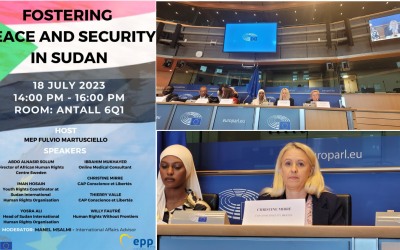
The devastating impact on women of the ongoing conflict in Sudan and the crucial role they can play in the peace process
As we all know, women, along with children, are the most vulnerable targets in wartime.
Gender-based violence and crime, such as rape and the destruction of property and lives, are the greatest threats to women, and these crimes are often overlooked and committed with impunity.
According to UN estimates, even before the fighting broke out on April 15, more than 3 million women and girls in Sudan were at risk of gender-based violence. This figure has since risen to 4.2 million.
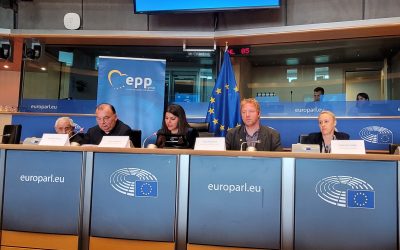
Conference EU Parliament : oppression of minorities in Iran and women rights
They have also encountered restrictions on their language and cultural rights. For instance, the Azeri language, which is widely spoken in Iran, has faced limitations in official settings, education, and media. Iranian law imposes certain restrictions on women, such as compulsory hijab and gender-based segregation in public spaces. It is important to emphasize that these issues are not unique to women of ethnic minority backgrounds in Iran. Women across the country, regardless of their ethnicity, face legal and social challenges that limit their rights and freedoms. I’d like to illustrate the situation of ethnic minority women in Iran with an emblematic case of persecution.
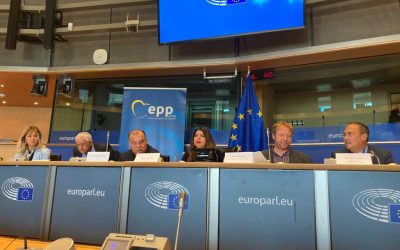
Conference EU Parliament : oppression of minorities in Iran and Religious Freedom
It is high time that Iran listened to the voices from around the world imploring it to comply with the universal principles of respect for human rights for all Iranians, and that the persecution, discrimination, and barbaric behavior of another age cease, so that this great country with a rich and glorious history, can once again become the magnificent Iran.

Oppression of Minorities in Iran : The Azeri Community as an Example
Join us tomorrow in the European Parliament to speak about the situation of Minorities and mainly the Azeri community. The debate aims at supporting 30 million Southern Azerbaijanis who suffer under the Iranian rule. The rights of this ethnic group must be guaranteed by anyone who claims to be an opposition leader, whether it is cultural autonomy or independence.
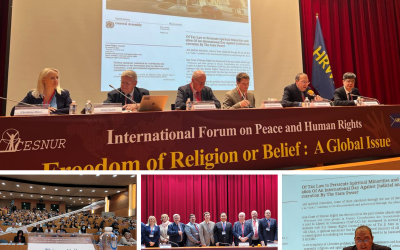
Taiwan : International Forum on Peace and Human Rights Freedom of Religion or Belief : The Case of Tai Ji Men at the United Nations
“religion and spirituality live in the hearts of the believers, but they create communities, and communities cannot exist without places where they can gather. For many religious and spiritual groups, these gathering places do not serve a functional purpose only. Land where devotees gather becomes sacred land. Religion and spirituality live in time and space. They separate portions of time and space from the daily temporal and spatial flow, appropriate them for themselves, and invest them with spiritual meanings. Taking their spaces away from spiritual movements means cutting their deepest roots.”
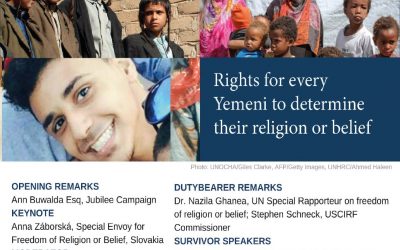
HRC52 Parallel Event | Recognising the Diversity of Yemen – Safeguarding the rights of every Yemeni to determine their religion or belief
As Yemen is defining its future, it is important that human rights, especially, the right to freedom of thought, conscience, religion and belief is front and centre and presented by those committed to those aims, not least individuals from discriminated religious beliefs.