What is “Coordination des Associations et des Particuliers pour la Liberté de Conscience” (CAP Freedom of Conscience)?

CAP Freedom of Conscience is a secular European NGO with United Nations Consultative Status, created in 1995 and dedicated to protect the Right of Freedom of Religion and Belief.

CAP Freedom of Conscience combats all forms of discrimination based on religion or belief by alerting European and International bodies.

CAP Freedom of Conscience collects testimonies of discrimination and human rights violations affecting religious or belief communities in order to disseminate them to international bodies, and in order to raise awareness and inform them as well as to generate debate on the protection of Freedom of Religion and Belief.

CAP Freedom of Conscience also advocates for any religious or spiritual group facing discrimination to have their right to Freedom of Religion and Belief recognized.

CAP Freedom of Conscience is a member of the European Federation for Freedom of Belief (FOB), European Network Of Religion and Belief (ENORB) and participate to the Civil Society Platform of Fundamental Rights created by the EU Fundamental Rights Agency DAFOH Partners in Combating and Preventing Forced Organ Harvesting
UN HRC 61 written Statement: Digital Witch Hunt Against Christian Gospel Mission (Providence)

UN HRC 61 written Statement: Digital Witch Hunt Against Christian Gospel Mission (Providence)

CAP LC’s UN statement denounces the severe persecution of Christian Gospel Mission members in South Korea and Taiwan. Sparked by commercial documentaries, this “digital witch hunt” utilizes guilt by association to incite harassment, job loss, and educational discrimination. The organization urges investigations into these institutional failures and calls for regulating media platforms to protect freedom of religion and prevent hate-fueled human rights violations.

read more
UN HRC 61 Item 9 Statement: Urge Norway to Reverse Deregistration of Jehovah’s Witnesses

UN HRC 61 Item 9 Statement: Urge Norway to Reverse Deregistration of Jehovah’s Witnesses

CAP LC and Human Rights Without Frontiers condemn Norway’s deregistration of Jehovah’s Witnesses as institutional discrimination. This act fosters stigmatization and contradicts the Durban Declaration. We urge the Norwegian Supreme Court to annul this decision and call on the State to ensure administrative practices uphold equality and do not target specific religious minorities.

read more
HRC 61 Item 9 UN Statement: Demand Release of Imran Khan and End Systematic Persecution in Pakistan

HRC 61 Item 9 UN Statement: Demand Release of Imran Khan and End Systematic Persecution in Pakistan

At the UN Human Rights Council, AESFE highlights the alarming rise of intolerance in Pakistan, focusing on the imprisonment of former PM Imran Khan for nearly 1,000 days. The statement details inhumane conditions, including torture in solitary confinement, and expanded blasphemy laws fostering hatred. AESFE urges the Council and OHCHR to demand immediate compliance with UN opinions and the release of all political prisoners to end this systematic persecution and restore human dignity.

read more
HRC 61 Item 9 Systematic Religious Persecution: The Case of the Ahmadi Religion of Peace and Light in Egypt

HRC 61 Item 9 Systematic Religious Persecution: The Case of the Ahmadi Religion of Peace and Light in Egypt

This statement condemns the arbitrary detention and torture of Egypt’s Ahmadi Religion of Peace and Light members. Since March 2025, systematic persecution, enforced disappearances, and denial of legal rights have occurred. We urge the UN to investigate these grave violations and demand Egyptian authorities immediately release the victims to uphold international human rights obligations and end religious intolerance.

read more
Side-event 61st session HRC Human Rights in Pakistan

Side-event 61st session HRC Human Rights in Pakistan

Discover why the European Union must urgently suspend Pakistan’s GSP+ status. MEPs and activists denounce systematic human rights violations, from the persecution of religious minorities to severe repression in Balochistan. While Pakistan benefits from EU market access, compliance with international conventions remains absent. This conference calls for immediate action to strictly link trade privileges with fundamental freedoms. Essential insights into the future of ethical trade relations and EU accountability.

read more
Pakistan: High Court Bar Condamnation Against the Ahmadiyya Community and Its Incompatibility with International Human Rights Law

Pakistan: High Court Bar Condamnation Against the Ahmadiyya Community and Its Incompatibility with International Human Rights Law

The condemnation by the High Court Bar Association at Larkana calls on authorities to criminally punish Ahmadiyya religious practices in Pakistan. This analysis explains how the text and the provisions it enforces violate the Universal Declaration of Human Rights and the International Covenant on Civil and Political Rights, and reaffirms States’ obligations to ensure freedom of religion or belief for all.

read more

CAP Freedom of Conscience involvement UNITED NATIONS

LASTEST NEWS

CAP Liberté de Conscience Submits Report to UN on Institutional Violence

The NGO CAP Liberté de Conscience has formally responded to the call for input issued by the Office of the UN High Commissioner for Human Rights (OHCHR) on the “Experiences and perspectives of victims and survivors of torture and other cruel, inhuman or degrading treatment or punishment”. The call, detailed here, seeks to gather information for a comprehensive report to be presented at the 61st session of the Human Rights Council in March 2026.

WG UPR 52nd Session CAP Liberté de Conscience Submits Report to UN WG UPR on Denmark’s Anti-Racism Efforts

CAP Liberté de Conscience (CAP LC), an international non-governmental organization with consultative status at the United Nations, has jointly submitted a report for the 52nd session of the Universal Periodic Review (UPR) Working Group, focusing on Denmark. This expert analysis was prepared in collaboration with Mr. Bashy Quraishy, Secretary General of the European Muslim Initiative for Social Cohesion (EMISCO), and Mr. Gregory Christensen, Leader of Youth for Human Rights – Denmark. Both experts are members of the Advisory Board of the Danish Institute for Human Rights and bring decades of experience in human rights, anti-discrimination, and minority integration work within Denmark and the European Union.

Submission on the Draft General Comment No. 27 on Children’s Access to Justice

A group of experts on children submitted a contribution on behalf of CAP Liberté de Conscience to the United Nations Committee on the Rights of the Child in response to its public call for contributions on draft general comment No. 27 (2025) on the right of children to access justice and effective remedy. The call for contributions is available on the OHCHR website.

CAP Liberté de Conscience Submits Written Statement on Human Rights Violations in Sudan at the 59th UN Human Rights Council Session

At the 59th session of the United Nations Human Rights Council, CAP Liberté de Conscience submitted a written statement detailing ongoing human rights violations in Sudan, emphasizing the urgent need for international attention and action. The statement highlights the severe impact of the conflict between the Rapid Support Forces (RSF) and other actors on civilians, including thousands killed or injured and nearly 12 million displaced persons, making it the world’s largest displacement crisis.

CAP Liberté de Conscience Responds to the Call on Children’s Right to Access to Justice and to an Effective Remedy

CAP Liberté de Conscience (CAP LC) has submitted a detailed report in response to the public consultation launched by the UN Committee on the Rights of the Child regarding the draft of General Comment No. 27 on children’s right to access to justice and to an effective remedy. The call for submissions, available at the OHCHR website, seeks perspectives on improving mechanisms to ensure that children can access justice effectively and receive appropriate remedies for violations of their rights. The contributors addresses systemic challenges in France and proposes concrete recommendations to safeguard children’s rights in judicial and social protection settings.

HRC 59 : The Ongoing Genocide in Sudan and The Intervention of International Actors

On Wednesday 18 June 2025, a side event on “The Ongoing Genocide in Sudan and The Intervention of International Actors” was hosted by the Coordination des Associations et des Particuliers pour la Liberté de Conscience (CAP Freedom of Conscience), and co-hosted by Global Human Rights Defence (GHRD), coinciding with the 59th session of the Human Rights Council.

HRC 59 Sudan Item 3: ID with the SR on extrajudicial, summary or arbitrary executions

I speak today on behalf of victims of violence committed by the Rapid Support Forces in Sudan and their foreign backers.

Since the outbreak of the conflict, thousands of civilians have been killed or injured with almost 12 million people who have fled their homes. The RSF has launched repeated attacks on displacement camps, forcing civilians to flee again.

Committee Against Torture Puts France’s Law Enforcement Practices and Detention Conditions under Scrutiny

During the 82nd session of the Committee Against Torture (CAT)[i], France’s record on police practices and detention conditions faced pointed scrutiny. Omnium des Libertés (ODL) recent report submitted to the Committee[ii] provided testimony-driven evidence highlighting abuses by French law enforcement and violations of detainees’ fundamental rights. In this context, the Committee used its platform to seek clarity and accountability from France, reinforcing the utility and urgency of independent civil society reporting.

82th CAT Session : France Under Scrutiny for Police Conduct

Key Findings from Human Rights Organization Report As France gets ready to respond to the Committee Against Torture (CAT) on its human rights record during the 82nd session, a report by an international human rights organization raises concerns about the activities of French police. The report notes severe violations of the fundamental rights of individuals during police raids and detention, with more emphasis on the treatment of spiritual minorities.

Freedom of Religion or Belief and the Plight of Migrants: A Call for Action

The United Nations Special Rapporteur on Freedom of Religion or Belief has called for contributions from  all over the world on the topic of religious freedom for migrants, internally displaced persons (IDPs)  and refugees. This initiative is aimed at the increasing problems faced by people and communities who have been forced  to leave their homes on account of religious persecution. The Special Rapporteur’s report provides a general  picture of systemic violations of religious freedom affecting primarily vulnerable populations such as asylum seekers and IDPs.

Religious Persecution and Human Rights: UN Report Examines Torture and Religious Freedom

In the  report “Freedom of Religion or Belief and the Prohibition of  Torture”, the UN Special  Rapporteur Nazila Ghanea looks at how religious persecution is linked with human  rights  violations. The study which was discussed at the 58th session of the Human Rights Council and later made  news by European Times News, focuses on how religious prejudice can lead to institutional violation.

 The focus of  the report is on the connection between coercion and religious freedom. According to European Times  News,  Ghanea said, “Not all forms of coercion reach the threshold of torture or ill-treatment,  but all forms of torture  committed on persons on the basis of their religion or belief constitute coercion.”

82th Session CAT : Domestic violence: a form of institutionalised torture?

The socio-judicial treatment of domestic violence in France is a cause for concern. At a time when our country, the self-proclaimed defender of human rights, is struggling to protect children and their protective parents from domestic violence, it is crucial to highlight the serious malfunctioning of our institutions. These practices, which I describe in a file submitted to the UN Committee against Torture as a form of institutionalised torture, expose the victims to a double penalty: that of the violence suffered and that of the procedures that condemn them to injustice and create new traumas.

Egypt’s Human Rights Landscape: Insights from the 48th Universal Periodic Review

The Coordination des Associations et des Particuliers pour la Liberté de Conscience (CAP Liberté de Conscience), a secular international organization, has actively contributed to the 48th session of the Universal Periodic Review (UPR) Working Group on Egypt. CAP Liberté de Conscience submitted a detailed report addressing critical issues related to freedom of religion and belief, particularly highlighting the persecution faced by the Ahmadi Religion of Peace and Light in Egypt. This article synthesizes the key points from the stakeholders’ submissions, the UPR summary report, and CAP’s recommendations to shed light on the ongoing challenges and proposed solutions.

UN OHCHR Syria: Children’s rights at the heart of the issues after the fall of the Assad regime

The fall of Bashar al-Assad’s regime on 8 December 2024 after fourteen years of civil war marks a major turning point for Syria. However, it also highlights the serious violations of children’s rights during the conflict. In the light of this particularly worrying information, based on data from international reports and first-hand accounts, I have submitted a dossier to the United Nations to draw attention to these injustices and make concrete recommendations.

Summary of stakeholders’ submissions on Ethiopia

Of particular alarm is the situation of the Amhara people. Joint Submission 3 (JS3) reported that the Amhara, Ethiopia’s largest ethnic group, have been subjected to targeted attacks, displacement, and grave human rights violations. These attacks appear to be intentionally aimed at eliminating Amharas from certain regions of the country.

France Under Scrutiny: UN Human Rights Committee Reveals Systemic Challenges in Religious Freedom, Policing

In a review of France’s human rights record, the United Nations Human Rights Committee has highlighted significant concerns regarding religious freedom, law enforcement practices. The 142nd session’s report (CCPR/C/FRA/CO/6) offers a critical examination of systemic challenges facing the French Republic.

UN OHCHR CAP LC Submits Report on Religious Persecution and Torture to UN Special Rapporteur

CAP Freedom of Conscience October 2024 CAP Liberté de Conscience has submitted a comprehensive...

Submission to the 49th session of the UPR Working group on Sweden

The submission highlights a concerning issue: the deportation of Ahmadi asylum seekers by Sweden to Pakistan, where they face a high risk of persecution. The submission argues that Sweden’s actions in this regard contravene international law, European legal frameworks, and established UN guidelines, which recognize the extreme vulnerability of Ahmadis in Pakistan.

CCPR – International Covenant on Civil and Political Rights 142 Session Pakistan

CAP Liberté de Conscience September 2024 Ahmadiyya Community in Pakistan Faces Alarming...

CCPR – International Covenant on Civil and Political Rights 142 Session FRANCE

The report by Human Rights Without Frontiers (HRWF) and CAP LC presented to the 142nd session of the UN Human Rights Committee paints a disturbing picture of the treatment of Romanian yoga practitioners by French authorities in the aftermath of wide-scale police raids in November 2023.

48th session Working Group Universal Periodic Review : Persecution of the Ahmadi Religion of Peace and Light in Egypt

Since their implantation in Egypt in 2012, members of a new religious movement in Islam, self-named “The Ahmadi Religion of Peace and Light,” have been the victims of state repression, social hostility, death threats by extremist imams for being considered heretics.

56th Session Human Rights Council Side Event on “Countering Islamophobia in Asia: From Awareness to Action”

In recent years, the rise of Islamophobia in Asia has emerged as a critical challenge to religious freedom and human rights across the region. This side event aims to transform dialogue into dedicated action, highlighting effective strategies and fostering international cooperation to address and mitigate Islamophobia.

UN OHCHR Protecting the Rights of Minority Groups; Efforts, by Civil Society

In a step towards addressing minority concerns the United Nations Special Rapporteur on minority issues has called upon civil society organizations worldwide. The appeal is for contributions to a report focusing on the role of NGOs in advocating for and safeguarding minority rights set to be presented at the UN General Assembly in 2024.

Ethiopia’s Hidden Crisis: UN Report Exposes Widespread Human Rights Abuses

The recent report, by the Office of the United Nations High Commissioner for Human Rights (OHCHR) has again brought attention to the human rights situation in Ethiopia specifically focusing on the hardships faced by the Amhara community.

United Nations Reaffirms Commitment to Religious Freedom in Landmark Resolution

The United Nations has restated its dedication to safeguarding freedom through a resolution approved by the Human Rights Council in its fifty session held from 26 February to 5 April 2024. This resolution, passed with support highlights the Community’s commitment, to upholding one of the essential human rights.

CAP Freedom of Conscience involvement in Europe

Side event OSCE 2023 Addressing Anti-Religious Hate Crime in the OSCE Area

Anti-religious intolerance and hate crimes continues to be a concern across the Organization for Security and Co-operation in Europe (OSCE) region. Such manifestations of intolerance threaten both the security of individuals and societal cohesion, as discrimination and intolerant discourse often escalate into violence and wider scale conflict. At the same time, a comprehensive security regime is also needed to fully respect, protect and fulfil freedom of religion or belief, which is specifically acknowledged as one of the fundamental principles guiding mutual relations among OSCE participating States and an integral aspect of the OSCE’s concept of security. Furthermore, participating States of the OSCE have agreed on a broad range of commitments to address racism, xenophobia, anti-Semitism, discrimination and intolerance, including intolerance against Christians, Muslims, Jews, and members of other religions.

Addressing Anti-Religious Hate Crime in the OSCE Area

Anti-religious intolerance and hate crimes continues to be a concern across the Organization for Security and Co-operation in Europe (OSCE) region. Such manifestations of intolerance threaten both the security of individuals and societal cohesion, as discrimination and intolerant discourse often escalate into violence and wider scale conflict. At the same time, a comprehensive security regime is also needed to fully respect, protect and fulfil freedom of religion or belief, which is specifically acknowledged as one of the fundamental principles guiding mutual relations among OSCE participating States and an integral aspect of the OSCE’s concept of security. Furthermore, participating States of the OSCE have agreed on a broad range of commitments to address racism, xenophobia, anti-Semitism, discrimination and intolerance, including intolerance against Christians, Muslims, Jews and members of other religions. This side event will present the current situation in the OSCE area with regards to anti-religious hate crime, including reporting and addressing it. It will also highlight ODIHR’s recent and forthcoming tools, such as community security guides and factsheets. The discussion will also address gender-related aspects of anti-religious hate crime. The side event will be organized by the Office for Democratic Institutions and Human Rights (ODIHR) with the support of the FoRB Roundtable Brussels-EU

The various peace and security proposals put forward by the United Nations UN Security Council on the conflict in Sudan.

The United Nations Security Council convened on 2nd June 2023, to discuss the ongoing situation in Sudan.

The members of the Security Council recalled the previous Press Statement issued on 15 April 2023, expressing deep concern regarding the continued military clashes between the Sudanese Armed Forces and Rapid Support Forces.

I will summarize the key points and outcomes of the Security Council’s deliberations.

The devastating impact on women of the ongoing conflict in Sudan and the crucial role they can play in the peace process

As we all know, women, along with children, are the most vulnerable targets in wartime.

Gender-based violence and crime, such as rape and the destruction of property and lives, are the greatest threats to women, and these crimes are often overlooked and committed with impunity.

According to UN estimates, even before the fighting broke out on April 15, more than 3 million women and girls in Sudan were at risk of gender-based violence. This figure has since risen to 4.2 million.

Conference EU Parliament : oppression of minorities in Iran and women rights

They have also encountered restrictions on their language and cultural rights. For instance, the Azeri language, which is widely spoken in Iran, has faced limitations in official settings, education, and media. Iranian law imposes certain restrictions on women, such as compulsory hijab and gender-based segregation in public spaces. It is important to emphasize that these issues are not unique to women of ethnic minority backgrounds in Iran. Women across the country, regardless of their ethnicity, face legal and social challenges that limit their rights and freedoms. I’d like to illustrate the situation of ethnic minority women in Iran with an emblematic case of persecution.

Conference EU Parliament : oppression of minorities in Iran and Religious Freedom

It is high time that Iran listened to the voices from around the world imploring it to comply with the universal principles of respect for human rights for all Iranians, and that the persecution, discrimination, and barbaric behavior of another age cease, so that this great country with a rich and glorious history, can once again become the magnificent Iran.

104 Ahmadis discussed at Organization for security and cooperation in Europe (OSCE) in Vienna

CAP/ Conscience et Liberté and Human Rights Without Frontiers are deeply concerned about the situation of over 100 members of the Ahmadi Religion of Peace and Light who have been blocked by the Turkish authorities at the Turkish-Bulgarian border since the end of May.

Ankara has decided to deport them back to their home countries where they would face imprisonment, torture and even execution in the case of Iran.

OSCE 2022 side-event The Anti-Cult Ideology and FECRIS: Dangers for Religious Freedom

CAP Freedom of Conscience is a secular European NGO with United Nations Consultative Status, created in 1995 and dedicated to protecting the Right of Freedom of Religion and Belief. It combats all forms of discrimination based on religion or belief, inter alia, by alerting European and International bodies to abuses and violations of international standards. It collects testimonies of discrimination and human rights violations affecting religious or belief communities disseminating them to international bodies, to broadly raise awareness on the subject and to generate debate on the need for protection of freedom of religion or Belief. CAP Freedom of Conscience also advocates for any religious or spiritual group facing discrimination supporting the right to have their freedom of religion or belief recognized.

OSCE 2022 Plenary Session VII Rule of Law II The Case of Cyrille Adam

Despite France is adherent to the ICCPR, to the Tokyo Rule, to the UNODC recommendations on prison conditions, it has been repeatedly pointed out on this issue during its UPR in 2018, by the ECHR, the OIP and the CPT. Moreover, on April 2021 a law was voted in France intended to guarantee the right to respect for dignity in detention.

OSCE 2022 Plenary Session III: Tolerance and Non-Discrimination I MIVILUDES

We call on France to definitively put an end to this campaign of discrimination and stigmatization with regard to spiritual minorities or beliefs.

SUPPORT CAP Liberté de Conscience

IBAN BE61 9670 0987 0017

SWIFT / BIC TRWIBEB1XXX

Address
TransferWise Europe SA
Square de Meeûs 38 bte 40
Brussels
1000
Belgium

Human Rights Now And in the Future

Human Rights Now And in the Future

By Thierry Valle President CAP Liberté de Conscience 10/12/2024 Strengthening international solidarity to improve the Human Rights situation in the future Why It Is Crucial to Promote the Idea of International Solidarity in Human  Rights  It is a great pleasure to...

read more
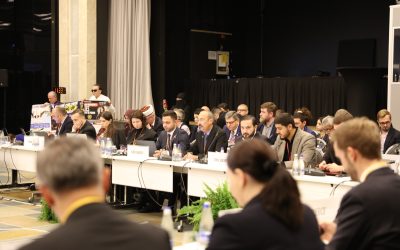
Side event HRC 57 Arbitrary Detention in the UAE: Addressing the Crisis of Civil Society Suppression

Side event HRC 57 Arbitrary Detention in the UAE: Addressing the Crisis of Civil Society Suppression

On Tuesday 17 September 2024 at 1 p.m. in the Peace Palace (Room XXV) in Geneva, a side event will feature Joey Shea, Researcher at Human Rights Watch, Ahmed al-Nuaimi,  defendant in the UAE 94 trial, and Matthew Hedges, a British academic held in solitary confinement for nearly seven months. The panel will address serious concerns about arbitrary detention and the repression of civil society in the United Arab Emirates (UAE).
read more
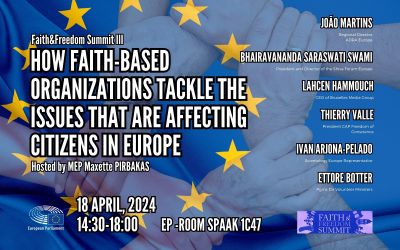
Social Impact of Faith-Based Organizations in Europe

Social Impact of Faith-Based Organizations in Europe

FBO’s play a significant role in addressing societal challenges, promoting social cohesion, and advocating for the values of faith and freedom in the European Union (EU). This conference aims to provide a platform for MEPs and Civil Society to discuss the challenges, opportunities and impact of FBOs and their contributions to a more inclusive and sustainable society inside Europe.
read more
Our heritage is not preceded by a testament

Our heritage is not preceded by a testament

Hannah Arendt quotes an aphorism by René Char (published in Feuillets d’Hypnos in 1946). “During the Resistance, a generation of European writers and men of letters created, in the political vacuum created by the collapse of the old system, a distinct public sphere, a bare space in which freedom could appear. But this opportunity did not last long. This treasure, which had appeared unexpectedly under mysterious circumstances, was soon lost. That generation was unable to give it a name. The history of revolutions was repeating itself.

read more
Conference 13 Decembre – Façonner un monde de libertés : 75 ans d’héritage et d’impact de la Déclaration Universelle des Droits de l’Homme

Conference 13 Decembre – Façonner un monde de libertés : 75 ans d’héritage et d’impact de la Déclaration Universelle des Droits de l’Homme

Dans le cadre de la commémoration du 75e anniversaire de la Déclaration Universelle des Droits de l’Homme, un groupement d’Associations et d’ONG collaborant avec les Nations Unies organise une conférence en ligne les 11 et 12 décembre 2023 (en anglais) et le 13 décembre 2023 (en français). Cette conférence qui a pour thème « Façonner un monde de libertés : 75 ans d’héritage et d’impact de la Déclaration Universelle des Droits de l’Homme ! Comment les Droits de l’Homme façonneront-ils l’avenir ? », vise à explorer l’influence durable et la pertinence de cette Déclaration.

read more
Translate »
Share This