What is “Coordination des Associations et des Particuliers pour la Liberté de Conscience” (CAP Freedom of Conscience)?
CAP Freedom of Conscience is a secular European NGO with United Nations Consultative Status, created in 1995 and dedicated to protect the Right of Freedom of Religion and Belief.
CAP Freedom of Conscience combats all forms of discrimination based on religion or belief by alerting European and International bodies.
CAP Freedom of Conscience collects testimonies of discrimination and human rights violations affecting religious or belief communities in order to disseminate them to international bodies, and in order to raise awareness and inform them as well as to generate debate on the protection of Freedom of Religion and Belief.
CAP Freedom of Conscience also advocates for any religious or spiritual group facing discrimination to have their right to Freedom of Religion and Belief recognized.
CAP Freedom of Conscience is a member of the European Federation for Freedom of Belief (FOB), European Network Of Religion and Belief (ENORB) and participate to the Civil Society Platform of Fundamental Rights created by the EU Fundamental Rights Agency DAFOH Partners in Combating and Preventing Forced Organ Harvesting
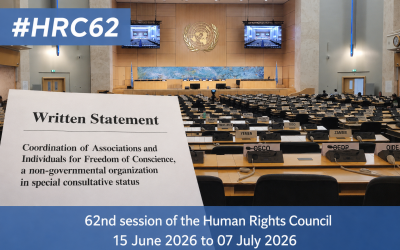
HRC 62 Written Statement : The OneTaste Case and the Expansion of Trafficking Law A Dangerous Precedent with Global Implications
CAP LC submitted this written statement during the 62nd session of the UN Human Rights Council (15 June – 10 July 2026) under Agenda Item 3, highlighting the case of Nicole Daedone and Rachel Cherwitz of OneTaste and warning against the dangerous expansion of trafficking law into a tool for policing belief and spiritual authority.
Deterioration of the Situation of Konstantin Rudnev in Argentina and the Risks of Transnational Repression
United for Human Rights and CAP LC submitted this joint written statement during the 62nd session of the UN Human Rights Council (15 June – 10 July 2026) under Agenda Item 3, updating the Council on the deteriorating situation of Russian spiritual teacher Konstantin Rudnev, currently detained in Argentina, and exposing the risks of transnational repression.
HRC 62 Written Statement : The Misuse of Tax Systems Against Spiritual Communities and the Two Covenants
CAP LC submitted this written statement during the 62nd session of the UN Human Rights Council (15 June – 10 July 2026) under Agenda Item 3, drawing the Council’s attention to a global pattern of misuse of taxation as a tool to target, stigmatize, or weaken spiritual and religious minorities.
HRC 62 Written Statement : Discrimination against “ArtExtasia” and the Need to Protect Artistic Freedom, Freedom of Expression, and Freedom of Religion
United for Human Rights and CAP LC submitted this joint written statement during the 62nd session of the UN Human Rights Council (15 June – 10 July 2026) under Agenda Item 3, drawing the Council’s attention to a growing pattern of discrimination affecting ArtExtasia, a Budapest-based artistic collective whose members include students of MISA, the Movement for Spiritual Integration into the Absolute.
HRC 62 Written Statement : Escalation from Discrimination to Violence against Members of the Christian Gospel Mission (Providence)
CAP LC submitted this written statement during the 62nd session of the UN Human Rights Council (15 June – 10 July 2026) under Agenda Item 3, updating the Council on the escalating situation facing members of the Christian Gospel Mission (CGM), also known as Providence, in the Republic of Korea and Taiwan (Province of) China.
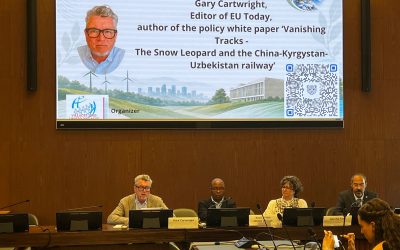
HRC 62 Snow Leopard and the CKU Railway: A Human Rights Council Side Event on Climate, Biodiversity, and the Right to a Healthy Environment
CAP Liberté de Conscience, Global Human Rights Defence, and United Village co-hosted a side event at the Palais des Nations during HRC 62 on the China–Kyrgyzstan–Uzbekistan railway and its impact on snow leopard habitat and high-mountain ecosystems in Kyrgyzstan. Speakers including Gary Cartwright (EU Today) and Sascha Fass (former Danish MP) called for full publication of Environmental Impact Assessments, independent ecological review, and EU GSP+ leverage to ensure transparency, public participation, and protection of the right to a healthy environment.
CAP Freedom of Conscience involvement UNITED NATIONS
LASTEST NEWS
Adhésion CAP LC 2024
CAP Freedom of Conscience involvement in Europe
SUPPORT CAP Liberté de Conscience
IBAN BE61 9670 0987 0017
SWIFT / BIC TRWIBEB1XXX
Address
TransferWise Europe SA
Square de Meeûs 38 bte 40
Brussels
1000
Belgium

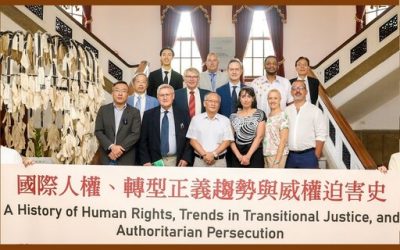
Taiwan’s transformational justice is not enough! European and American human rights experts visit the 228 Memorial Hall
President Tsai Ing-wen has publicly promised that transitional justice will not stop. What do international scholars and experts say about this? International human rights experts from Europe and the United States visited the February 28 National Memorial Hall on the morning of July 28 and were grandly received by the executive director Yang Zhenlong. During the exchanges, human rights experts pointed out that Taiwan’s transformational justice is really not enough. In the afternoon, the group participated in a forum co-hosted by the 228 National Memorial and the Taiwan Institute of Economics and Criminal Law to discuss “international human rights, trends in transitional justice, and history of authoritarian persecution.” Many scholars mentioned the Taijimen case, an iconic case in Taiwan, and Questioned the situation that Hou Kuanren, director of the Institute of Forensic Medicine of the Supreme Prosecutor’s Office who was a prosecutor, investigated many cases of abuse of power and law, but was not punished but was promoted. He called on the Taiwan government to restore the historical truth, face it squarely, and speed up the resolution.
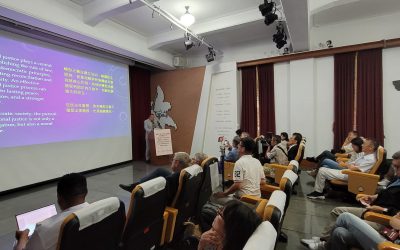
28 07 2023 A History of Human Rights, Trends in Transitional Justice, and Authoritarian Persecution Taïwan Nation 228 Memorial Museum
Transitional justice is a complex and essential process that a democratic country must undertake to address past human rights violations, atrocities, and injustices.
Today, we will examine the key components and strategies needed to ensure a successful transitional justice process in a democratic country like Taiwan.
We will see how the implementation of transitional justice in a democratic country can emphasize the importance of inclusiveness, accountability, restorative justice, and sustained engagement in achieving a just and harmonious society.
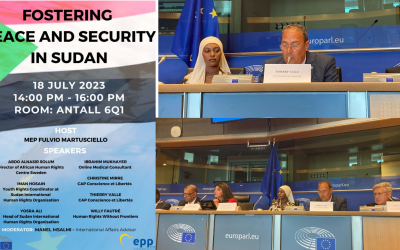
The various peace and security proposals put forward by the United Nations UN Security Council on the conflict in Sudan.
The United Nations Security Council convened on 2nd June 2023, to discuss the ongoing situation in Sudan.
The members of the Security Council recalled the previous Press Statement issued on 15 April 2023, expressing deep concern regarding the continued military clashes between the Sudanese Armed Forces and Rapid Support Forces.
I will summarize the key points and outcomes of the Security Council’s deliberations.
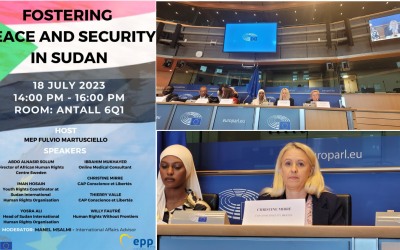
The devastating impact on women of the ongoing conflict in Sudan and the crucial role they can play in the peace process
As we all know, women, along with children, are the most vulnerable targets in wartime.
Gender-based violence and crime, such as rape and the destruction of property and lives, are the greatest threats to women, and these crimes are often overlooked and committed with impunity.
According to UN estimates, even before the fighting broke out on April 15, more than 3 million women and girls in Sudan were at risk of gender-based violence. This figure has since risen to 4.2 million.
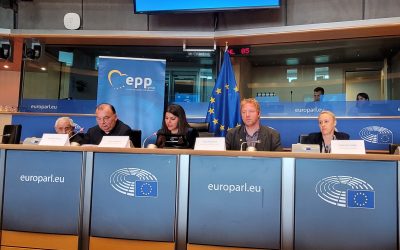
Conference EU Parliament : oppression of minorities in Iran and women rights
They have also encountered restrictions on their language and cultural rights. For instance, the Azeri language, which is widely spoken in Iran, has faced limitations in official settings, education, and media. Iranian law imposes certain restrictions on women, such as compulsory hijab and gender-based segregation in public spaces. It is important to emphasize that these issues are not unique to women of ethnic minority backgrounds in Iran. Women across the country, regardless of their ethnicity, face legal and social challenges that limit their rights and freedoms. I’d like to illustrate the situation of ethnic minority women in Iran with an emblematic case of persecution.
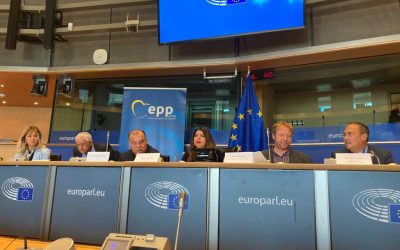
Conference EU Parliament : oppression of minorities in Iran and Religious Freedom
It is high time that Iran listened to the voices from around the world imploring it to comply with the universal principles of respect for human rights for all Iranians, and that the persecution, discrimination, and barbaric behavior of another age cease, so that this great country with a rich and glorious history, can once again become the magnificent Iran.