What is “Coordination des Associations et des Particuliers pour la Liberté de Conscience” (CAP Freedom of Conscience)?
CAP Freedom of Conscience is a secular European NGO with United Nations Consultative Status, created in 1995 and dedicated to protect the Right of Freedom of Religion and Belief.
CAP Freedom of Conscience combats all forms of discrimination based on religion or belief by alerting European and International bodies.
CAP Freedom of Conscience collects testimonies of discrimination and human rights violations affecting religious or belief communities in order to disseminate them to international bodies, and in order to raise awareness and inform them as well as to generate debate on the protection of Freedom of Religion and Belief.
CAP Freedom of Conscience also advocates for any religious or spiritual group facing discrimination to have their right to Freedom of Religion and Belief recognized.
CAP Freedom of Conscience is a member of the European Federation for Freedom of Belief (FOB), European Network Of Religion and Belief (ENORB) and participate to the Civil Society Platform of Fundamental Rights created by the EU Fundamental Rights Agency DAFOH Partners in Combating and Preventing Forced Organ Harvesting
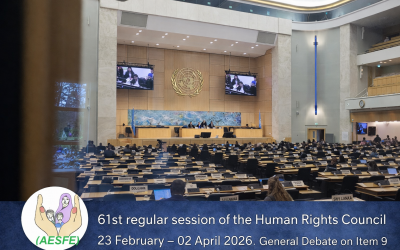
HRC 61 Item 9 UN Statement: Demand Release of Imran Khan and End Systematic Persecution in Pakistan
At the UN Human Rights Council, AESFE highlights the alarming rise of intolerance in Pakistan, focusing on the imprisonment of former PM Imran Khan for nearly 1,000 days. The statement details inhumane conditions, including torture in solitary confinement, and expanded blasphemy laws fostering hatred. AESFE urges the Council and OHCHR to demand immediate compliance with UN opinions and the release of all political prisoners to end this systematic persecution and restore human dignity.
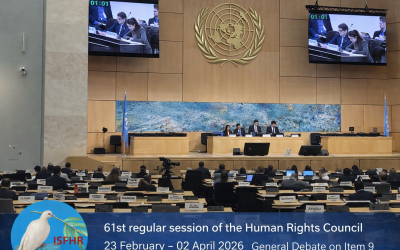
HRC 61 Item 9 Systematic Religious Persecution: The Case of the Ahmadi Religion of Peace and Light in Egypt
This statement condemns the arbitrary detention and torture of Egypt’s Ahmadi Religion of Peace and Light members. Since March 2025, systematic persecution, enforced disappearances, and denial of legal rights have occurred. We urge the UN to investigate these grave violations and demand Egyptian authorities immediately release the victims to uphold international human rights obligations and end religious intolerance.
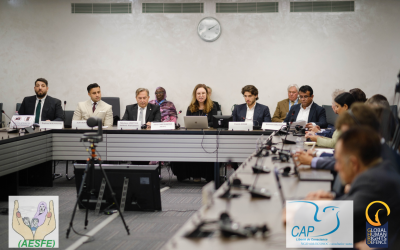
Side-event 61st session HRC Human Rights in Pakistan
Discover why the European Union must urgently suspend Pakistan’s GSP+ status. MEPs and activists denounce systematic human rights violations, from the persecution of religious minorities to severe repression in Balochistan. While Pakistan benefits from EU market access, compliance with international conventions remains absent. This conference calls for immediate action to strictly link trade privileges with fundamental freedoms. Essential insights into the future of ethical trade relations and EU accountability.
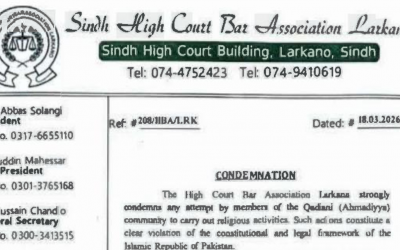
Pakistan: High Court Bar Condamnation Against the Ahmadiyya Community and Its Incompatibility with International Human Rights Law
The condemnation by the High Court Bar Association at Larkana calls on authorities to criminally punish Ahmadiyya religious practices in Pakistan. This analysis explains how the text and the provisions it enforces violate the Universal Declaration of Human Rights and the International Covenant on Civil and Political Rights, and reaffirms States’ obligations to ensure freedom of religion or belief for all.

From Stigmatization to Violence: A Public Health Approach to Media-Driven Persecution
CAP Liberté de Conscience (CAP LC) addressed the UN Human Rights Council (HRC 61) on the dangerous link between sensationalist media and violence against religious minorities. Applying the WHO’s “Public Health Approach to Violence Prevention,” we highlighted how media stigmatization acts as a precursor to physical attacks. Citing the “digital witch-hunt” against the Christian Gospel Mission and a recent hammer assault in Taiwan, we called for a UN expert group to monitor media bias and protect believers from persecution fueled by online hate.
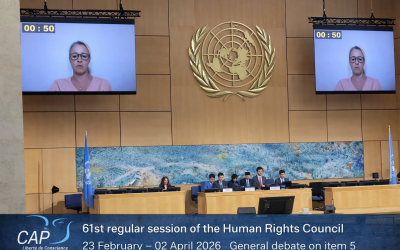
HRC 61 Item 5 Media-Fueled Persecution: Establishing Accountability for Sensationalist Coverage of Religious Minorities
Sensationalist media coverage triggers systematic violence against religious minorities worldwide. Following the Public Health Approach to Violence Prevention, stigmatization by mainstream and digital platforms—such as Netflix documentaries on Jehovah’s Witnesses or South Korean coverage of Gospel Mission—precedes persecution and violence. Recent cases include hammer attacks on Shincheonji members in Taiwan. We urge the Human Rights Council to establish an expert group monitoring media-driven discrimination to protect believers from state and online violence fueled by inflammatory content.
CAP Freedom of Conscience involvement UNITED NATIONS
LASTEST NEWS
Adhésion CAP LC 2024
CAP Freedom of Conscience involvement in Europe
SUPPORT CAP Liberté de Conscience
IBAN BE61 9670 0987 0017
SWIFT / BIC TRWIBEB1XXX
Address
TransferWise Europe SA
Square de Meeûs 38 bte 40
Brussels
1000
Belgium

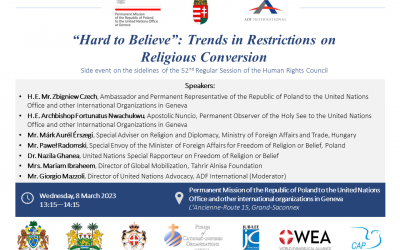
HRC52 Side Event Invitation: “Hard to Believe”: Trends in Restrictions on Religious Conversion – 8 March 2023
The Permanent Mission of Hungary, the Permanent Mission of Poland and ADF International are co-hosting a side event on the margins of the 52nd Regular Session of the Human Rights Council, titled “Hard to Believe: Trends in Restrictions on Religious Conversion”.
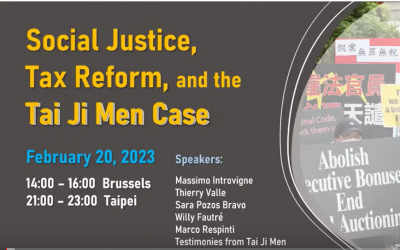
Social Justice, Tax Reform, and the Tai Ji Men Case
Social Justice, Tax Reform, and the Tai Ji Men Case
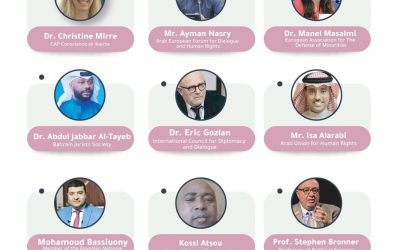
High-level event : Seminar inaugurating the shadow report of the Universal Periodic Review mechanism Human Rights in the United Arab Emirates
High-level event : Seminar inaugurating the shadow report of the Universal Periodic Review mechanism
Human Rights in the United Arab Emirates
What the Abe assassination reveals about tolerance of hate speech and the deficit of religious freedom in Japan
On July 8th 2022, the assassination of Shinzo Abe, by a lone assassin, caused shock and consternation in Japan and around the world, triggering a nationwide media campaign against the Unification Church, which the assassin falsely blamed for his family’s troubles.
Reflection on the hate speech in the contemporary society
CAP Liberté de Conscience is a French NGO, granted of the Consultative Status of the United Nations, and has been dedicated since 1995 to the promotion and defense of the universal principles of freedom of conscience, religion or belief, as defined and guaranteed by the various national, European and international legal texts, whatever the category of persons to whom these principles apply and whatever their convictions.
Freedom of Expression, Hate Speech, and Religious Freedom: A Human Rights Perspective.
Hate speech is an ongoing problem in all societies, both online and offline. As history has shown, atrocity crimes are sparked by hate speech. A growing trend of
hatred and intolerance toward people who are perceived as different increases the potential to incite violence and severe human rights violations. Ethnic and religious
minorities, migrants, refugees, and others who are perceived as unwelcome are often targets of hate speech and discrimination.