What is “Coordination des Associations et des Particuliers pour la Liberté de Conscience” (CAP Freedom of Conscience)?
CAP Freedom of Conscience is a secular European NGO with United Nations Consultative Status, created in 1995 and dedicated to protect the Right of Freedom of Religion and Belief.
CAP Freedom of Conscience combats all forms of discrimination based on religion or belief by alerting European and International bodies.
CAP Freedom of Conscience collects testimonies of discrimination and human rights violations affecting religious or belief communities in order to disseminate them to international bodies, and in order to raise awareness and inform them as well as to generate debate on the protection of Freedom of Religion and Belief.
CAP Freedom of Conscience also advocates for any religious or spiritual group facing discrimination to have their right to Freedom of Religion and Belief recognized.
CAP Freedom of Conscience is a member of the European Federation for Freedom of Belief (FOB), European Network Of Religion and Belief (ENORB) and participate to the Civil Society Platform of Fundamental Rights created by the EU Fundamental Rights Agency DAFOH Partners in Combating and Preventing Forced Organ Harvesting
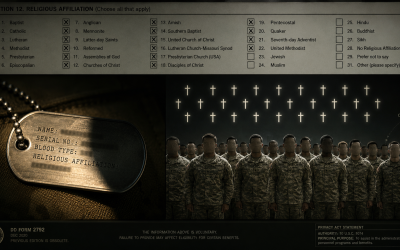
Pentagon Slashes Religious Affiliation Codes from 211 to 31, Sparks Debate Over Mormon Inclusion and State Neutrality
The Pentagon reduced military religious codes from 211 to 31 in June 2026, ostensibly to streamline chaplaincy resources. The initial omission of the Mormon Church sparked political backlash, revealing deeper tensions about state categorisation of faith. The subsequent removal of all “Christian” labels from denominations avoided doctrinal adjudication but flattened meaningful diversity. Minority faiths — atheists, Pagans, Wiccans — were collapsed into generic categories, raising concerns about invisibility and equitable resource allocation within an increasingly Christian-framed military culture.

Serbia Condemned by the European Court of Human Rights for Banning Falun Gong Protests During Xi Jinping’s Visit
The European Court of Human Rights unanimously condemned Serbia for banning three peaceful Falun Gong assemblies during Chinese President Xi Jinping’s 2016 state visit to Belgrade. The Court ruled that Serbian authorities relied on speculative security grounds rather than concrete evidence, violating Article 11 (freedom of peaceful assembly) and Article 13 (right to an effective remedy) of the European Convention. The judgment reinforces that diplomatic considerations cannot override fundamental rights in democratic societies.
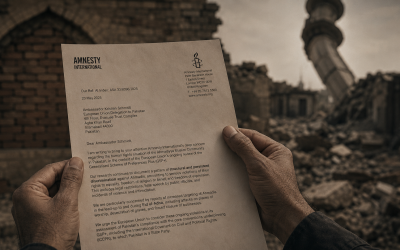
Pakistan: Amnesty International Warns of Escalating Persecution Against Ahmadis Ahead of Eid
Amnesty International wrote to Punjab’s Chief Minister on 21 May 2026 warning of escalating persecution against Ahmadis ahead of Eid ul-Adha. IHRC documented the demolition of minarets in Jamalpur under mob pressure. CAP LC and IHRC welcome Amnesty’s intervention, noting that Pakistan’s GSP+ reapplication must account for these documented violations of religious freedom.

The EU Reinforces Trade Preferences: Human Rights and the GSP+ Revision
The Council of the EU formally adopted the revised GSP regulation on 22 May 2026, expanding human rights conditionality from 27 to 32 conventions. CAP Liberté de Conscience and IHRC welcome this reinforcement, noting that Pakistan’s GSP+ reappraisal offers an opportunity to address documented persecution of the Ahmadiyya community. The organisations urge the Commission to use the review to transform words into acts.

Afghanistan: The European Parliament Confronts Institutionalised Gender Apartheid
The European Parliament adopted resolution TA-10-2026-0186 on 21 May 2026, condemning the Taliban’s Criminal Procedure Code for Courts as institutionalised gender apartheid. The text demands repeal of the Code, ICC warrant enforcement, and recognition of slavery and child marriage as crimes against humanity. CAP Liberté de Conscience supports this resolution, highlighting the intersection of religious freedom and gender persecution in Afghanistan.
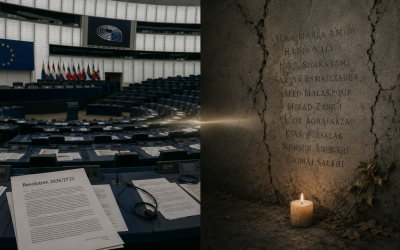
Iran: The European Parliament Denounces a Machinery of Death
The European Parliament adopted resolution TA-10-2026-0185 on 21 May 2026, condemning mass executions and repression in Iran. The text highlights the disproportionate targeting of religious minorities — Bahá’ís, Christians, Jews, and others — and demands accountability. CAP Liberté de Conscience welcomes this intervention, linking it to its own oral statement at the UN 39th Special Session on Iran.
CAP Freedom of Conscience involvement UNITED NATIONS
LASTEST NEWS
Adhésion CAP LC 2024
CAP Freedom of Conscience involvement in Europe
SUPPORT CAP Liberté de Conscience
IBAN BE61 9670 0987 0017
SWIFT / BIC TRWIBEB1XXX
Address
TransferWise Europe SA
Square de Meeûs 38 bte 40
Brussels
1000
Belgium

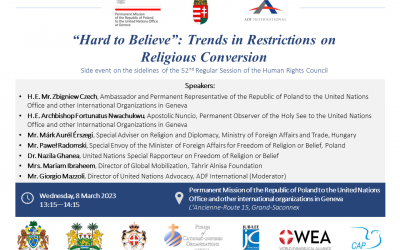
HRC52 Side Event Invitation: “Hard to Believe”: Trends in Restrictions on Religious Conversion – 8 March 2023
The Permanent Mission of Hungary, the Permanent Mission of Poland and ADF International are co-hosting a side event on the margins of the 52nd Regular Session of the Human Rights Council, titled “Hard to Believe: Trends in Restrictions on Religious Conversion”.

Social Justice, Tax Reform, and the Tai Ji Men Case
Social Justice, Tax Reform, and the Tai Ji Men Case

High-level event : Seminar inaugurating the shadow report of the Universal Periodic Review mechanism Human Rights in the United Arab Emirates
High-level event : Seminar inaugurating the shadow report of the Universal Periodic Review mechanism
Human Rights in the United Arab Emirates
What the Abe assassination reveals about tolerance of hate speech and the deficit of religious freedom in Japan
On July 8th 2022, the assassination of Shinzo Abe, by a lone assassin, caused shock and consternation in Japan and around the world, triggering a nationwide media campaign against the Unification Church, which the assassin falsely blamed for his family’s troubles.

Reflection on the hate speech in the contemporary society
CAP Liberté de Conscience is a French NGO, granted of the Consultative Status of the United Nations, and has been dedicated since 1995 to the promotion and defense of the universal principles of freedom of conscience, religion or belief, as defined and guaranteed by the various national, European and international legal texts, whatever the category of persons to whom these principles apply and whatever their convictions.
Freedom of Expression, Hate Speech, and Religious Freedom: A Human Rights Perspective.
Hate speech is an ongoing problem in all societies, both online and offline. As history has shown, atrocity crimes are sparked by hate speech. A growing trend of
hatred and intolerance toward people who are perceived as different increases the potential to incite violence and severe human rights violations. Ethnic and religious
minorities, migrants, refugees, and others who are perceived as unwelcome are often targets of hate speech and discrimination.